

This post contains affiliate links.


You can make pumpkin puree at home, and it’s so simple! The best part? You know exactly what you’re getting…pure, delicious pumpkin. Perfect for autumn cooking and baking (plus your house will smell amazing!).
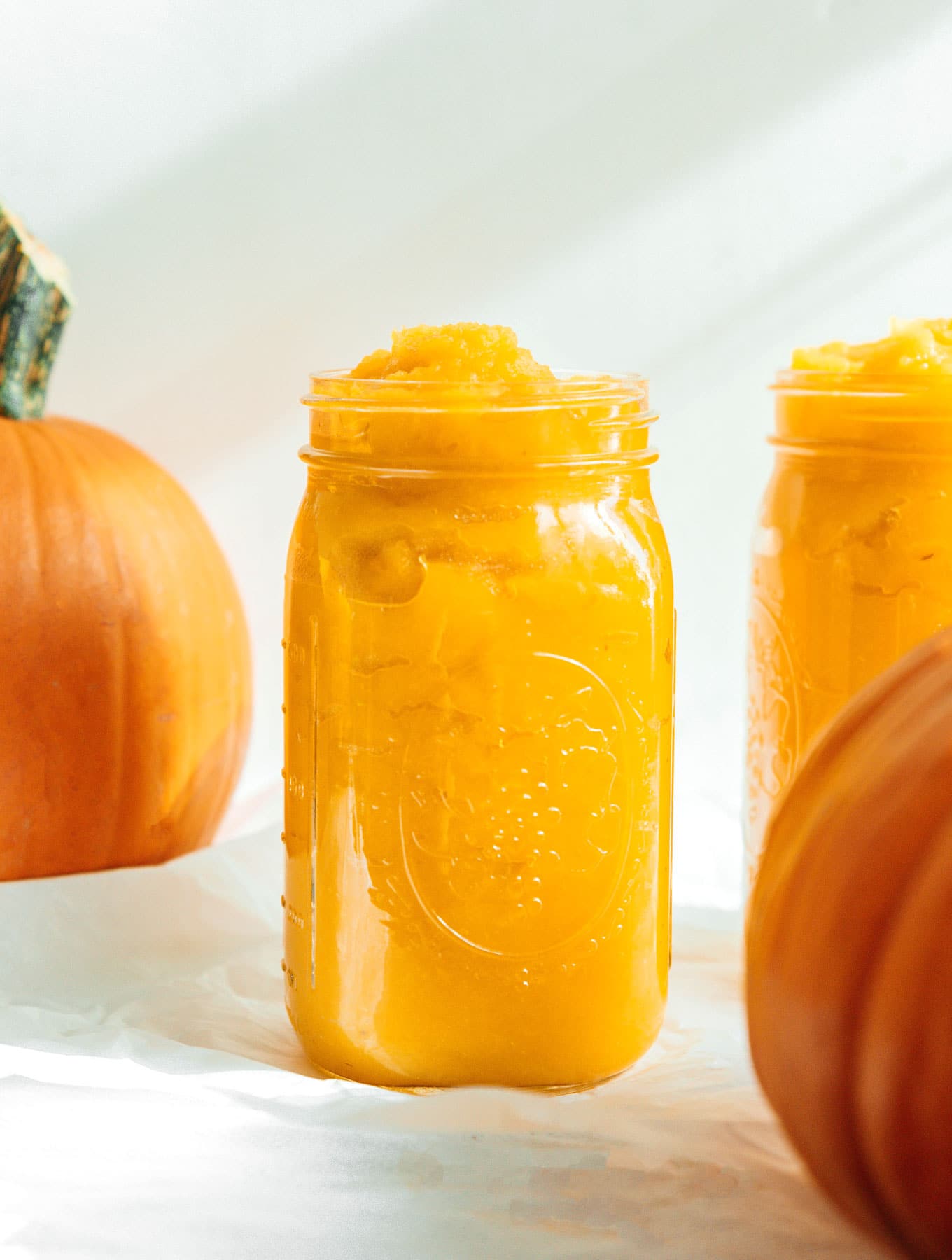
 save this recipe!
If you are knee-deep in fall baking, then I’m sure you’ve already realized how expensive a can of pumpkin can be. Well, good news! Making homemade pumpkin puree can be cheaper than canned pumpkin and is a great way to reduce food waste!
Isn’t canned pumpkin 100% pumpkin?
Although the canned pumpkin claims to be 100% pumpkin, some trickery is involved. The USDA is fairly relaxed in what they consider a “pumpkin,” broadening the spectrum from the classic orange pumpkin to wide varieties of winter squash, like butternut squash. These other squash varieties add the orange color and sweeter flavor we’ve come to know and love in pumpkin puree. So, while it’s not like canned pumpkin is loaded with artificial dyes or anything, there is certainly more than meets the eye.
Reader rating
“Absolutely love this recipe. Great tips on using any pumpkin. When every other recipe discourages using our old jack-o’-lantern pumpkin (Uncut of course) you do not!” —Mel
You only need one ingredient
Since this recipe keeps it clean and simple with ingredients, it’s totally vegan and gluten-free friendly! For the full quantity, be sure to jump to the recipe card.
- Pumpkin: The smaller the pumpkin, the sweeter and less stringy it will be. Sugar or pie pumpkins are great for making puree and your everyday jack-o-lantern kind of pumpkin. That said, you can use virtually any pumpkin or winter squash for this puree!

Pumpkin Puree vs Pumpkin Pie Filling
It’s important to note that pumpkin puree differs greatly from pumpkin pie filling! While pumpkin puree is simply cooked and pureed winter squash, pumpkin pie filling has added flavors like cinnamon, nutmeg, cloves, and sugar.
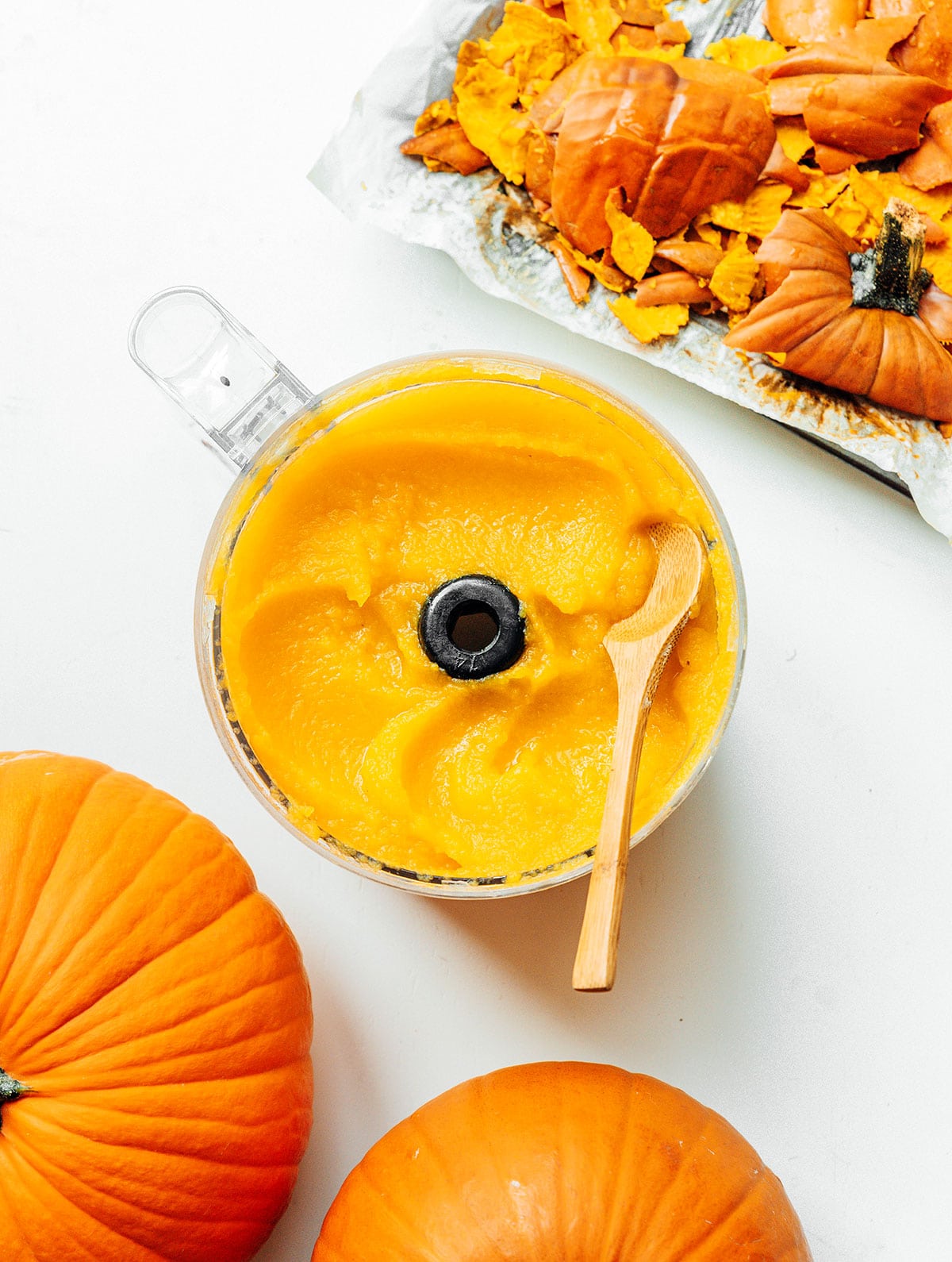
How to Make Pumpkin Puree
This is just a brief overview, jump to the recipe for the full instructions.
Step 1: Cut the Pumpkin
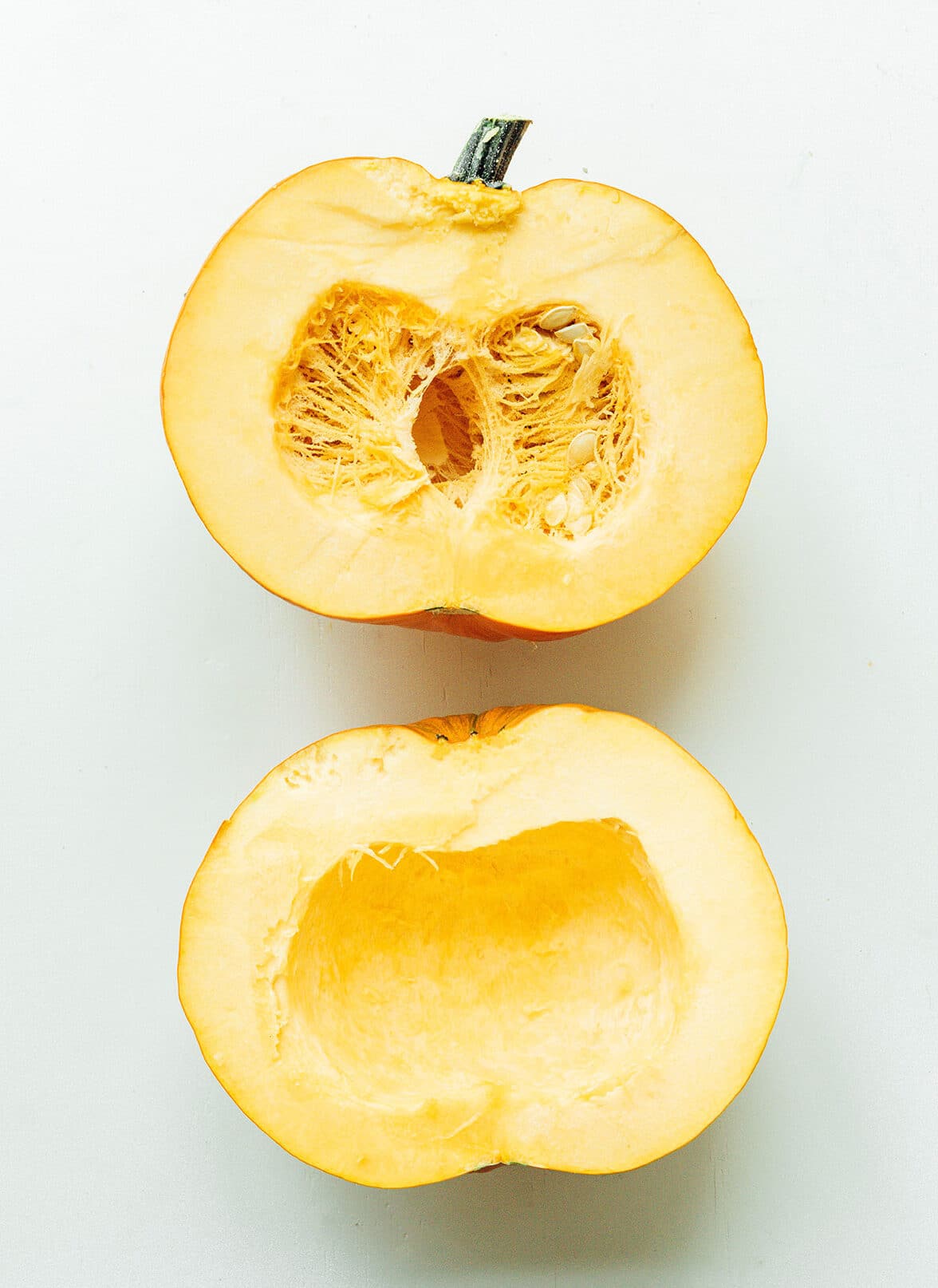
If you’re using a small pumpkin, chop it in half lengthwise from the bottom up. When you get near the stem, pull to break the pumpkin to separate the two halves. If using a larger pumpkin, cut it into long, wide pieces down the natural grooves of the pumpkin.
Step 2: Remove the Insides
Remove the seeds (save them for roasting!), and gently scrape the gunk away from the inside with a spoon.
Step 3: Cook It
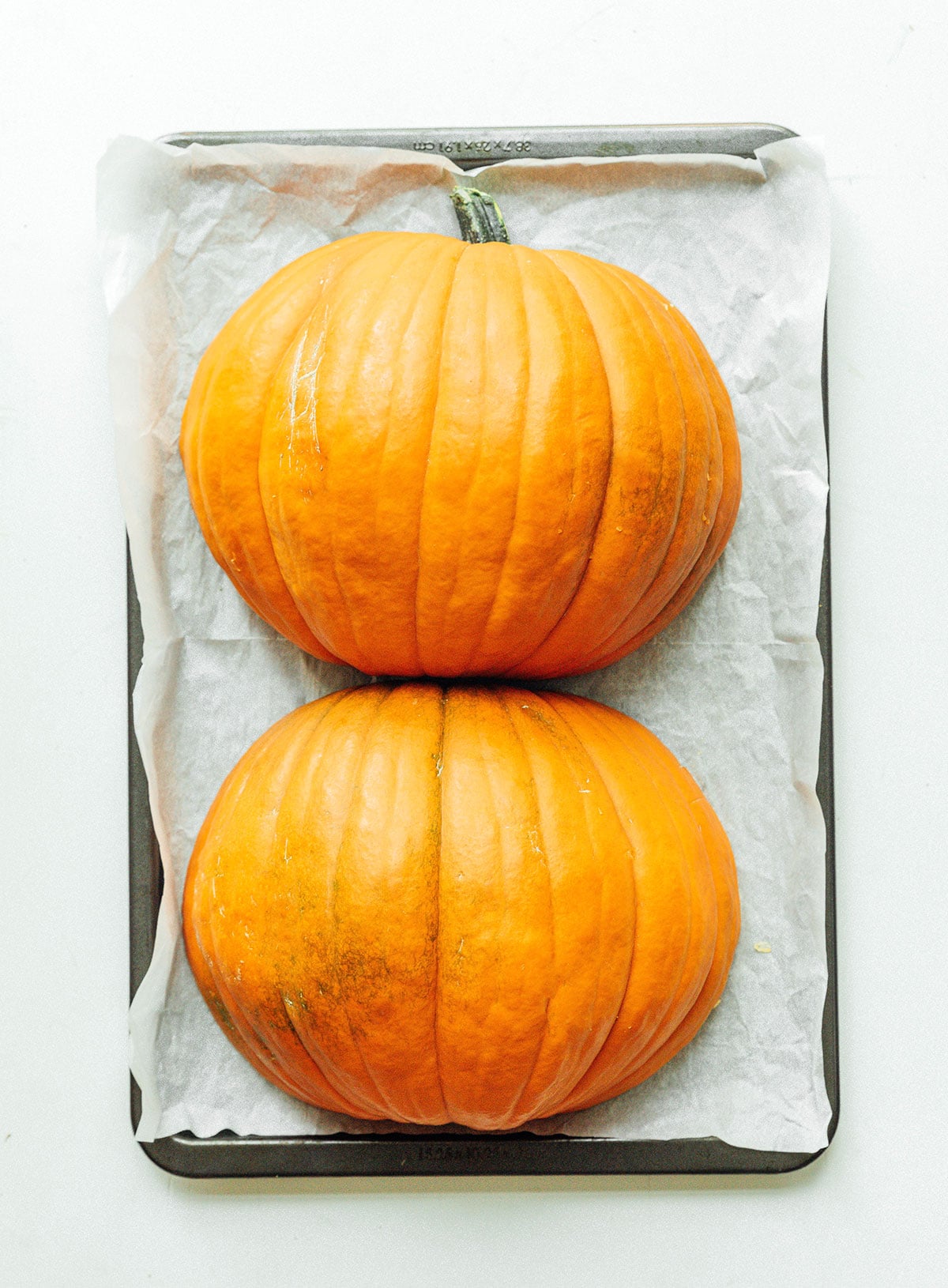
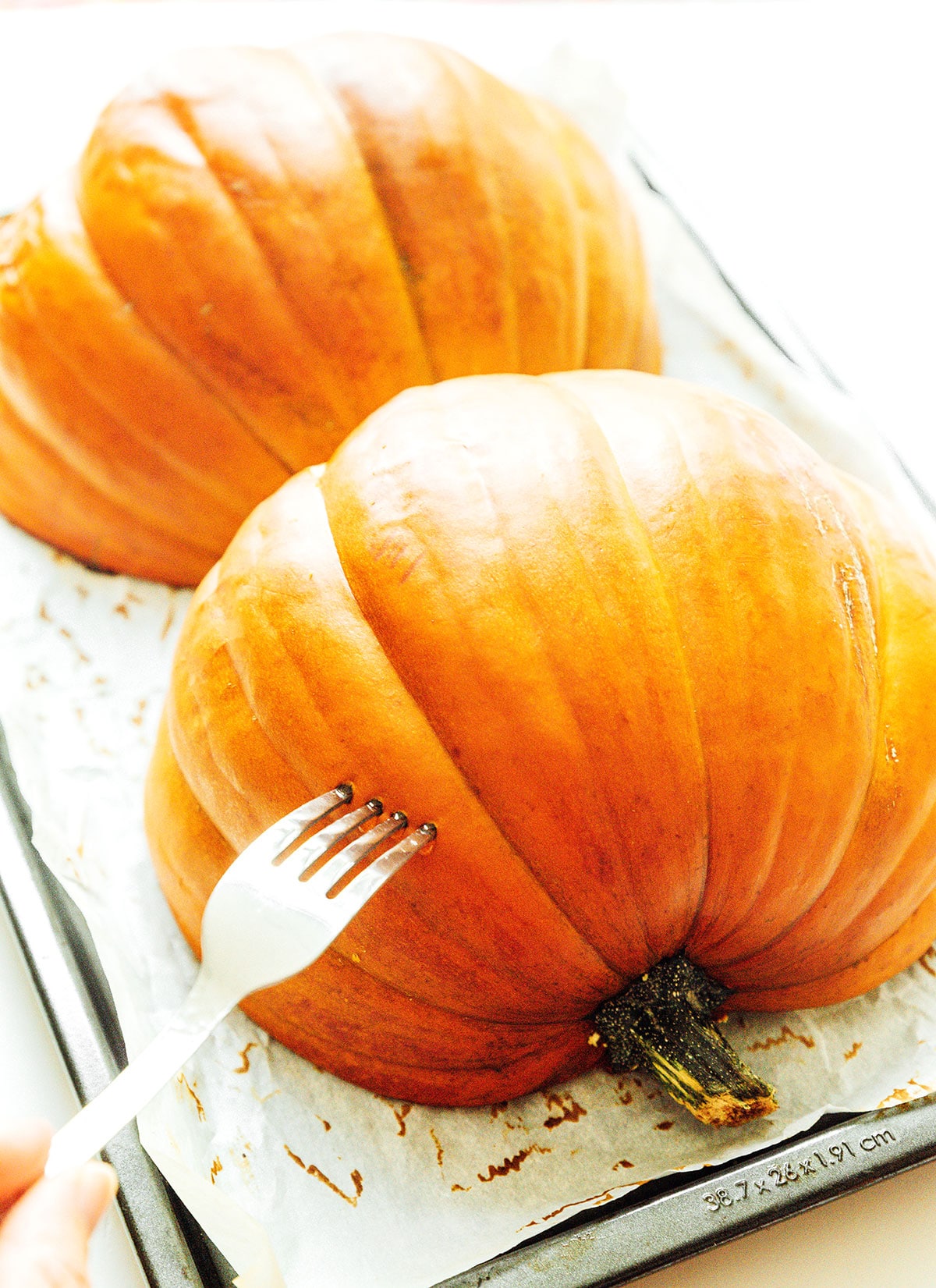
Place pumpkin pieces facedown on a baking sheet and bake at 400°F (204°C) for about 1 hour, or until the inside is easily pierced with a fork. Steam is trapped by placing them facedown, which helps tenderize the tasty pumpkin flesh!
Step 4: Remove the Peel
Once it reaches the perfect tenderness, remove it, let it cool enough to touch, and either peel or cut off the skin. Then, chop the pumpkin flesh into chunks.
Step 5: Puree
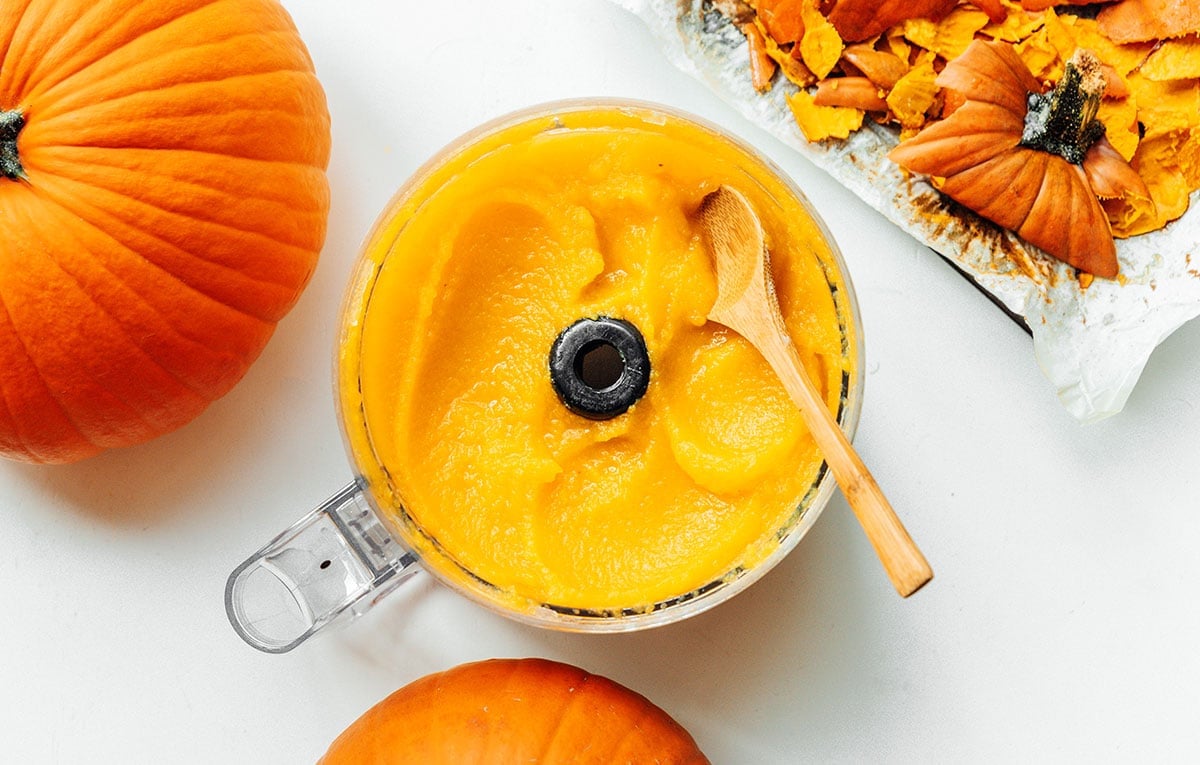
Throw pumpkin pieces into a food processor or blender and blitz until smooth. If you need water to reach the right consistency, add a tablespoon at a time.


Storage suggestions
Either store your homemade pumpkin puree in the fridge for a few days in an airtight container or freeze 1 cup portions in baggies until you’re ready to use it. It’ll last up to 3 months in the freezer, so you can enjoy pumpkin all winter long!
ways to enjoy your pumpkin puree


How to Make Pumpkin Puree (Better Than Canned Pumpkin!)

Ingredients
- 1 5-lb pumpkin, 2.2 kg
Instructions
- Cut: Preheat oven to 400°F (204°C). If you’re using a small pumpkin, cut off the stem then chop it in half. If using a larger pumpkin, cut it into long, wide pieces down the natural grooves of the pumpkin.

- Scrape: Gently scrape the inside with a spoon to remove seeds and stringy gunk.
- Roast: Place pumpkin pieces facedown on a baking sheet and bake for 40 to 60 minutes, or until the inside is easily pierced with a fork. This may take longer for larger/thicker pumpkins.

- Peel: Let pumpkin cool enough to touch and either peel or cut off the skin. Chop pumpkin flesh into chunks.
- Puree: Throw pumpkin into a food processor or blender and blitz until smooth. (Note: if your pumpkin is at all hot, do not cover the blender completely! Leave the top off so hot air can escape.) If you need to add water to reach the right consistency, add a tablespoon at a time.

Notes
Nutrition
Nutrition information calculated by Sarah Bond, degreed nutritionist.
 did you make this?Leave a comment below and tag @liveeatlearn on social media! I love seeing what you’ve made!




The article advertisement said, ” Check out this article for more about what’s in canned pumpkin.” But, the article did not have this information. Could you give me that information?
Thank you,
Antone
Ah sorry about that, Antone! Canned pumpkin often has many types of winter squash (like butternut) to help give it that orange flavors.
Hi Antone! Ah sorry about that – canned pumpkin usually contains a mix of many types of squash (like butternut and other winter squashes), which help give it that orange color.
Why can’t you use 1 can of pumpkin pie filling with 1 box of spice cake mix to make cupcakes?
Elonye
I think it would just be pretty sweet then, but you could certainly try! I usually do pure pumpkin puree + boxed cake mix 😀
I can not find pumpkin puree. What can I use instead of it
Pureed sweet potato or butternut squash would work well!
Absolutely love this recipe. Great tips on using any pumpkin. When every other recipe discourages using our old jack-o’-lantern pumpkin (Uncut of course) you do not! Any suggestions for dealing with pumpkins that are stringy?
I would cook them a little longer then blend as long as you can in a good quality blender! You can always pass the puree through a sieve to remove the remaining strings.
what spices would I put into pumpkin puree to use for recipes and how much pumpkin (cup) for the exact amount of spices?
That depends on the recipe! 🙂 Store bought doesn’t contain any spices.