

This post contains affiliate links.
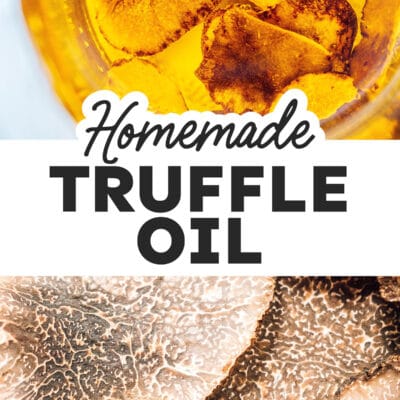
This guide on how to make truffle oil covers 3 different ways to make this pantry staple ingredient, plus a rating for each method! Enjoy truffle oil with toasty bread, drizzle it over pasta, or use it to saute veggies – the possibilities are endless!
 save this recipe!
Truffle oil has an intense and potent flavor. A little bit goes a long way. Plus, using oil is a much easier route than grinding and cooking actual truffles into your recipe each time!
While store-bought truffle oil is expensive and can be filled with additives, making your own truffle oil is pretty simple at home and more affordable. A quick Google search shows bottles selling for around $30 USD a pop (easily more in many cases). We’ve tested three different methods that all use common household items and rated them according to how good they are at extracting truffle flavor.
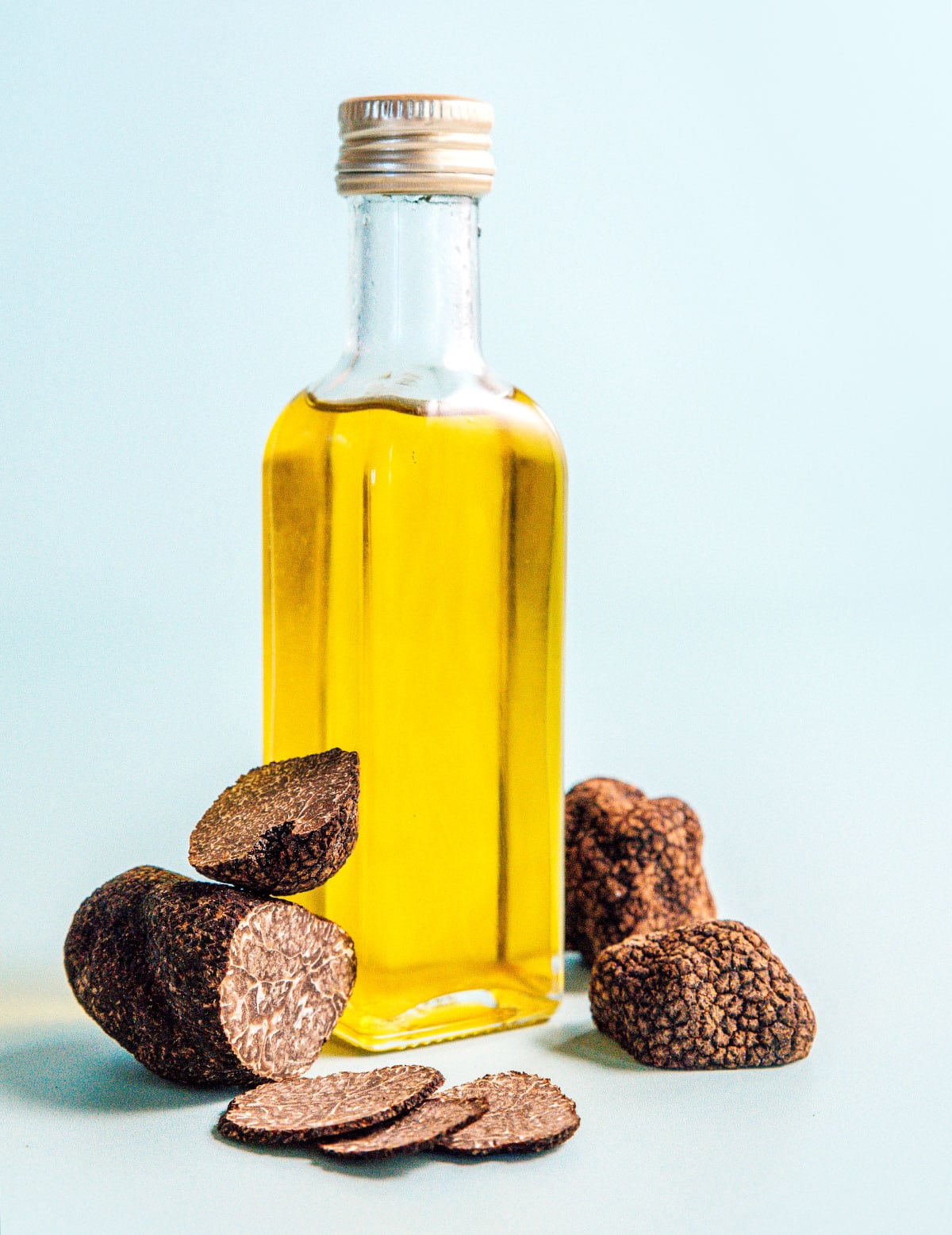
just 2 ingredients, that’s it!
Black truffle oil is simple and efficient to make.
- Olive Oil: Start with ½ cup of good quality olive oil (one that’s mild in flavor). Try to go with one that’s pretty natural and doesn’t contain any chemicals or additives.
- Truffle: Depending on your infusing method, you will need 1 whole black truffle or 1 tablespoon of shaved black truffle.
truffle Tip
While we’re using black truffles here, you can make truffle oil with any type of truffle. If using white truffles, which contain a much more potent flavor, consider using less than 1 tablespoon of shavings or more oil to offset that potency.
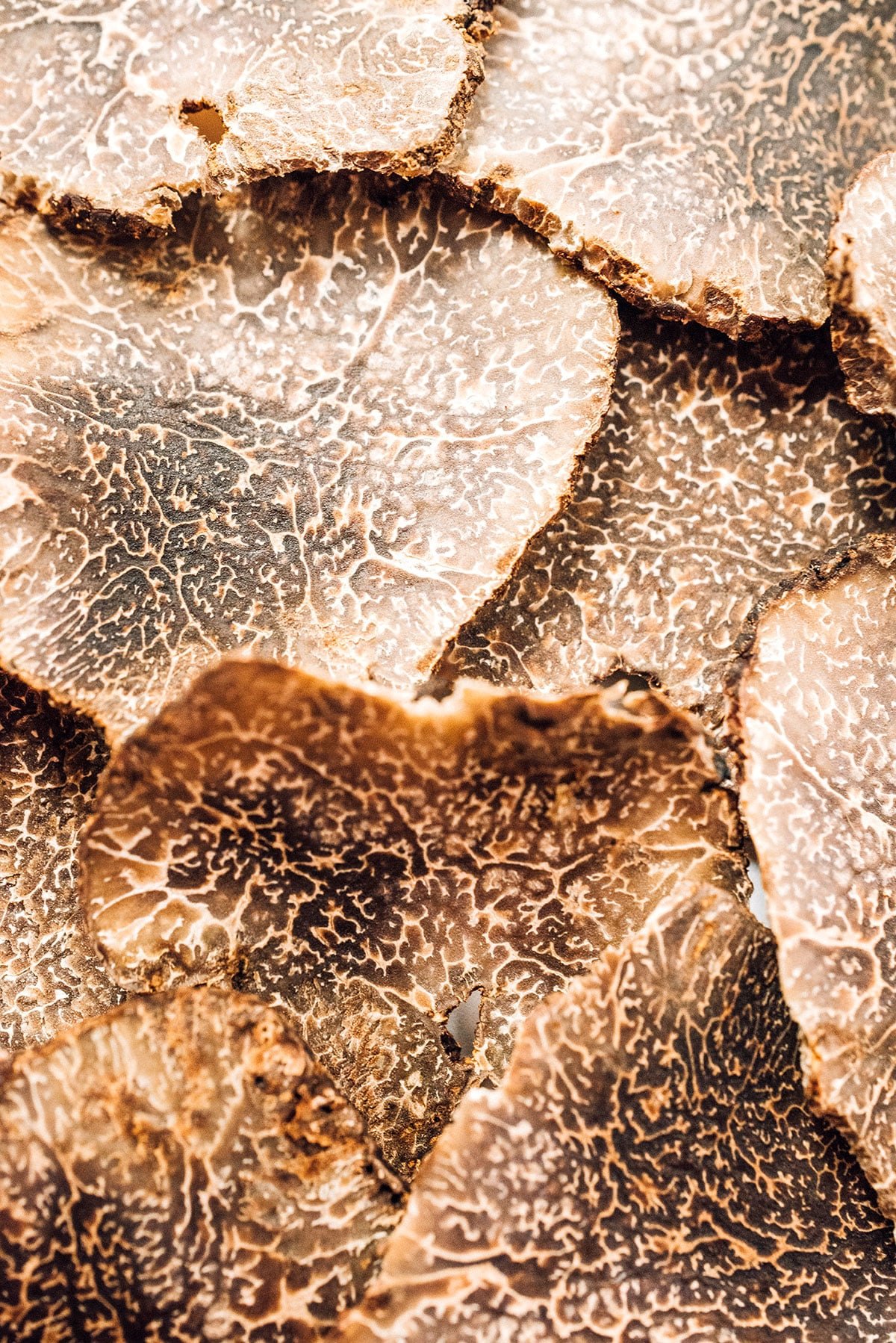
3 different ways to make it
There are three ways to make truffle oil at home. We’ve rated each method to save you time when deciding which method is best for you.
Method 1: Hot Steep (Grade A)
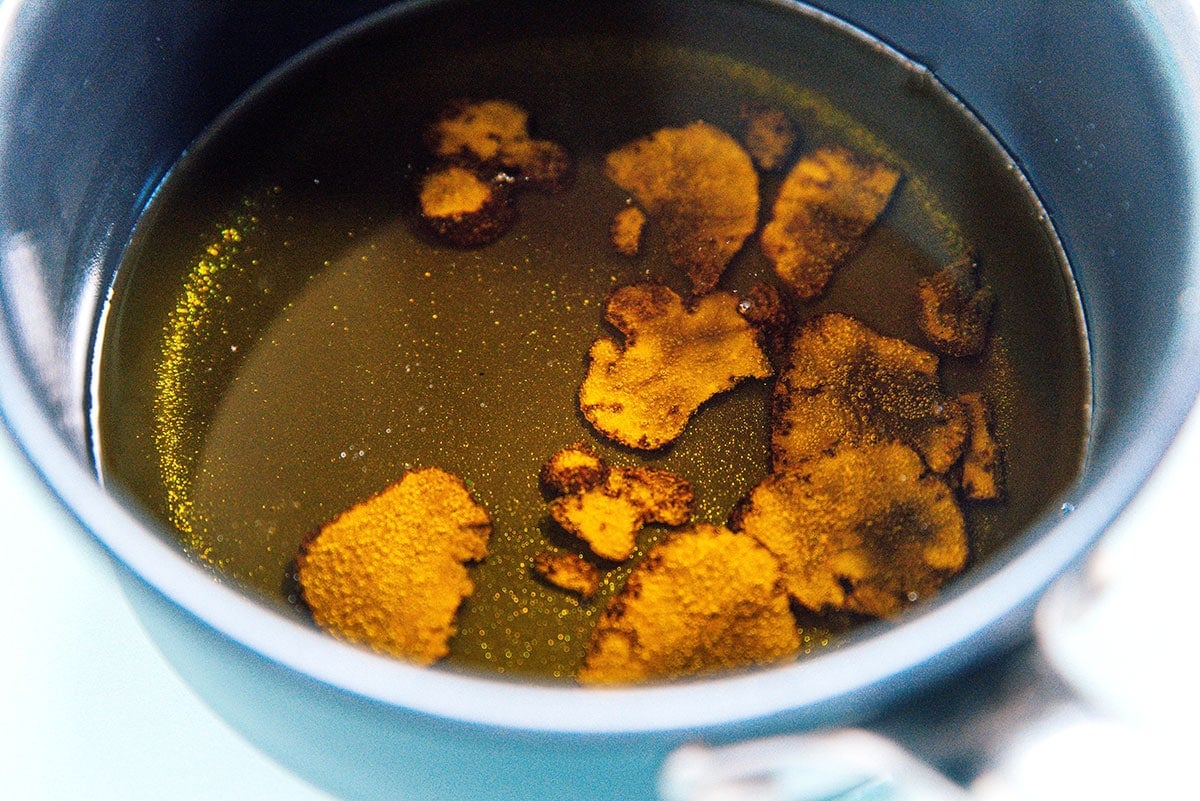
- Heat the oil over low heat until it reaches about 130°F (54°C).
- Remove the pot from the heat and add the shaved truffle.
- Cover and let the mix cool completely. Once cooled, strain and store in a clean, airtight jar for up to 3 months.
Pros
- Fast infusion time: This is a very quick and easy infusion method. If you want to enjoy your oil today, this is the method for you!
Cons
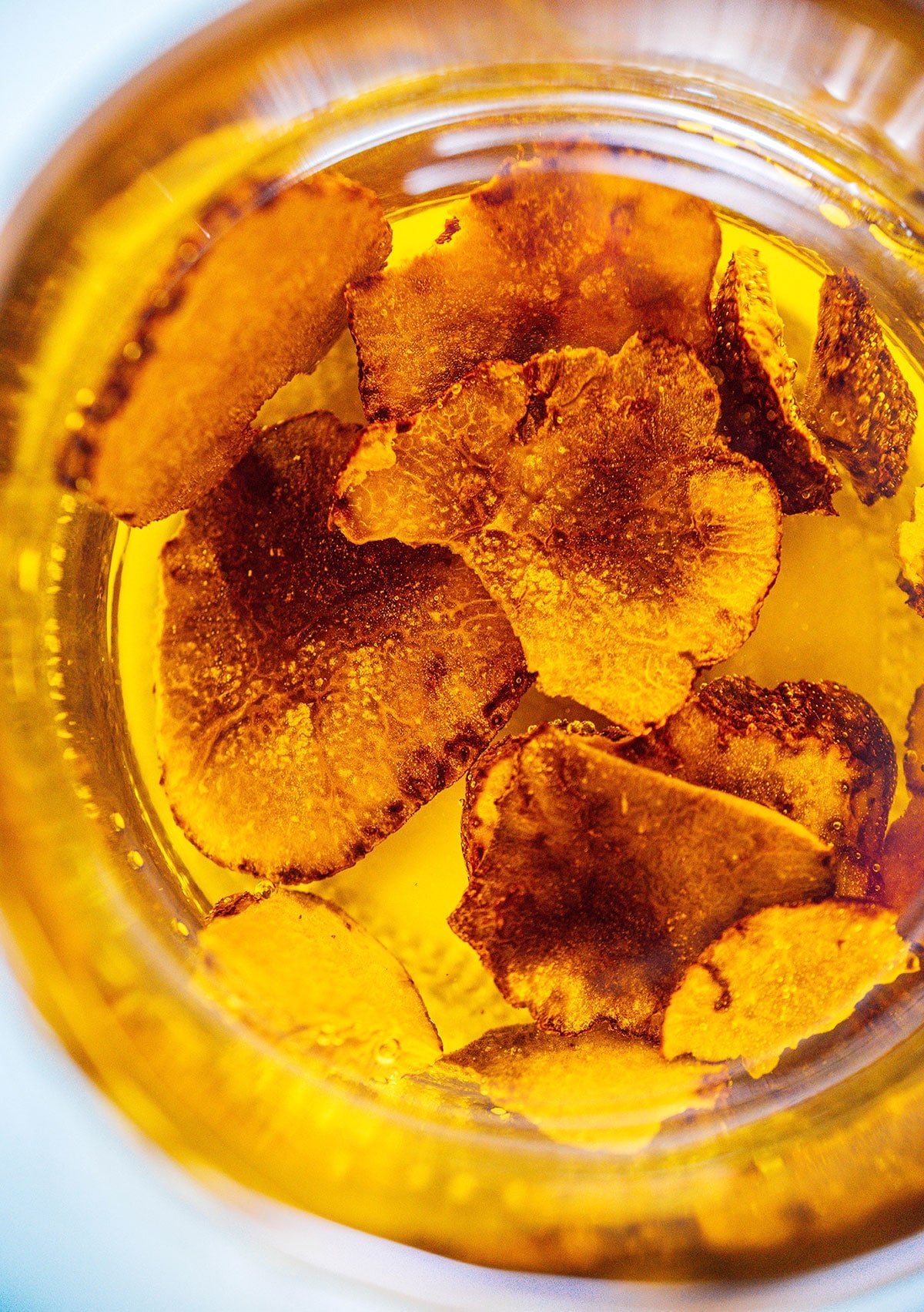
- Medium shelf life: Typically, when the infused item is in the oil (as opposed to not touching like in the hover method), the oil will expire faster. Heating the oil allows is to be stored slightly longer than in the cold step method (below) – about 3 months.
Method 2: Hover (Grade B+)
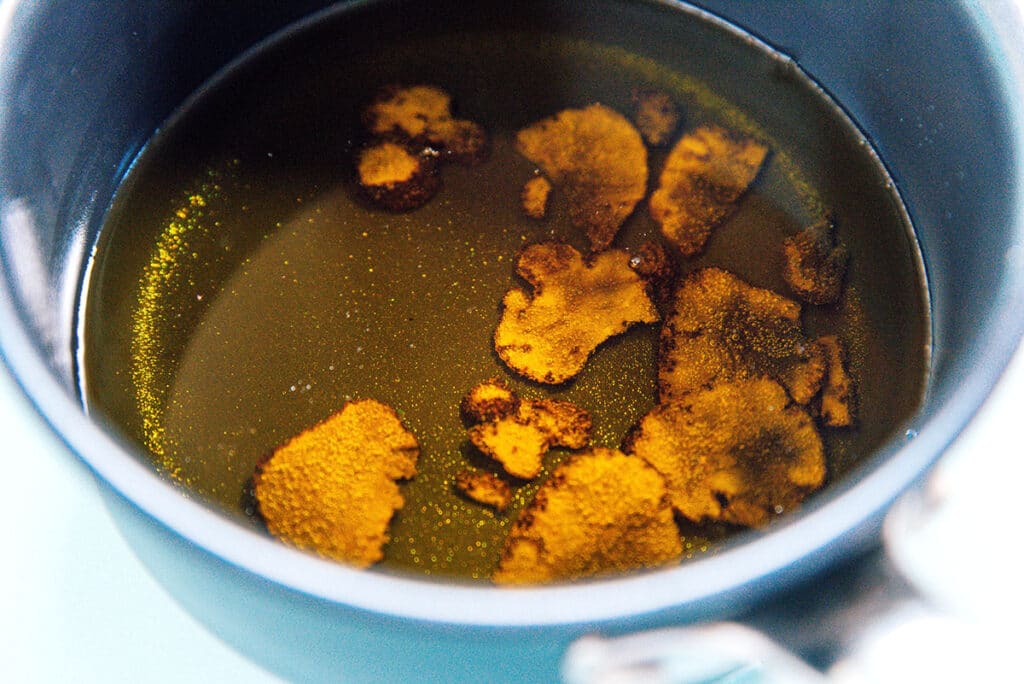
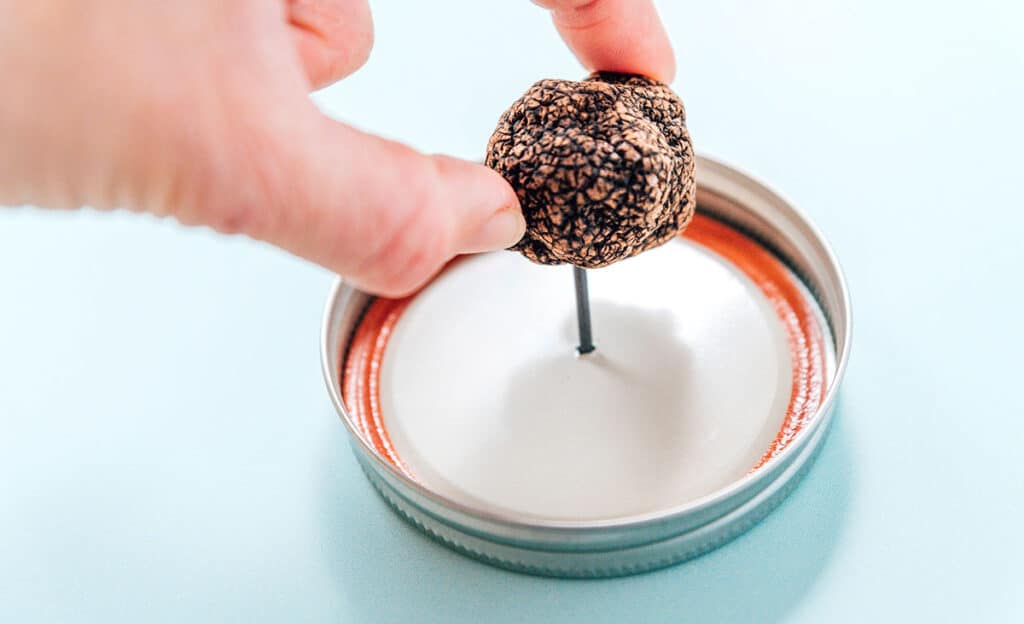
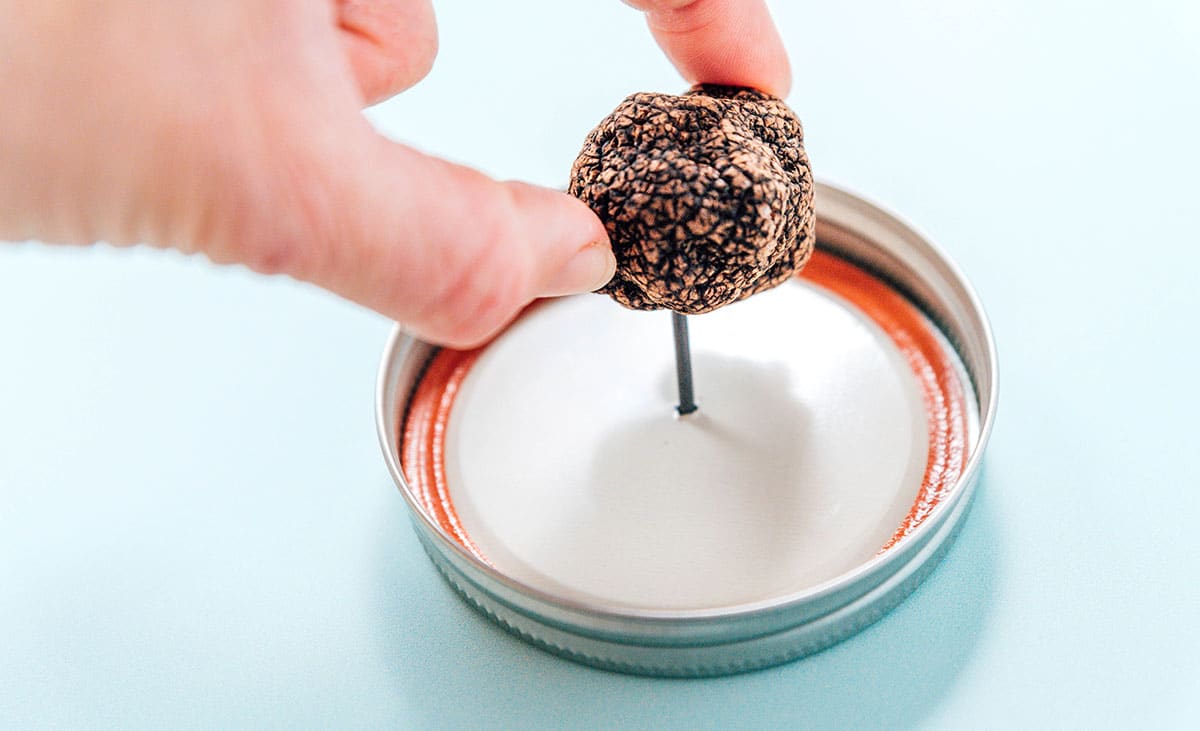
- Punch a small nail through the lid of a mason jar. Pierce a truffle (or piece of a truffle) onto the nail.
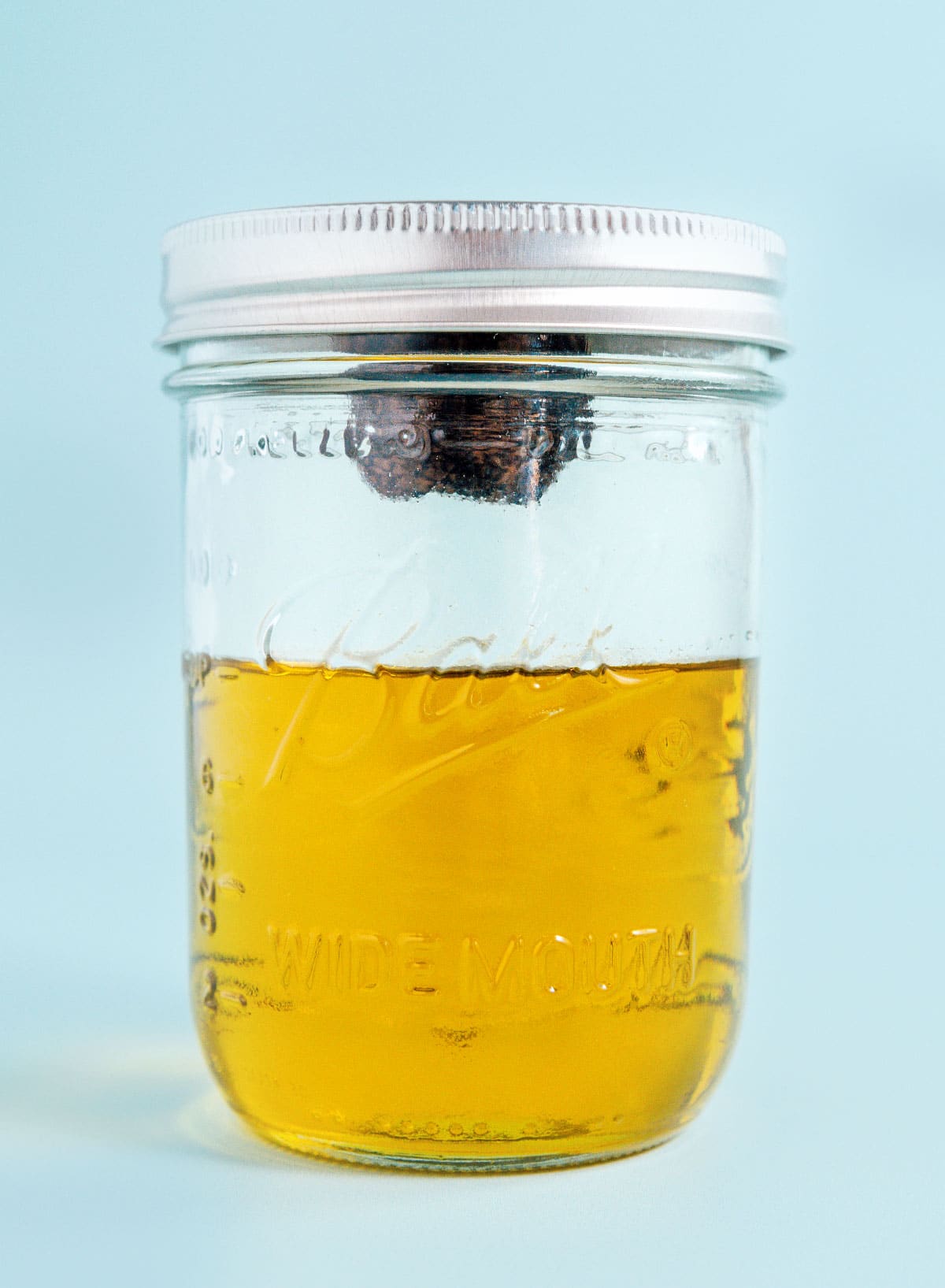
- Pour the oil into the jar, and then twist the lid (with the nailed-on truffle) onto the top of the jar. Ensure that the truffle doesn’t touch the oil.
- Place the jar somewhere cool and dry. After one week, the truffle flavor will be fully infused into the oil. Store for up to 6 months.
Pros
- Long shelf life: Because the truffle and oil flavors fuse together without touching, they both last longer!
- Not degraded: With this method, the delicate truffle flavors aren’t degraded by heat, so you can use the truffles later to add to risotto, to make truffle butter, and more.
Cons
- Long infusion time: This method takes up to a week to fully infuse, so you can’t enjoy it for a while.

Method 3: Cold Steep (Grade B)
- Place the oil in a clean mason jar (or any glass jar), and then add the shaved truffle.
- Let steep for one week, and then strain. Store for up to one month.
Pros
- Not degraded: With this method, the truffles aren’t degraded by the heat.
- Easy method: Since no cooking (or jar assembling) is required, this is a simple steeping method.
Cons
- Long infusion time: This steeping method takes one week to infuse.
- Short shelf life: With a one month shelf life, this method does not last as long as the others. The oil will expire sooner because the truffles are in the oil.
are truffles mushrooms?
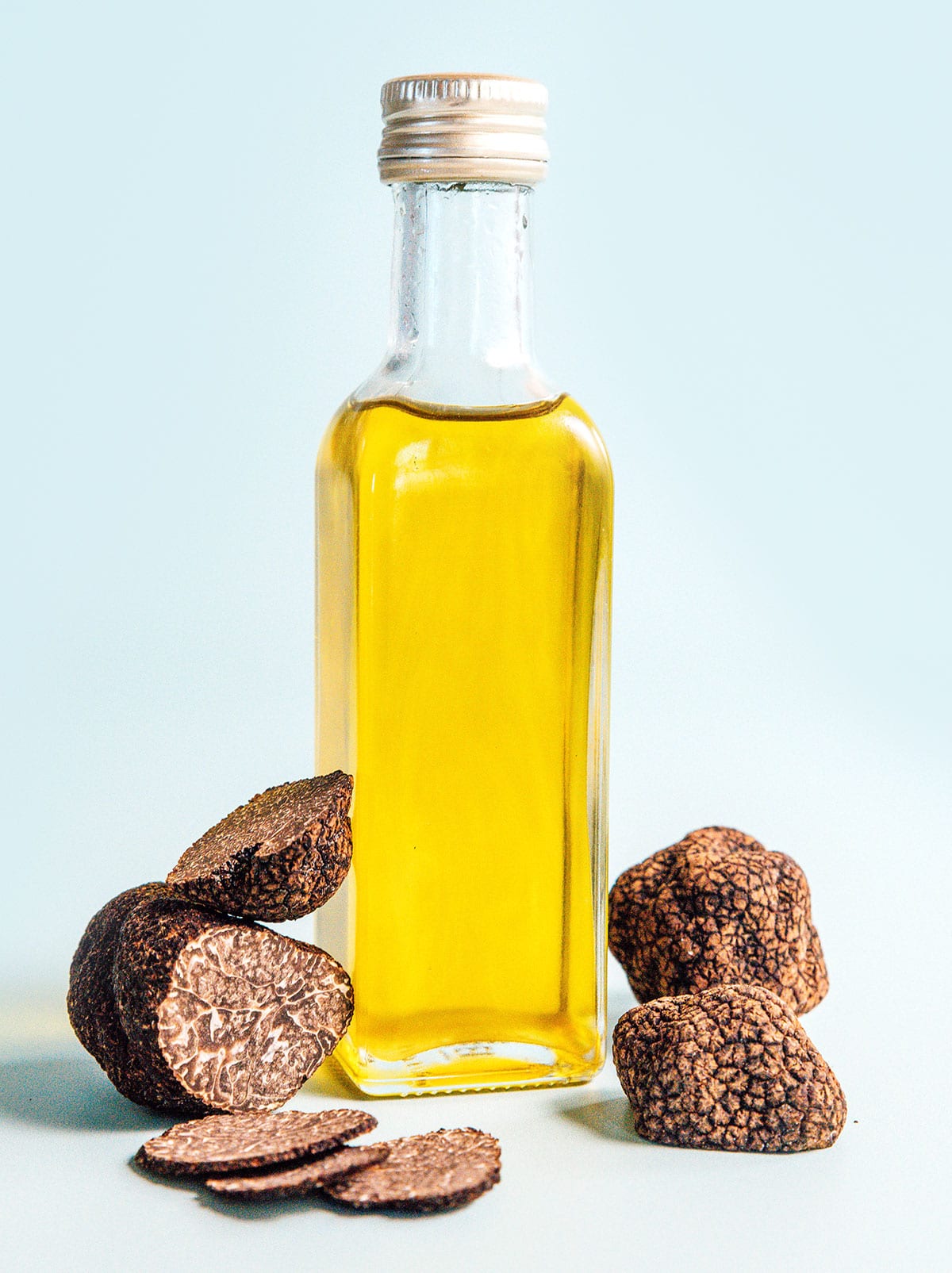
Truffles are rigid, textured, ball-shaped delicacies that grow underground. They’re much like mushrooms in that they’re edible fungi. What makes them different, however, is their specific growing conditions and the fact that growing, harvesting, storing, and even finding them is much trickier than with mushrooms.
They take around 7 years to grow and need very specific conditions to do so (particular soil and moisture). This makes farming them unreliable, so most truffles are instead just found in the wild leading to their expensive price tag.
Here’s the funny part – humans are pretty terrible at finding truffles, so this is where pigs come in. Yep, pigs are used in harvesting, as they naturally search out truffles and are able to find them hidden underground, all thanks to their sense of smell. Read all about what truffles are here!
now, let’s use the truffle oil
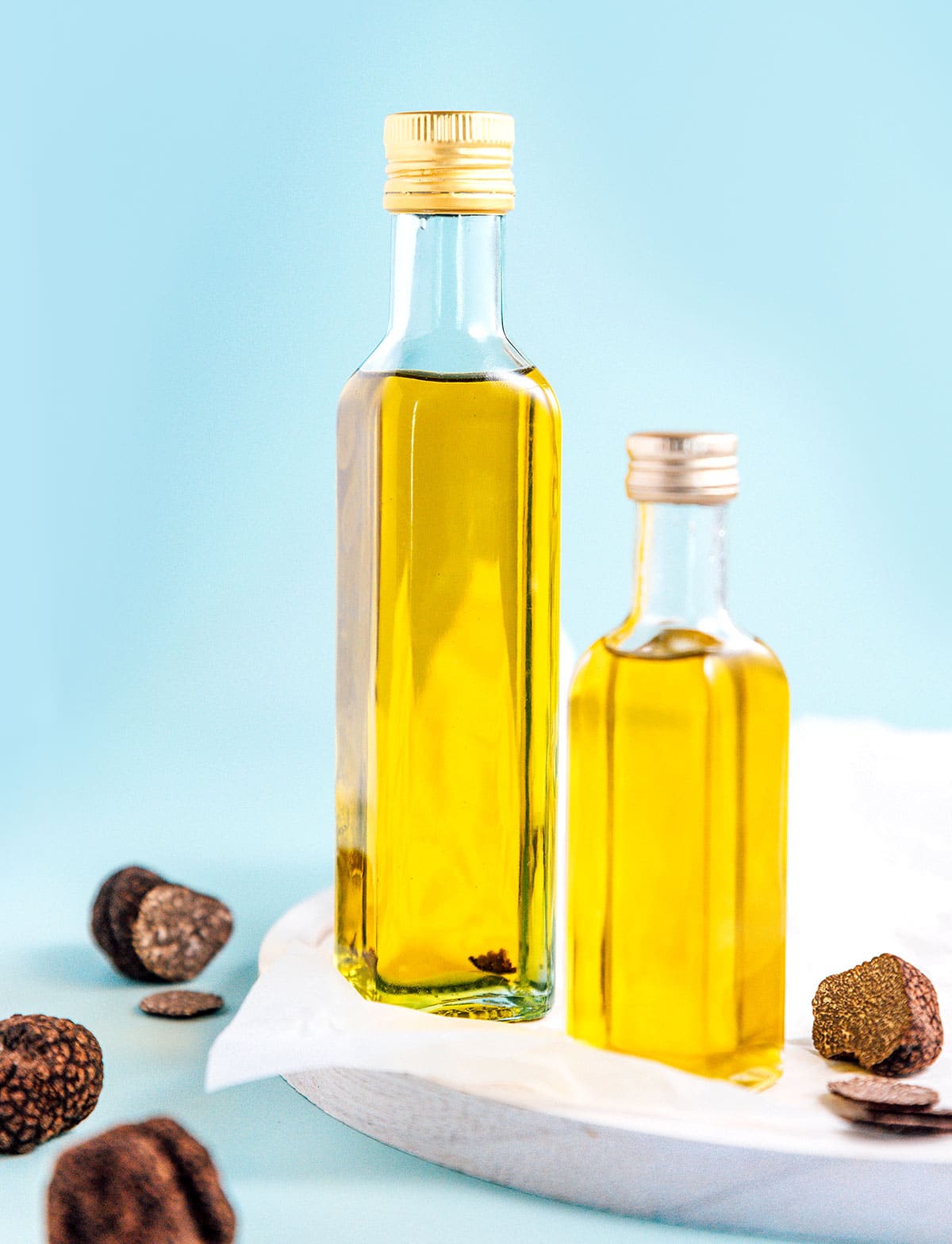
This oil works great on vegetables and garlic bread or in pasta, soup, and more. Drizzle it over your mushroom truffle pizza for a real pop of flavor!

How To Make Truffle Oil (3 Methods)

Ingredients
- ½ cup good quality olive oil, 120 mL
- 1 Tbsp shaved black truffle
Instructions
1. Hot Steep Method (A)
- Heat oil over low heat until it reaches about 130°F (54°C). Remove from heat and add shaved truffle. Cover and let cool completely. Strain and store in a clean, airtight jar for up to 3 months.

2. Hover Method (B+)
- Punch a small nail through the lid of a mason jar. Pierce a truffle (or piece of a truffle) onto the nail. Pour oil into the jar, then twist the lid with the nailed on truffle onto the jar, ensuring the truffle doesn't touch the oil. Place somewhere cool and dry, letting truffle flavor infuse into oil for a week. Store for up to 6 months.

3. Cold Steep Method (B)
- Place oil in a clean mason jar (or glass jar), then add shaved truffle. Let steep for 1 week, then strain out truffle. Store for up to 1 month.

Notes
Nutrition
Nutrition information calculated by Sarah Bond, degreed nutritionist.
 did you make this?Leave a comment below and tag @liveeatlearn on social media! I love seeing what you’ve made!



I love the jar and nail idea!.Haven`T tried this myself,Iam not a truffel fan,but it gives me ideas;like garlic,maybe herbs and spices in a kind of suspended bed(if you know what I mean).Any ideas on how to do a butter oil this way?And lastly,is the idea that less is more!Thanks…to one and all,be safe and happy….Alexandriaxxx
A butter truffle recipe is actually coming to the site tomorrow! Less is definitely more when it comes to truffle 😀
What do you do with the truffles after you’ve made the oil?
You can shave them over pasta or pizza!
Hello:
I want to make 2 large batches using the hover method (one with black & one with white truffle). I have 2 black truffles double wrapped & vacuum sealed in my fridge. The white arrives today. Obviously both extremely expensive.
You suggest a “good quality” oil for these recipe’s. Should the oil be mild to infuse the flavor better? What is the maximum amount of oil I can use at one time and how long should it be left for maximum flavor?
Hi Sarah! So exciting! Yes, aim for a low flavor oil if you want that truffle flavor to really shine. You could get away with 1 cup of oil per truffle, and it should have infused after about 1 week (up to 6 months).
Hi Sarah:
Sarah Vasques again with another question. The black truffles I used were huge – 1 I cut into 3 pieces. Th other I left whole.
My husband brought up a the point that because the truffle is a “live organism” it may spoil before the oil is infused. Even
Will the cut truffle “pieces” go moldy before the oil is infused enough?
I would like to send you pictures of their size if I may, But I cannot send attachments here.
As long as they’re kept dry and cool, they shouldn’t go moldy very quickly! And by suspending them over the oil we’re ensuring air can flow around them, which should also prevent mold.
I would like to know which method works best?
The hot steep method extracts the most flavor! But all have their pros and cons 🙂
What if on hover method it hovered for a week and a half and mold grew on truffle. Can I still use the oil as it looks like white film on edges at top of oil.
Any suggestions to save the oil.
Oh shoot! You can probably still use the oil if you don’t see any evidence on mold on it.