

This post contains affiliate links.

Bulgur pilaf is one of those dishes I wish more people knew about. It’s fast, it’s deeply flavorful, and it has this nutty, slightly chewy texture that makes it feel more substantial than rice. Think Mediterranean comfort food. Ready in 25 minutes, naturally vegan, and honestly one of the best things you can make on a weeknight.
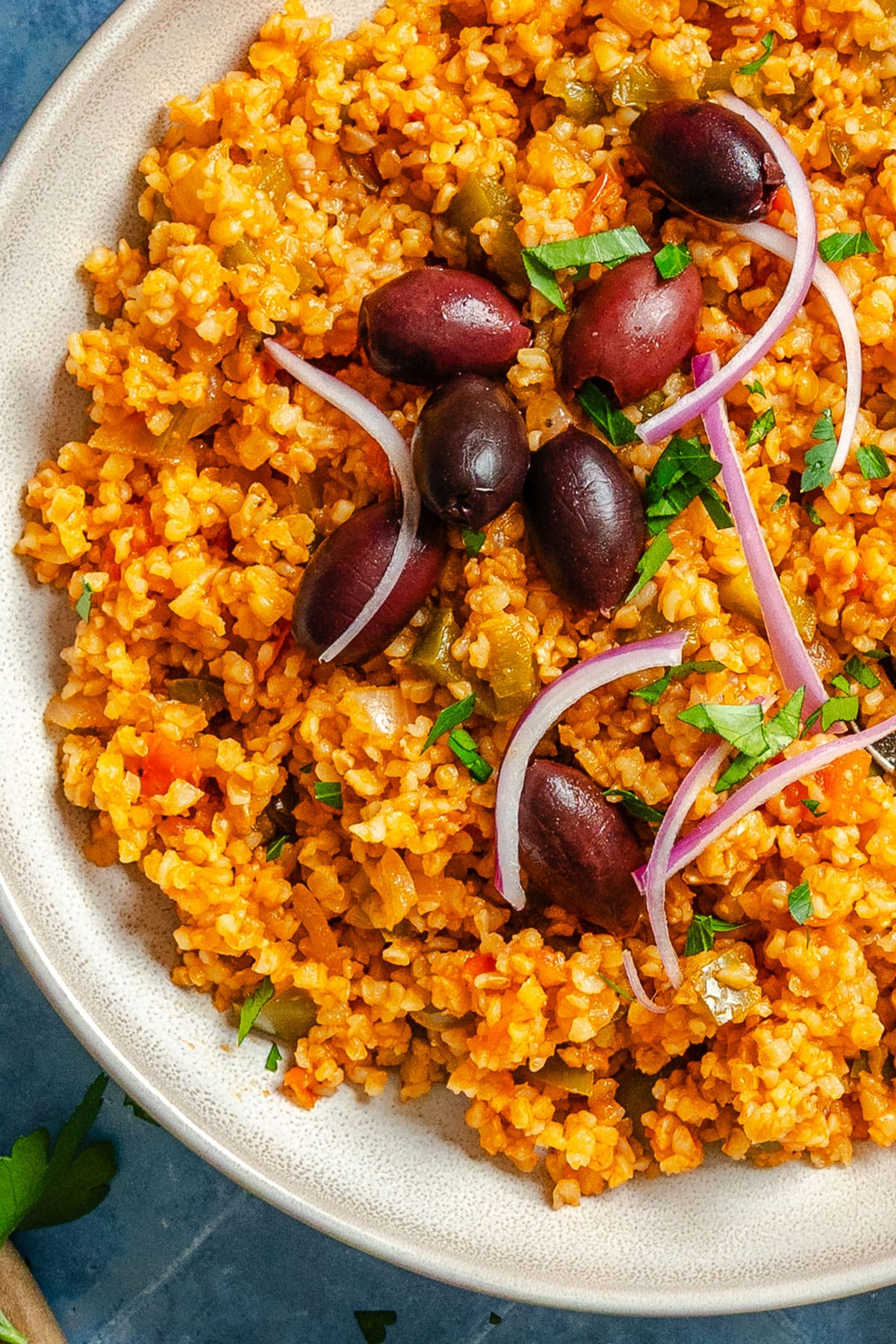
 save this recipe!
Bulgur is one of those grains that doesn’t get nearly enough attention in Western cooking, which surprised me when I moved to the Netherlands and started cooking my way through Middle Eastern and Mediterranean cuisines more seriously.
It’s a staple across Turkey, Lebanon, and Syria for good reason: it cooks faster than rice, absorbs flavor beautifully, and has a nutty, slightly chewy texture that holds up whether you serve it warm or at room temperature.
This pilaf is modeled on the Turkish and Lebanese versions I kept encountering, where the grain is cooked directly in a seasoned tomato base rather than plain water, which is the detail that makes it taste like something rather than just a side dish.
Reader rating
“Great source of information! I’m from Cyprus, which is the island in the middle of Lebanon and Anatolia and we make it with tomato too!” —Gursal

types of Pilaf
This bulgur pilaf dish is common in Turkish and Lebanese cuisine. Turks call it bulgur pilav and cook it without a tomato base and sometimes with the addition of vermicelli. The Lebanese call it sayeth and typically make it with a tomato base. This bulgur pilaf is closer to the Lebanese version, with a taste and feel similar to Spanish rice!
Here’s What You’ll Need
Jump down to the recipe card for exact measurements, this is just an overview!
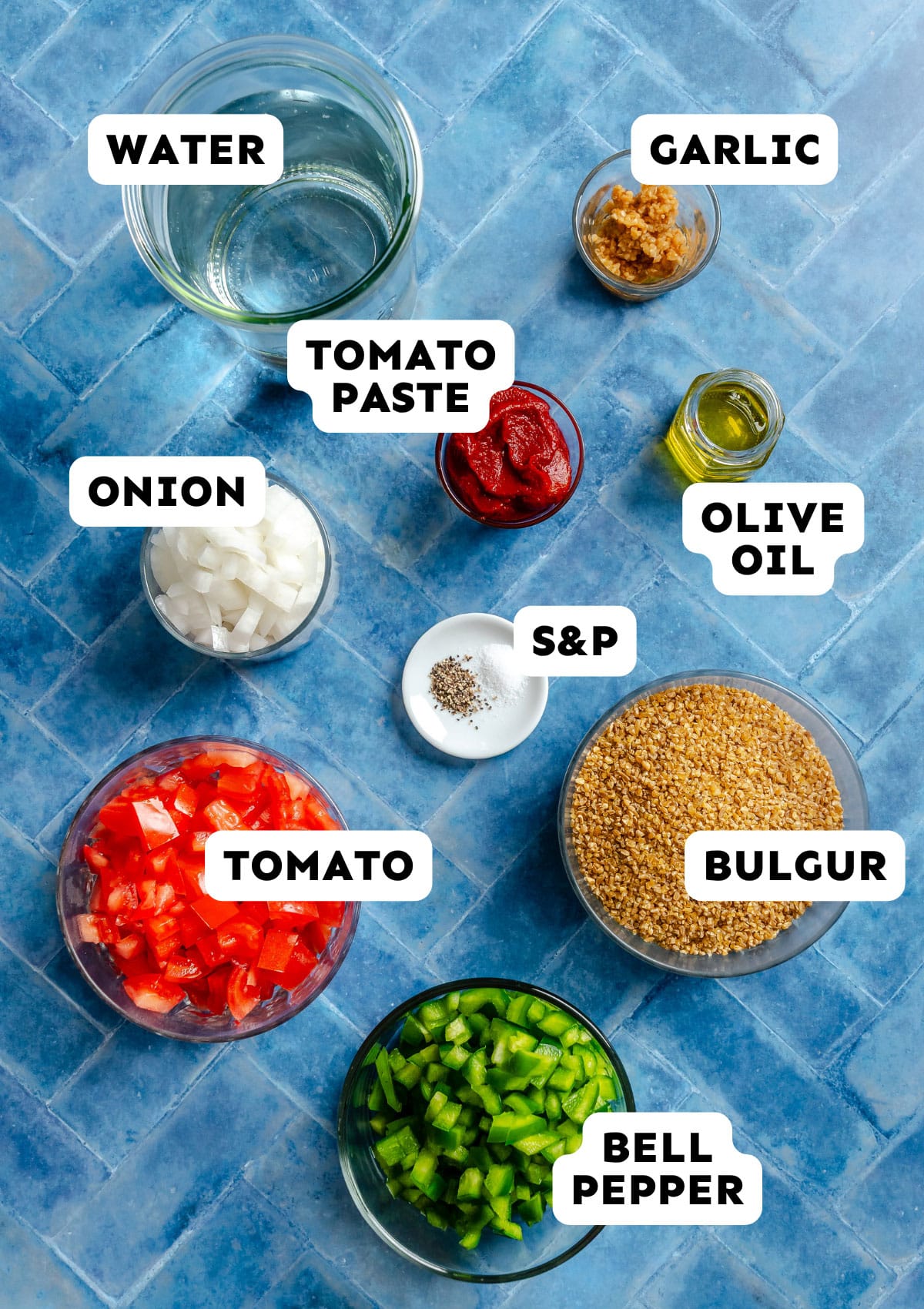
- Bulgur: A whole grain made from cracked, parboiled wheat. Medium or coarse bulgur works best here; fine bulgur cooks too quickly and can turn mushy.
- Tomato paste: Concentrates the tomato flavor and adds a slightly caramelized depth when cooked in the oil for a minute or two before the liquid goes in. Don’t skip this step.
- Roma tomatoes: Meatier and less watery than round tomatoes, which keeps the pilaf from getting too wet.
- Green bell pepper: It needs to soften fully before the bulgur goes in, so don’t rush the initial cook.
- Onion and garlic: The aromatic base that the entire pilaf builds on. White onion is slightly sharper than yellow and works well here against the tomato.
Pilaf variation options
Here are some ideas for switching up your bulgur pilaf. There’s really no messing up this recipe, so experiment with it and add your favorite flavors!
- Add vegetables: The more veggies, the better! You can add broccoli, red and yellow bell peppers, corn, cherry tomatoes, and even black beans!
- Switch the grain: In place of bulgur, you can use rice, couscous, cracked wheat, quinoa, or freekeh.
- Use broth: To add extra flavor, you can use broth instead of water. A nice veggie broth should do the trick!
Mediterranean dishes that pair well with pilaf
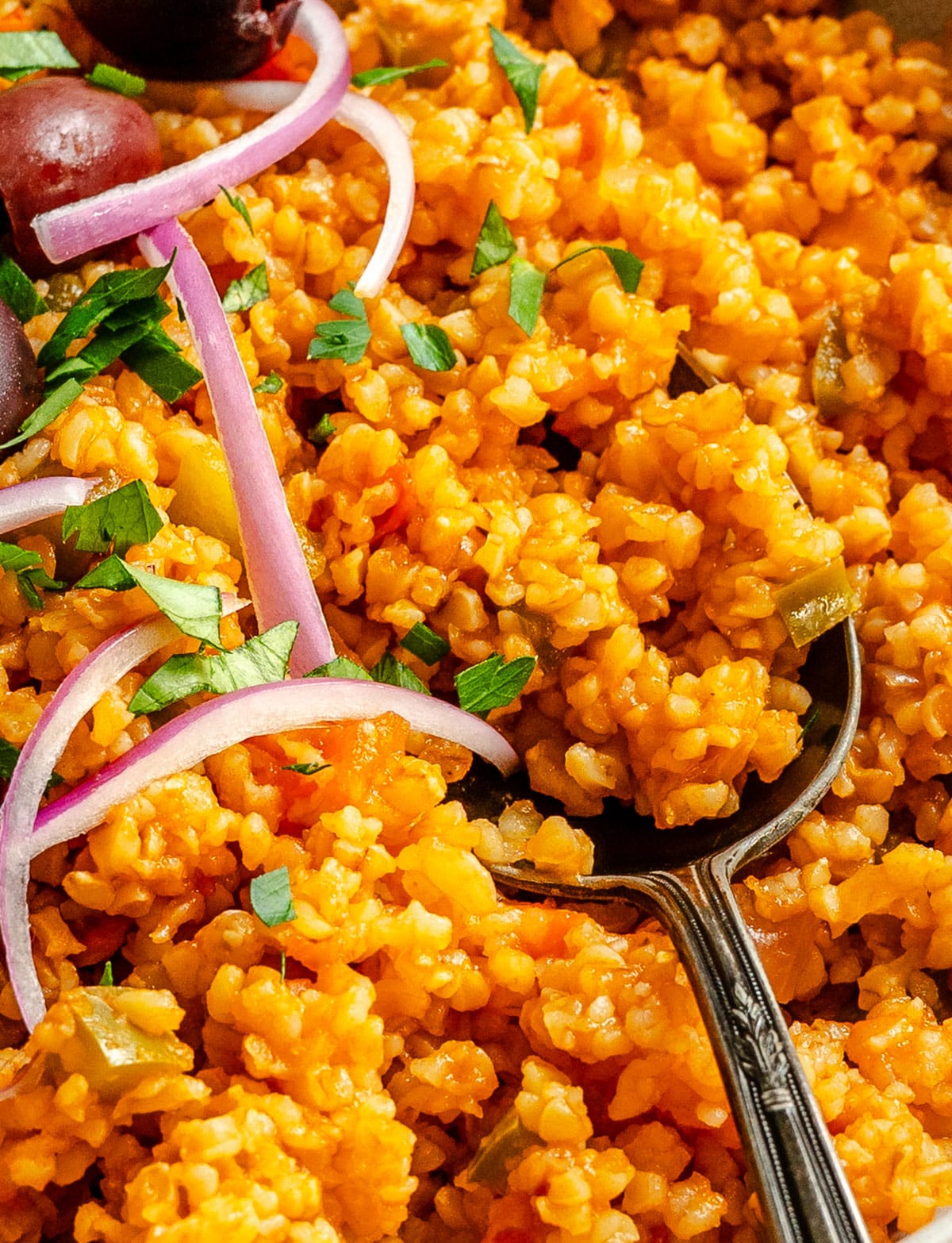
Bulgur pilaf works alongside almost anything Mediterranean or Middle Eastern. Serve it next to roasted chickpea gyros or vegan shawarma as a grain base in place of rice. It pairs naturally with baked falafel and a spoonful of tzatziki on the side!

Easy Tomato Bulgur Pilaf Recipe

Ingredients
- 1 Tbsp olive oil , or butter, 15 mL
- 1 medium white onion, diced, about 1 cup
- 2 cloves garlic, minced
- 1 green bell pepper, diced
- 2 roma tomatoes, diced
- 3 Tbsp tomato paste, 40 g
- 1 ½ cups uncooked bulgur, 340 g
- 2 ½ cups water, 590 mL
- ¼ tsp each salt and pepper
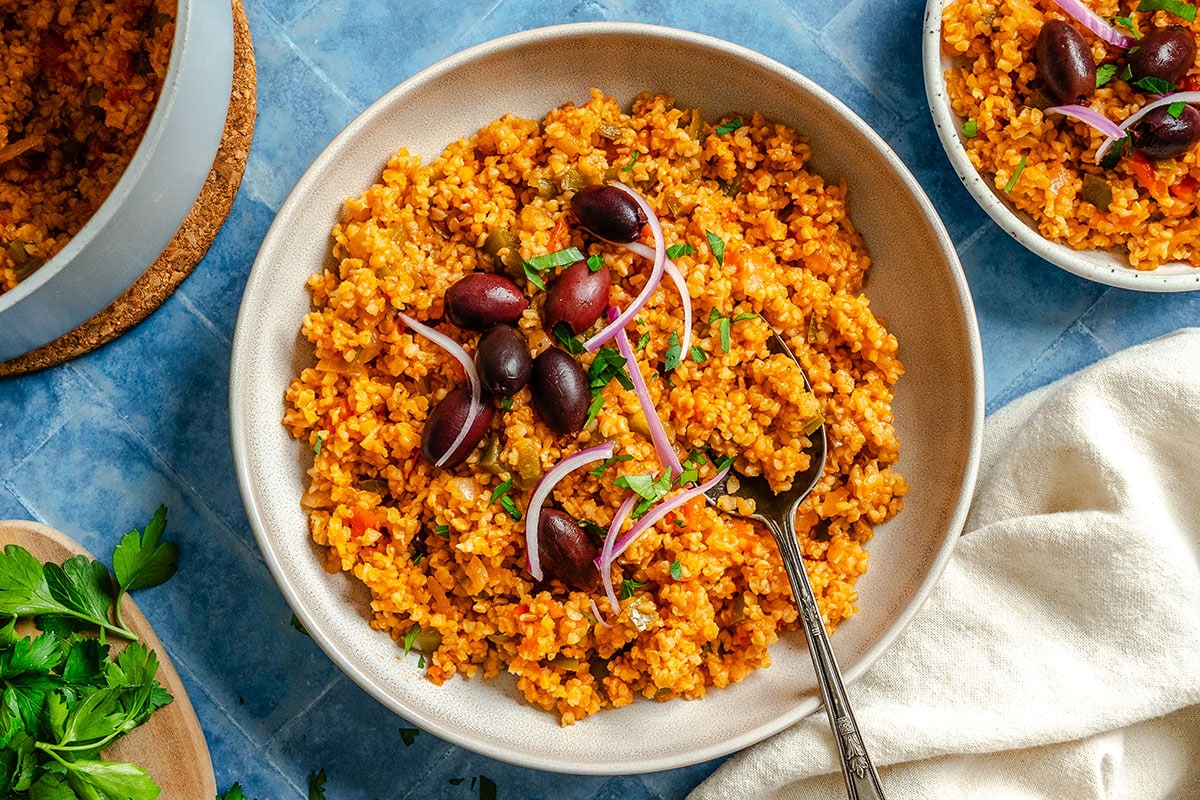
- Serving suggestions: olives, sliced red onion, parsley, slivered almonds, feta cheese
Instructions
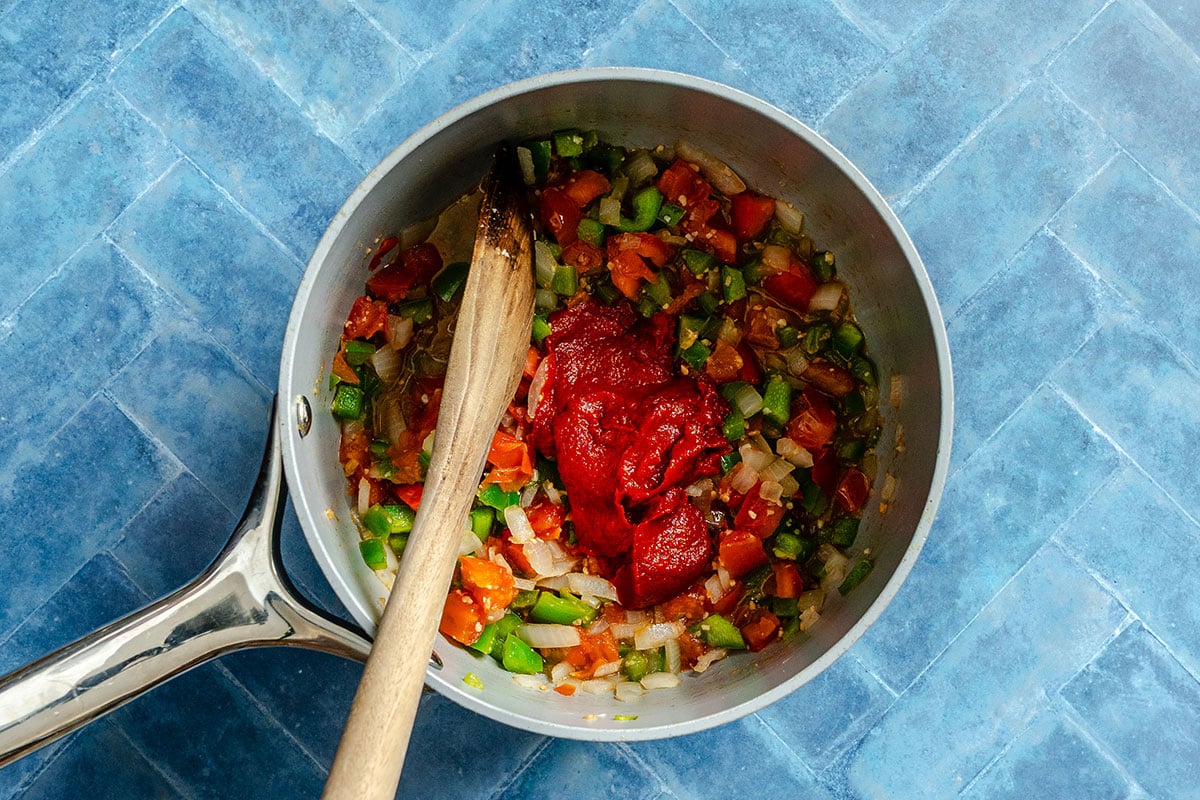
- Base: Heat oil over medium heat in a large saute pan or pot. Add onion, garlic, peppers, and roma tomatoes, cooking until the peppers are soft, about 5 minutes. Add tomato paste and cook for another 2 minutes.

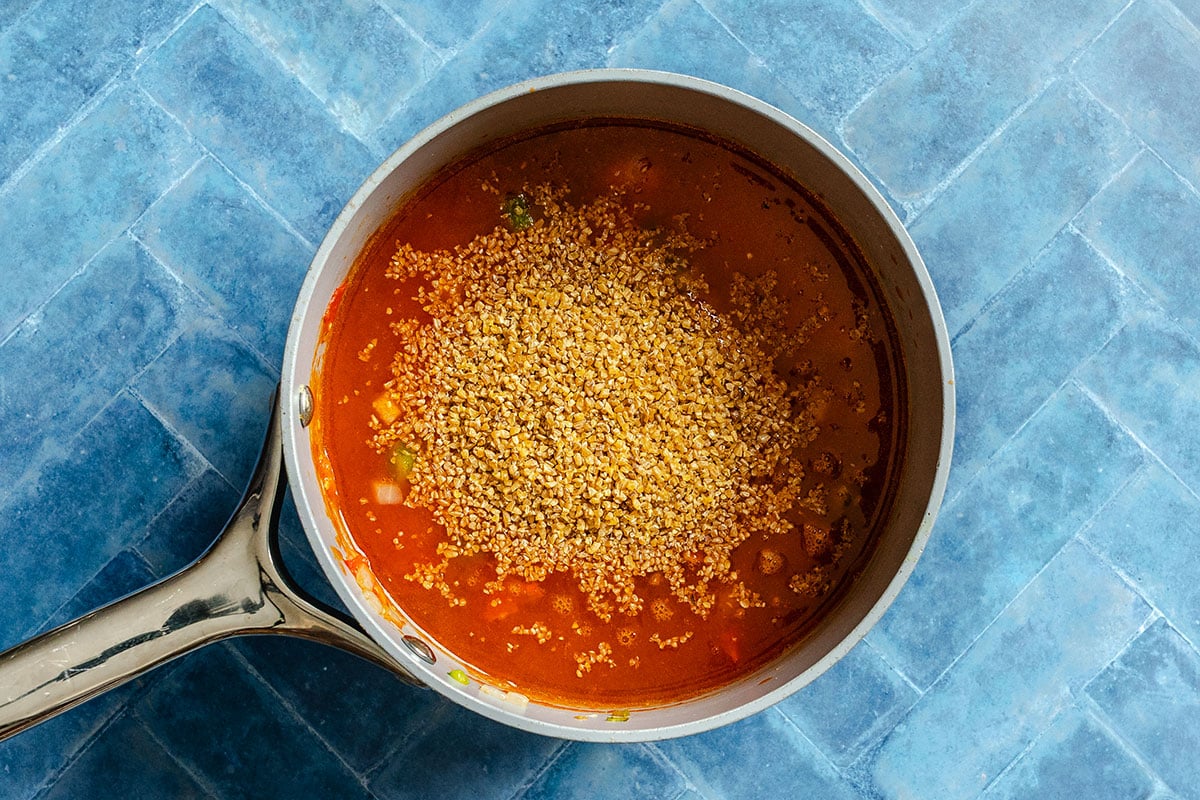
- Bulgur: Add bulgur and water, stir to combine, cover, and let simmer for 15 to 20 minutes until water is absorbed and bulgur is tender (add more water ½ cup at a time if bulgur is still tough). Season with salt and pepper.
- Serve: Warm or cold, optionally topped with olives, sliced red onion, parsley, slivered almonds, or feta cheese.
Notes
Nutrition
Nutrition information calculated by Sarah Bond, degreed nutritionist.
 did you make this?Leave a comment below and tag @liveeatlearn on social media! I love seeing what you’ve made!


Hi you are using wrong type of bulghur to make pilaf. You should use durum wheat big chunky bulghur to get good texture and taste. This one is more like a salad which is called “KISIR” in Turkish.
Thanks for the tip, Marko!
Great source of information! I m from Cyprus, which is the island in the middle of Lebanon and Anatolia and we make it with tomato too 🙂
As Marko said, in the explanation it is written right, but in the photos what you used looks like fine bulgur. You can even just pour boiled water over that and wait. It is the way kisir or tabbouleh is done. But if you boil fine bulgur, it becomes mushy. And with coarse bulgur, that water ratio wont work. You need at least 1,5 water for 1 bulgur. We use 2 for 1 + fresh tomatoes. Also i like bulgur with chopped mushroom or eggplant, cooked or roasted before adding the bulgur 🙂
Wonderful recipe–congrats!! Especially, the flexibility & tips that
are included. Any way you make this will be a BIG winner!! Coarse bulgur with 1/2 broth & 1/2 water works best. Jim. Las Vegas.
Very informative. I would definitely try bulgur pilaf with added vegetables.
Thanks for the recipes
Turks also eat bulgur pilavi with a tomato base (salcali) and use onion and peppers, although the version with vermicelli is also popular. Certain versions may be more popular in certain regions. My husband is Turkish and I lived there for a decade, and we always made it in a covered pot like rice. It’s great with garlic yogurt!
This was really, really good, and we had honestly not used bulgar before. Thanks for expanding our palate.