

This post contains affiliate links.


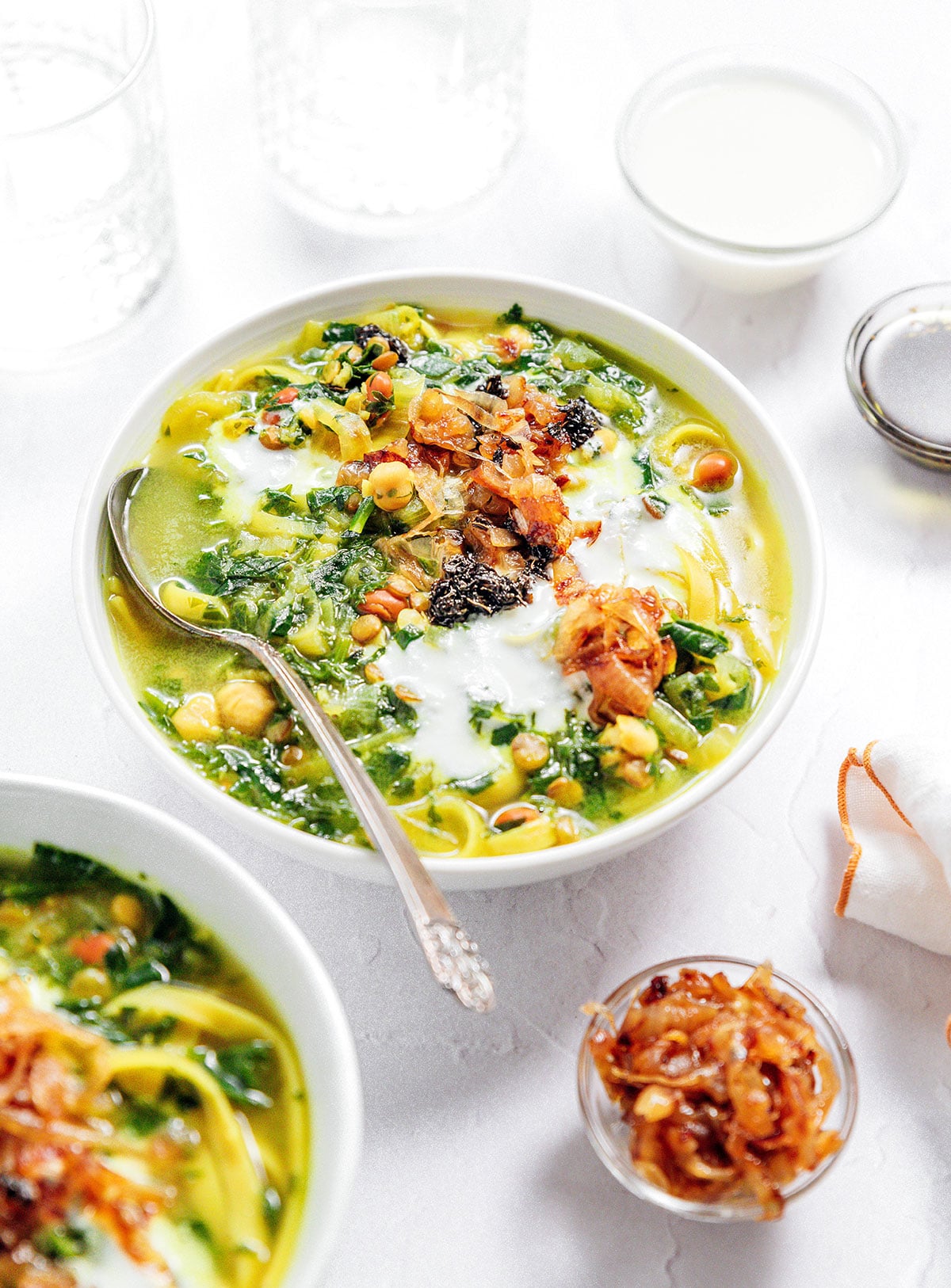
Got an hour and need something soul-warming? Ash reshteh is the perfect fix! This flavor-packed, vegetarian Persian soup is loaded with tender legumes, hearty noodles, fresh herbs, and a tangy kashk (buttermilk-yogurt sauce). Bonus: it’s shockingly simple to make!
 save this recipe!
A Soup That Does It All
Ash reshteh (a.k.a. “Persian noodle soup” or “Persian legume soup”) is an Iranian dish that really lives up to its name. It consists of hearty noodles, tender legumes, and a long list of herbs, which makes sense because “ash” translates to thick soup and “reshteh” to noodle!
But here’s the best part: kashk, a thick, tangy buttermilk-and-yogurt sauce that ties the whole meal together. And don’t let the ingredient list fool you—this is the perfect “use up your herbs” soup, meaning most of the items are likely already in your spice cabinet and pantry.
It’s loaded with protein, fiber, and complex carbs. The buttermilk and yogurt “kashk” add healthy fats, and spinach and fresh herbs help you sneak in some greens. What’s not to love?

Grab These Ingredients
The bulk of ash reshteh is made with canned goods and spices, so double-check your pantry before heading to the store! For exact ingredient measurements, jump to the recipe card—this is only an overview.
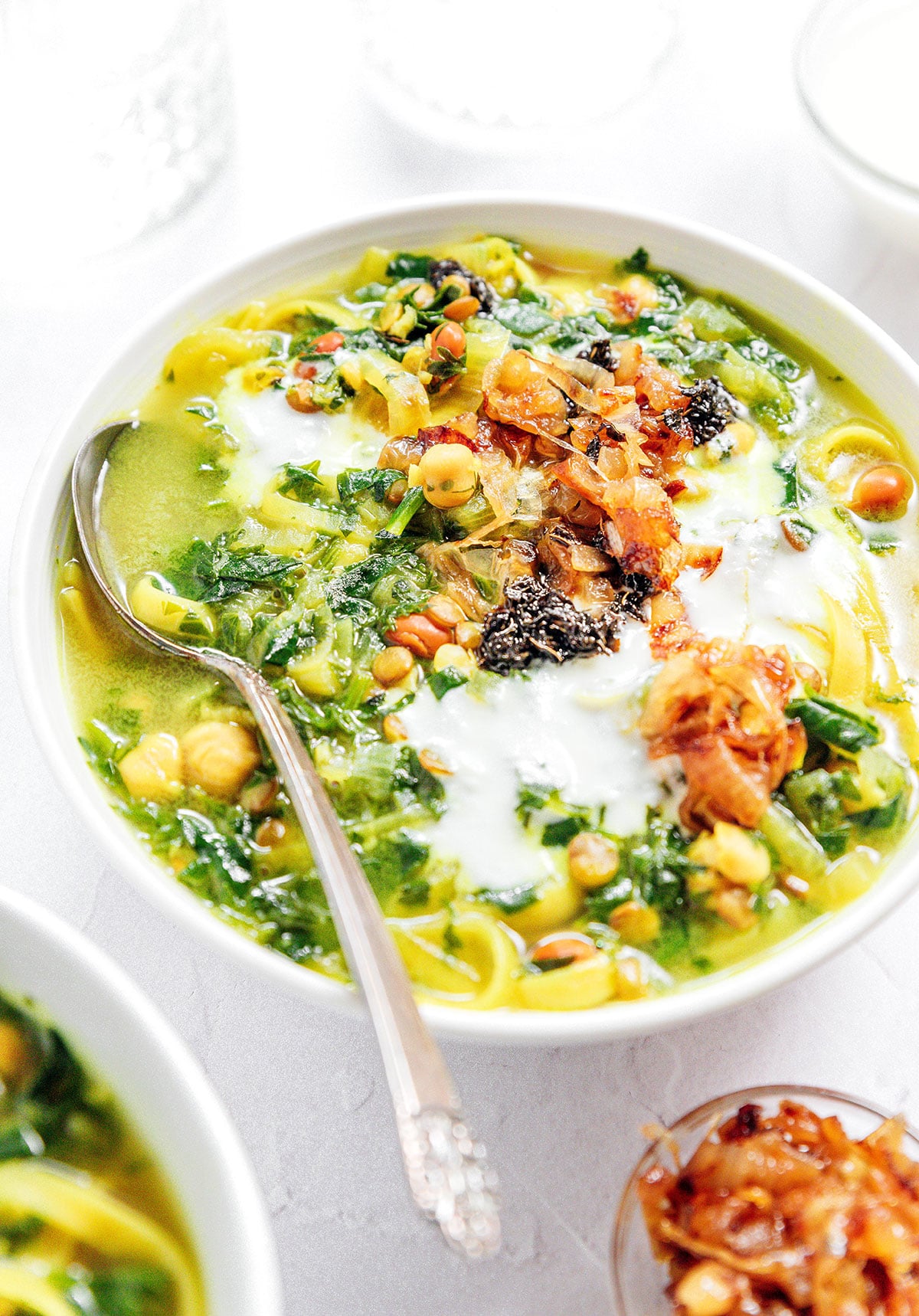
- Soup: The soup portion will be made with a base of green lentils, chickpeas, kidney beans, flat rice noodles, and water. The flavors come to life when we add olive oil, white onions, garlic, lemon juice, spinach, and a world of herbs and seasonings: turmeric, cilantro, parsley, dill, and salt!
- Sauce: Our homemade kashk substitute packs a punch with just 2 simple ingredients (buttermilk and plain yogurt), bringing the perfect balance of tangy richness.
- Mint Oil: Finally, we’ll complete this dish with minted oil created with… you guessed it: mint and oil! This adds a slightly sweet flavor that ties everything together.
Easy Ingredient Swaps
Traditional ash reshteh calls for reshteh noodles and kashk sauce, but if those aren’t in your usual Western grocery store, don’t sweat it!
To replace the reshteh, feel free to use fettuccini or any thin, flat noodle.
No kashk? A simple blend of buttermilk and yogurt mimics the same tangy richness while adding extra creaminess to the soup.
Making Ash Reshteh Is Actually Simple
This vegetarian ash reshteh will require just over an hour to make, but half of that is dedicated to the onions (seriously, even beginners can nail it!). Jump to the recipe card for the full printable instructions.
Step 1: Caramelize The Onions
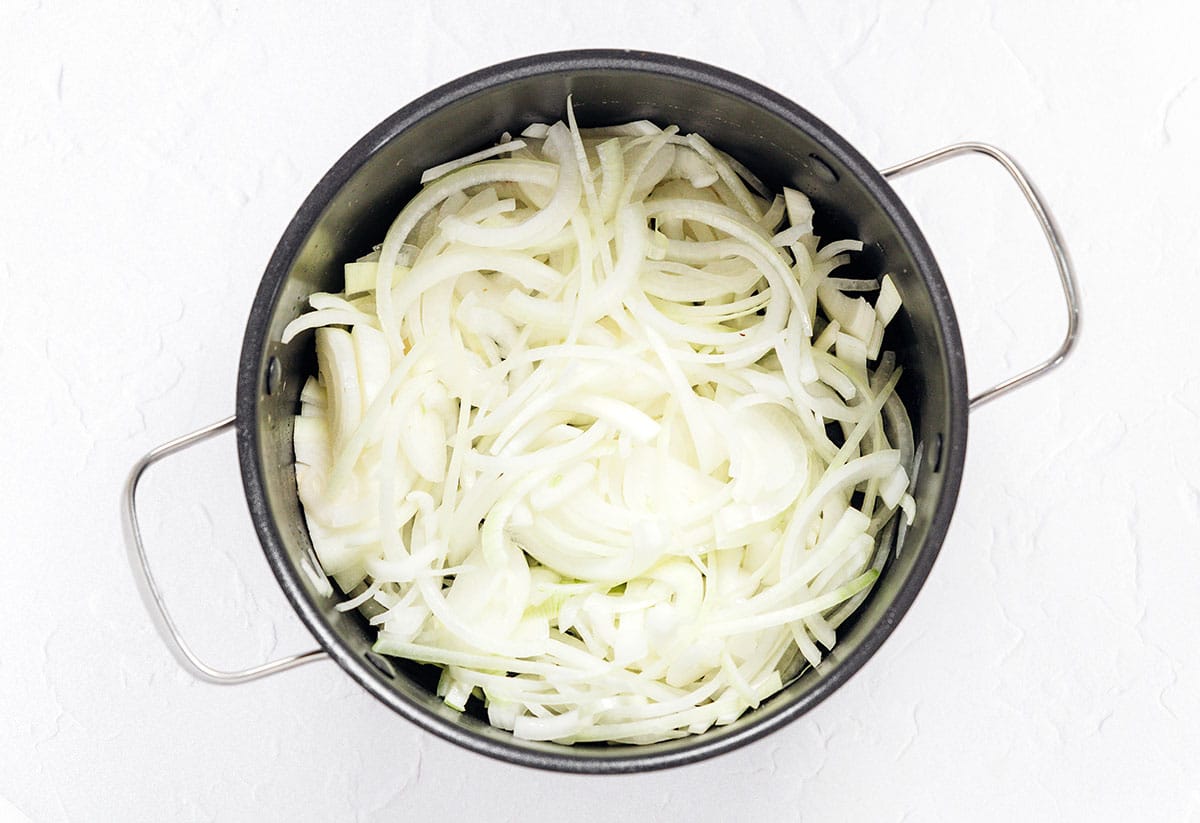
Heat the oil in a large pot over medium heat. Add the onions and cook, stirring often, until they caramelize (this should take about 20-30 minutes). When finished, remove half of the onions and reserve them for the topping.
Step 2: Create The Flavor Base
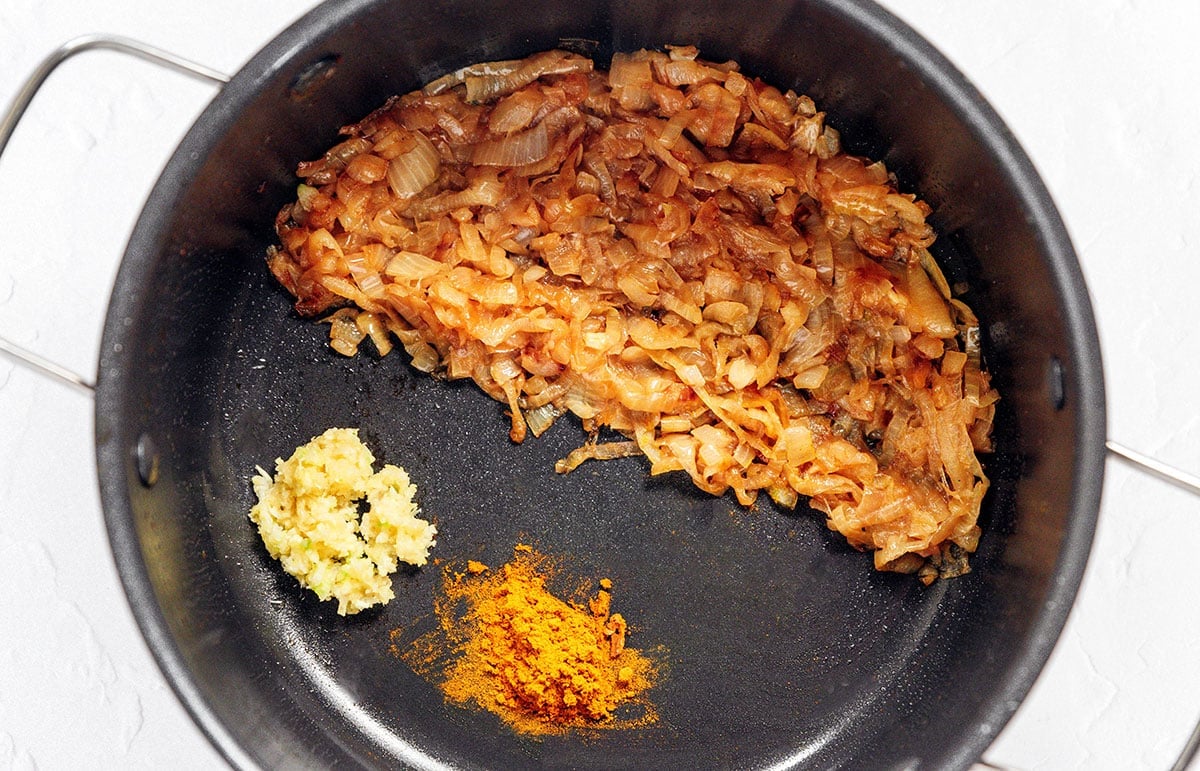
Add the garlic and turmeric to the pan with half of the onions. Cook until the garlic is soft and fragrant.
Step 3: Prepare The Lentils
Add the lentils and water to the pot. Cover and cook for 20 minutes.
Step 4: Cook Everything Together
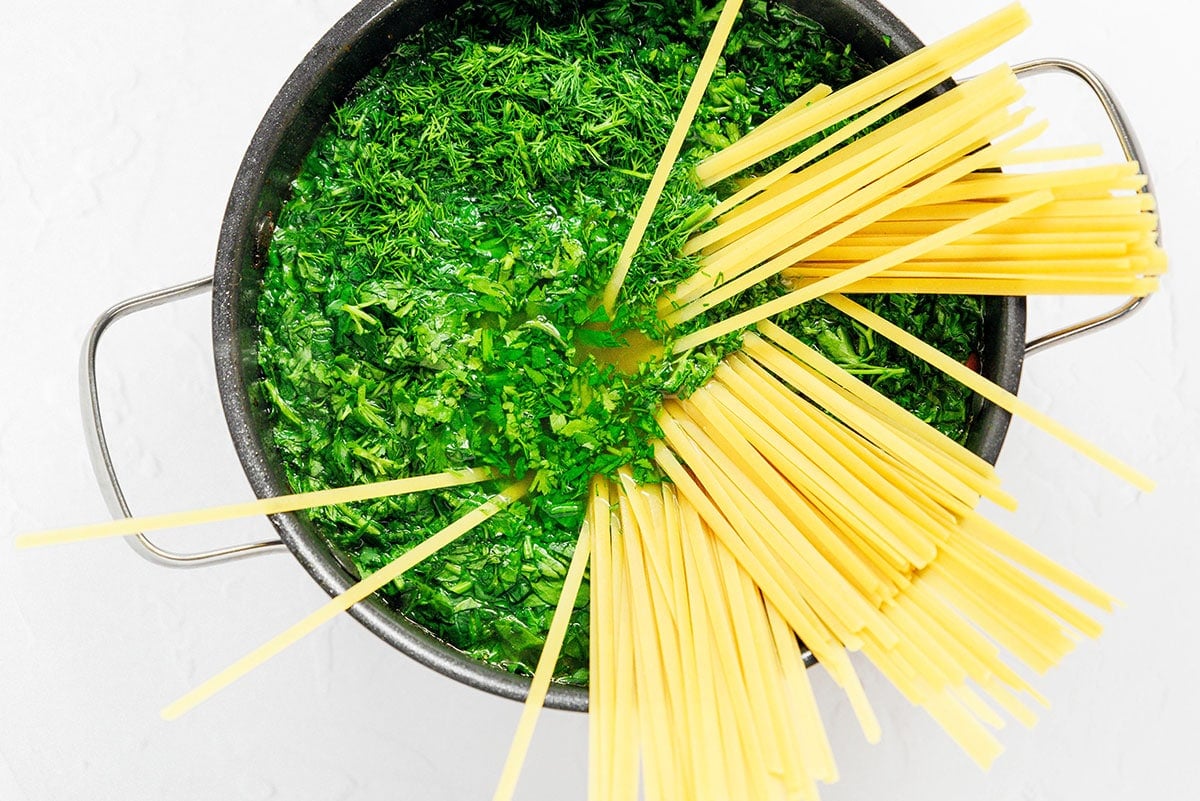
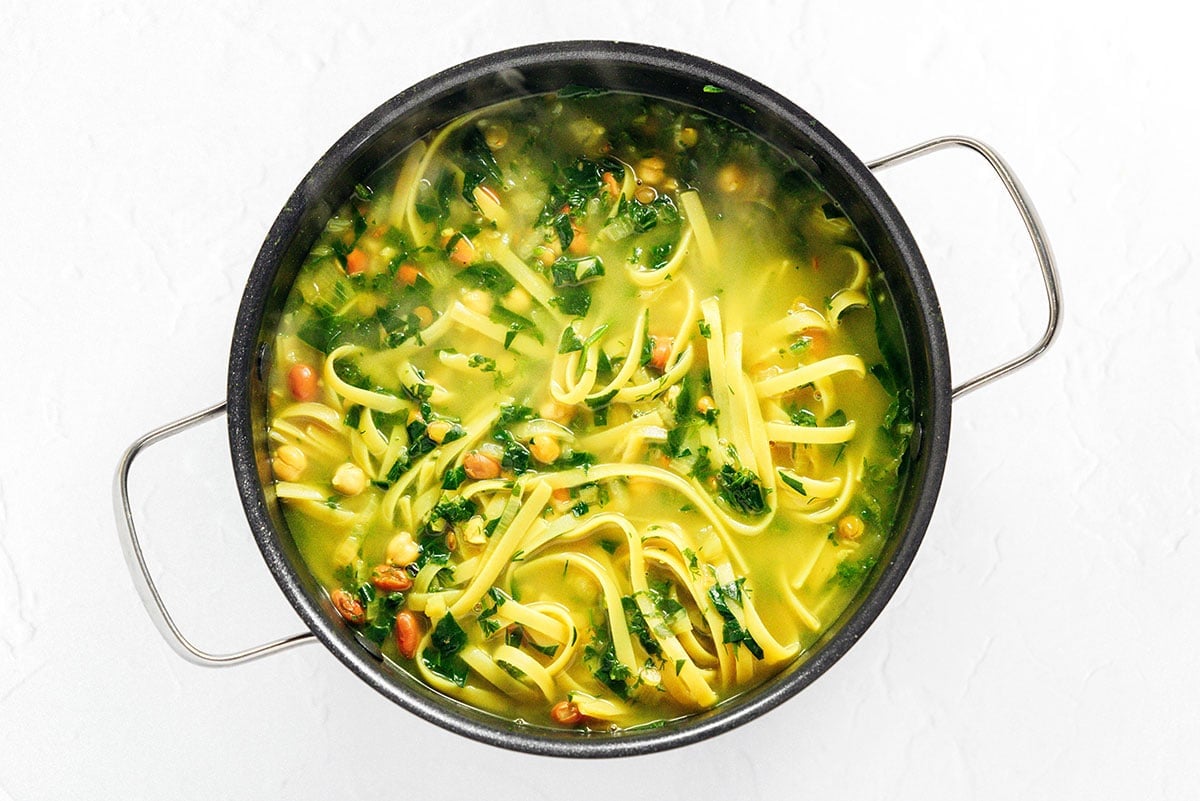
Next, add the chickpeas, kidney beans, noodles, spinach, and all of the herbs to the pot. Cover and cook until the noodles are tender. When finished, add the lemon juice and salt. Taste and add more salt as needed.
Step 5: Mix The Kashk
While everything cooks, combine the buttermilk and yogurt in a bowl.
Step 6: Prepare The Minted Oil
Heat the oil in a small pan over medium heat. Add mint and cook for about 30 seconds.
Step 7: Assemble The Dish
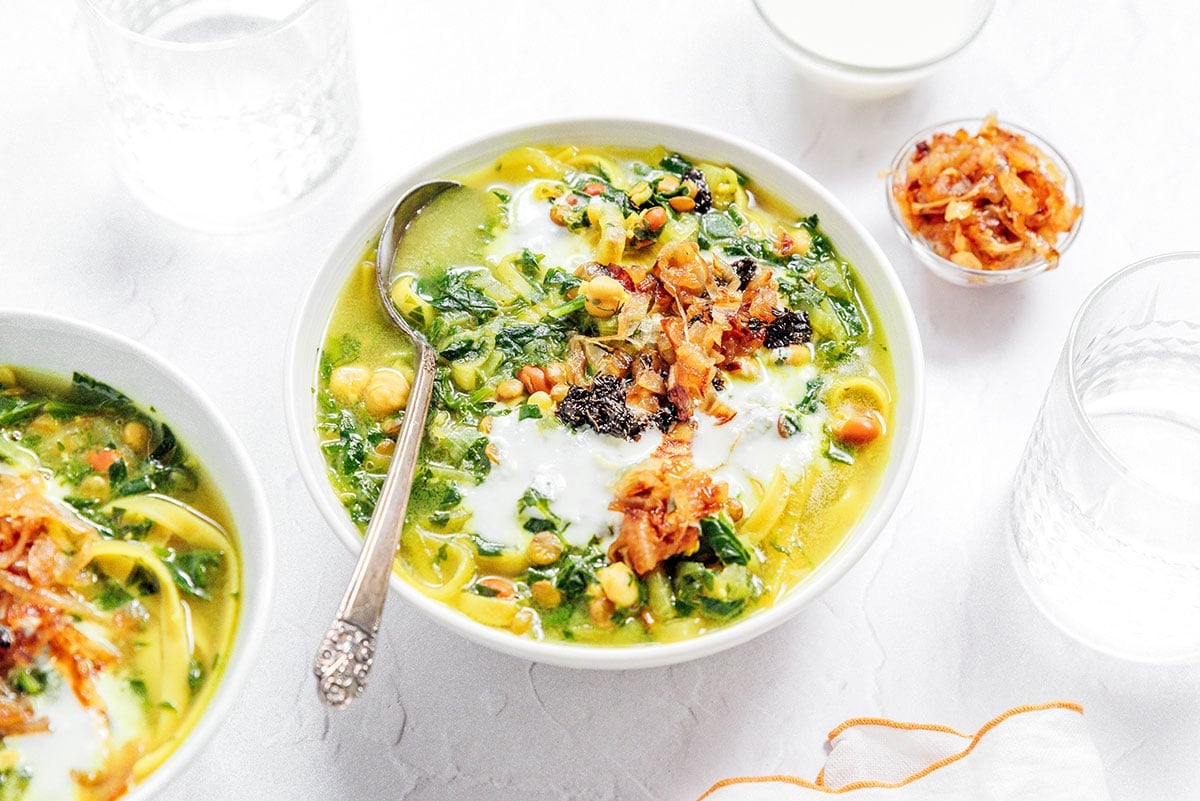
Finally, ladle your ash reshteh into serving bowls and top with the reserved caramelized onions, homemade kashk, and minted oil.

Plays Well With
Ash reshteh is already a complete meal on its own, but if you want to round out the experience, these pairings will take your dinner to the next level.
- Pressed Eggplant Sandwich: You can never go wrong with a soup and sandwich combo, especially when it’s loaded with pesto!
- Avocado Sandwich: This sandwich keeps it light, fresh, and healthy.
- Curried Melon Salad: For something different, this refreshing yet flavor-packed melon salad is always a good choice!

How To Make Ash Reshteh (Persian Noodle Soup)

Ingredients
Ash Reshteh (the soup)
- 2 Tbsp olive oil, 30 mL
- 2 large white onions, finely sliced
- 4 cloves garlic, minced
- 1 tsp turmeric
- ½ cup green lentils, 88 g
- 10 cups water, 2.3 L
- 1 15-oz can chickpeas, drained, 425 g
- 1 15-oz can kidney beans, drained, can sub pinto beans, 425 g
- 8 oz uncooked flat noodles, like fettuccine or reshteh, 226 g
- 5 oz fresh spinach, finely chopped, 141 g
- 1 cup fresh cilantro, finely chopped, 20 g
- 1 cup fresh parsley, finely chopped, 20 g
- ¼ cup fresh dill, finely chopped, 5 g
- 2 Tbsp lemon juice, 30 mL
- ¼ tsp salt
Kashk (the sauce)
- 1 cup buttermilk, 226 mL
- 1 cup plain yogurt, 220 g
Minted Oil
- 2 Tbsp olive oil, 30 mL
- 2 Tbsp dried mint
Instructions
- Caramelize Onions: Heat oil in a large pot or pan over medium heat. Add onions and cook, stirring often, until they turn brown and caramelize, about 20 to 30 minutes. If onions begin to crisp at the edges, reduce heat – we want them soft and delicious! When finished, remove half of the onions and reserve them for the topping.

- Flavor Base: Add garlic and turmeric to the pan with the remaining onions. Cook until garlic is soft and fragrant, about 2 minutes.

- Cook Lentils: Add the lentils and water. Cover and cook for 20 minutes.
- Cook Everything: Add chickpeas, kidney beans, noodles, spinach, and all herbs. Cover and cook until noodles are tender. When finished, add lemon juice and salt. Taste and add more salt as needed.

- Kashk: While everything cooks, stir together buttermilk and yogurt.
- Minted Oil: Heat oil in a small pan over medium heat. Add mint and cook for about 30 seconds.
- Assemble: Ladle soup into serving bowls, topping with reserved caramelized onions, kashk, and minted oil.
Notes
Nutrition
Nutrition information calculated by Sarah Bond, degreed nutritionist.
 did you make this?Leave a comment below and tag @liveeatlearn on social media! I love seeing what you’ve made!






Must I use dry beans or can I use canned? If I use canned , I guess I should add them after the lentils & noodles? PLEASE ANSWER – I can’t wait to try this!
We actually use canned kidney beans and chickpeas in this recipe, so follow the recipe as listed! The only dry legume are the lentils, which can be added with the canned beans if you choose to use canned lentils. Enjoy! 😀
Do you think this could be made vegan? Maybe with cashew milk yogurt and lemon juice or apple cider vinegar to make it zing?
Yes, I think that would be a great!