

This post contains affiliate links.
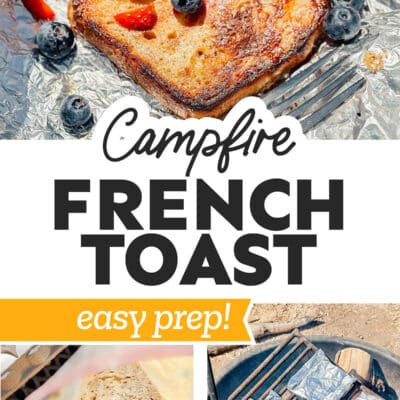
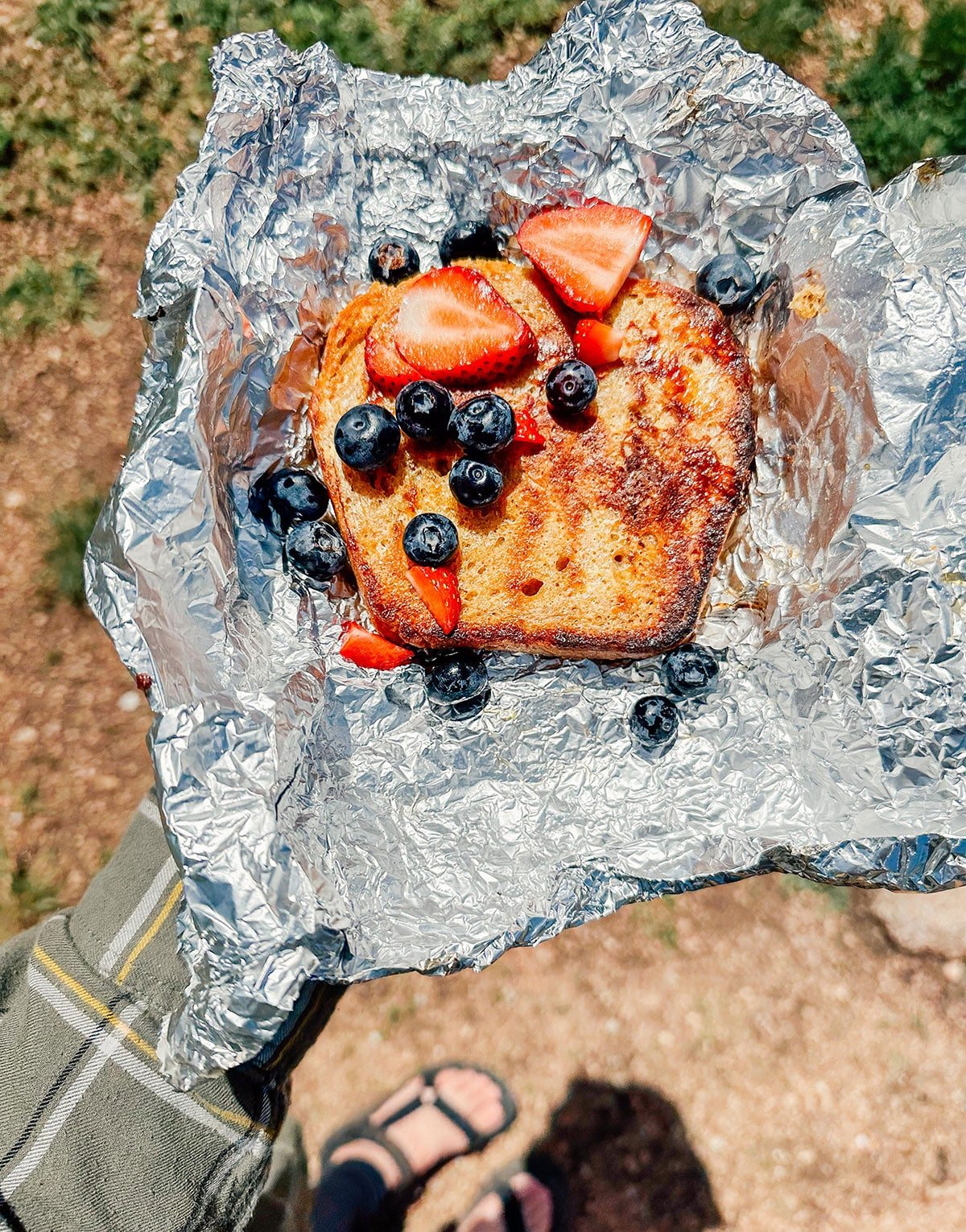
The next time you go camping and need a tasty breakfast, grab the handful of ingredients needed for this campfire French toast. Cooked over the fire in just a foil pack, it’s a delicious camp breakfast idea that requires almost no cleanup.
 save this recipe!
If you’re not a morning person and aren’t super into camping, then you need this French toast recipe to help make the event more… fun! Not only will it get you excited to pop out of the tent but it’s:
- Made with simple ingredients like bread, eggs, and milk
- Has minimal cleanup since the coating is mixed in a plastic bag and the French toast is cooked in foil – you don’t even need a spoon to mix
- Can be customized with your favorite toppings
So let’s make camp mornings more enjoyable together and get cooking!
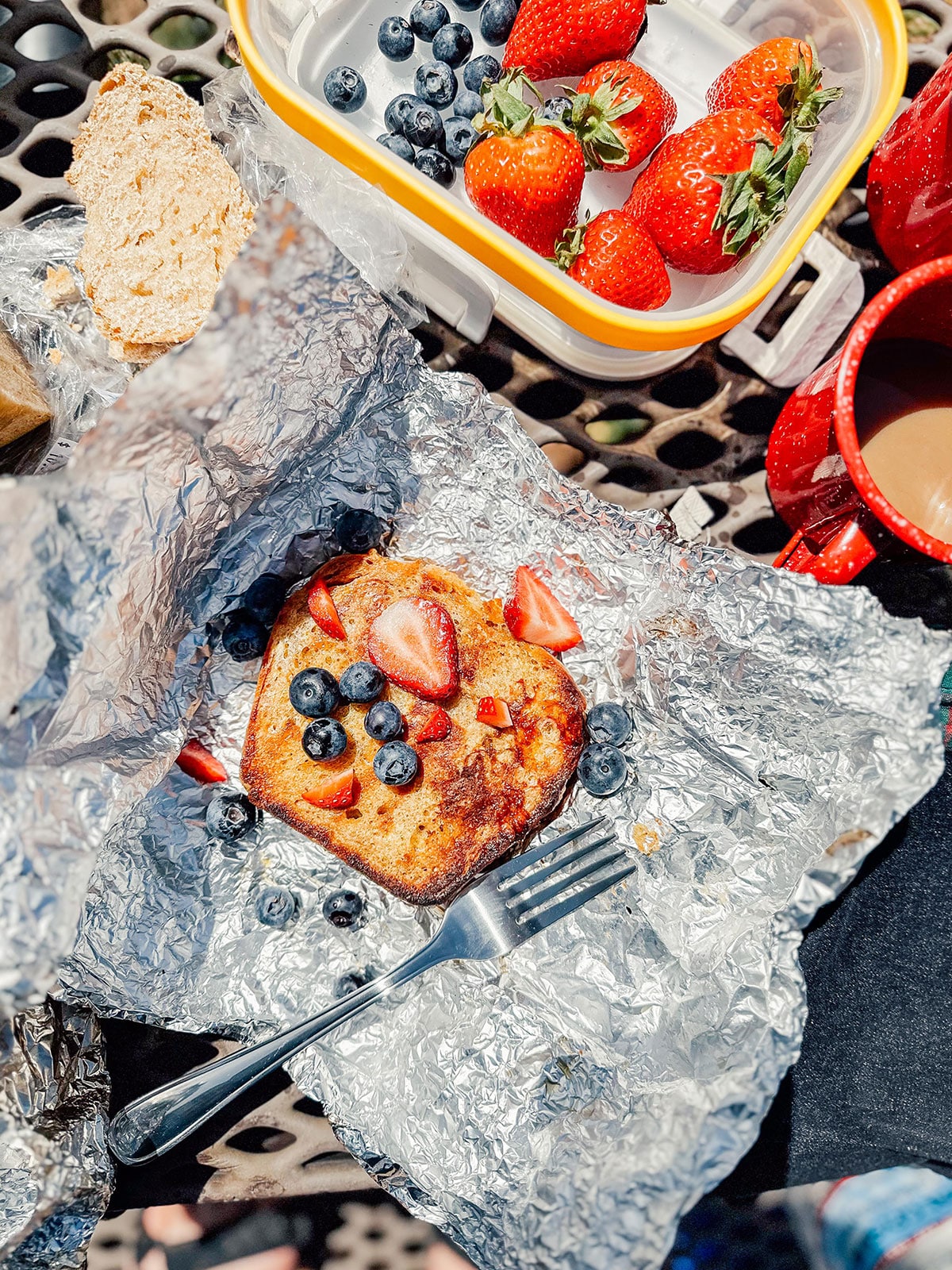
Here’s What You’ll Need
The ingredients for this campfire French toast are pretty minimal, and all travel well in a cooler! Jump to the recipe card for exact measurements!
- Eggs: The key ingredient in French toast is eggs, which provide richness and help bind the other ingredients together, creating a creamy and luscious texture when cooked. (For an eggless version, try our vegan French toast!)
- Milk: Adds moisture and creaminess to the egg mixture, resulting in a soft and tender French toast. Feel free to use dairy-free milk here.
- Sugar: Sweetens the French toast, balancing out the flavors and making it more delectable.
- Vanilla Extract: Infuses the French toast with a warm and inviting aroma, enhancing the overall flavor profile.
- Bread: Serves as the base for the French toast, absorbing the egg mixture and transforming it into a golden and toasty delight. Use whatever bread you like.
- Oil or Cooking Spray: Grease the foil to prevent the French toast from sticking and ensure easy cooking and serving.
Which bread?
I used sourdough bread here, which is sturdy and holds up well on the go. Other popular, hearty options are whole wheat, cinnamon raisin, and more. When making French toast at home, I like a softer bread like brioche, but camping requires all around a more sturdy group of ingredients.
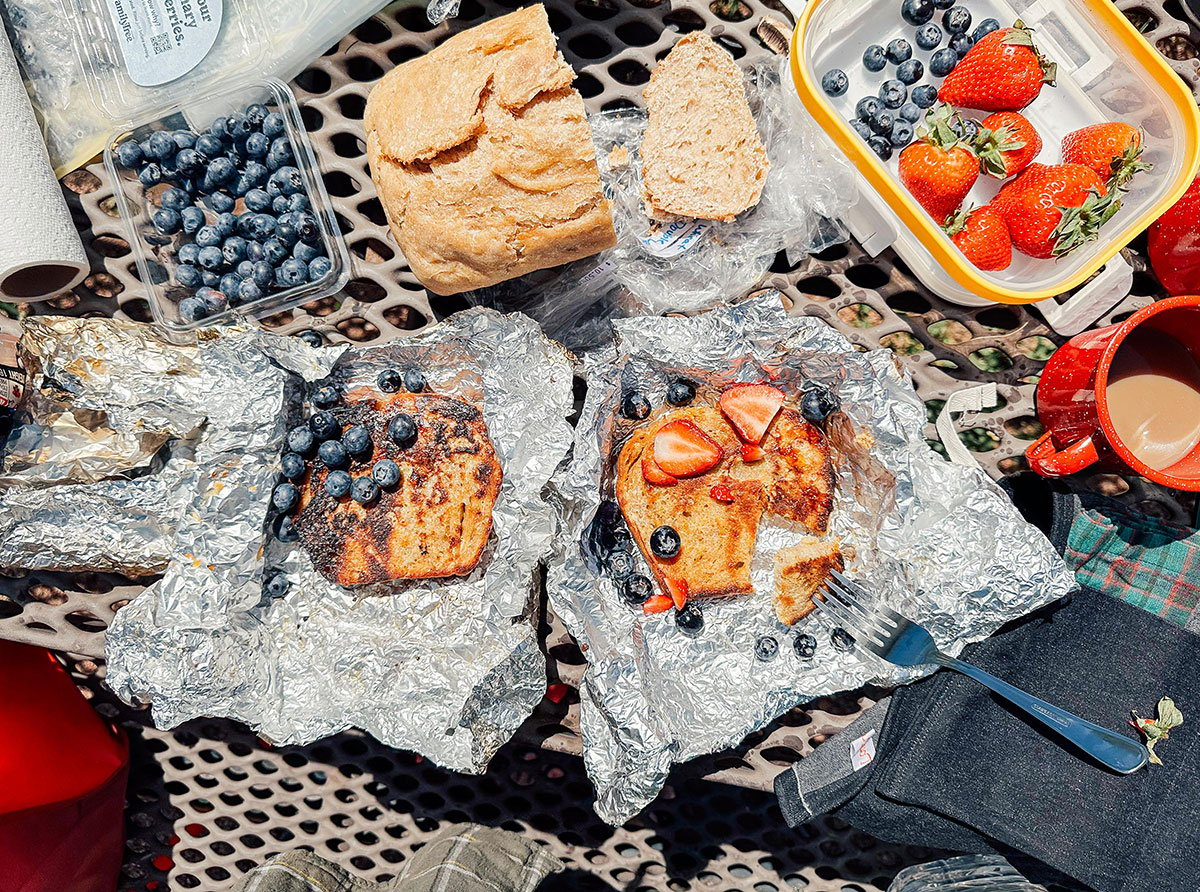
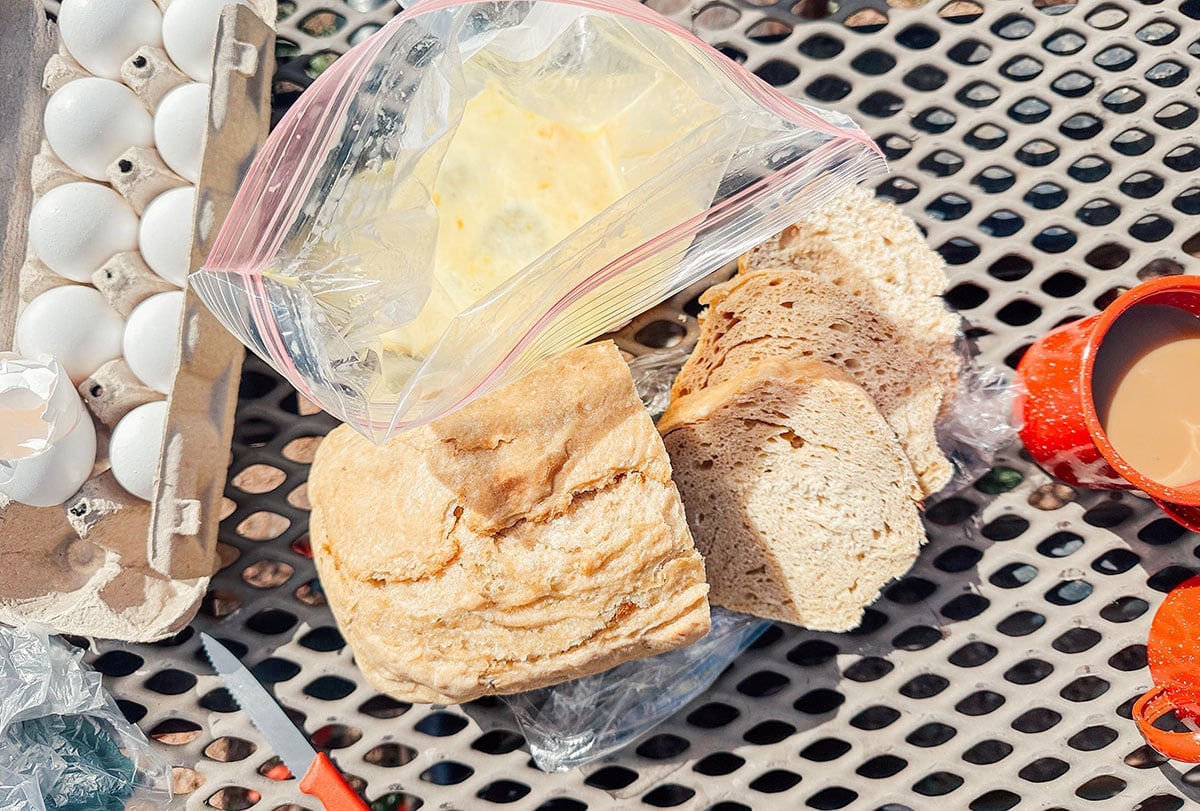
French Toast On The Campfire = So easy
The steps for making this campfire breakfast are pretty close to normal French toast, but with one critical change: you’ll need a campfire (or grill!). This is just a brief overview; jump to the recipe card for the full instructions.
Step 1: Make the Egg Mixture
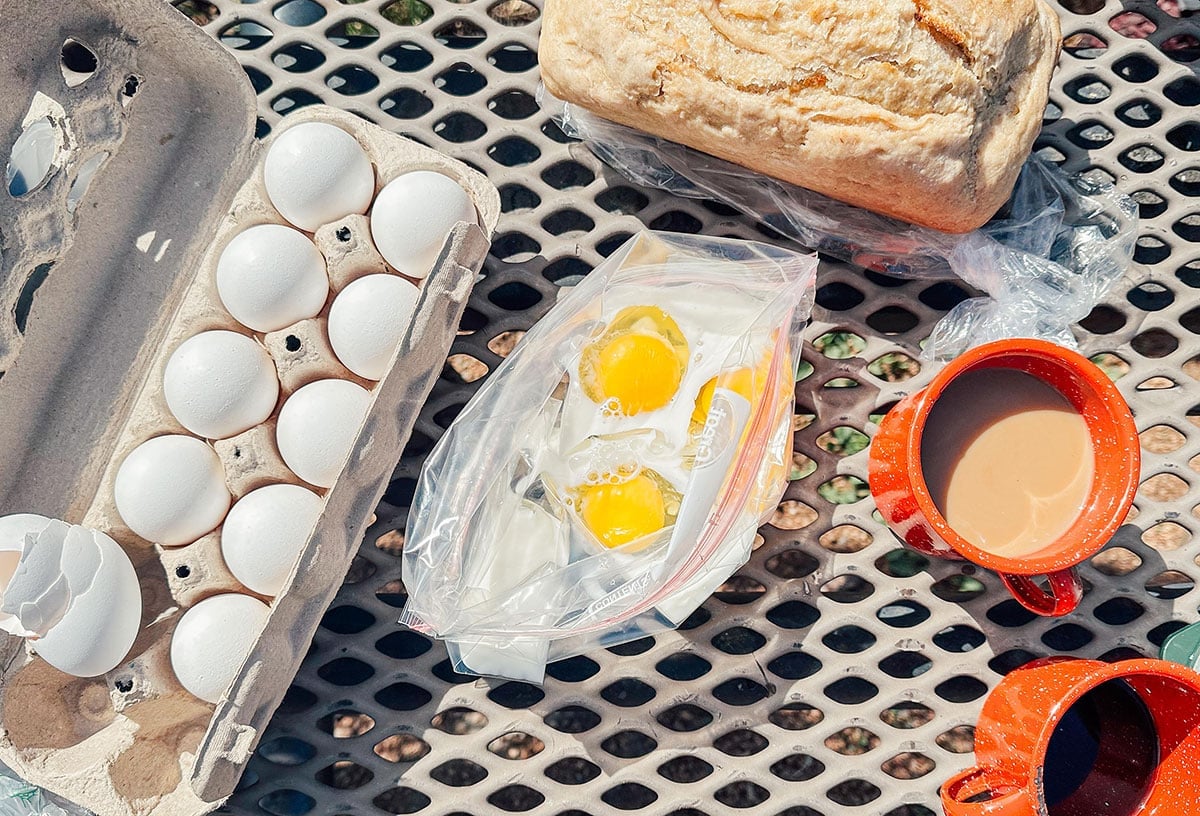
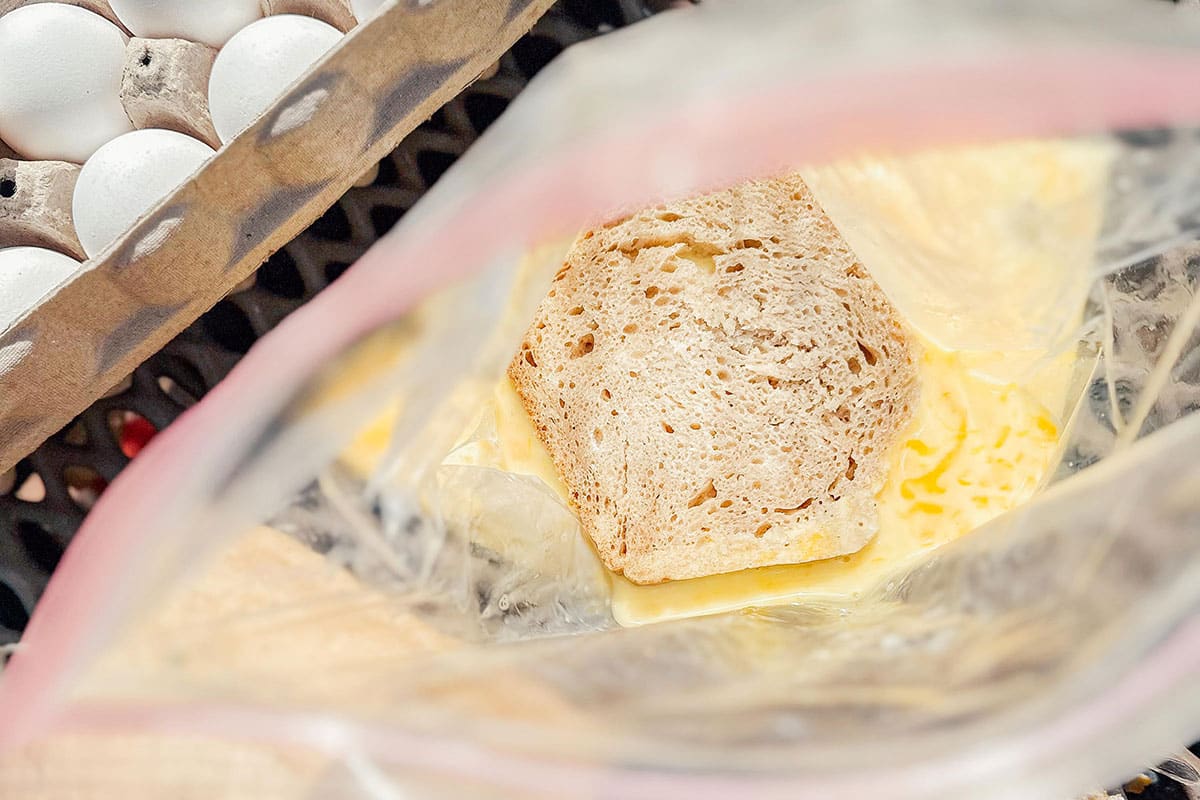
In a large Ziploc bag, combine the eggs, milk, sugar, and vanilla extract. Seal the bag tightly and give it a good shake or squish to ensure all the ingredients are well-mixed.
Step 2: Soak the Bread
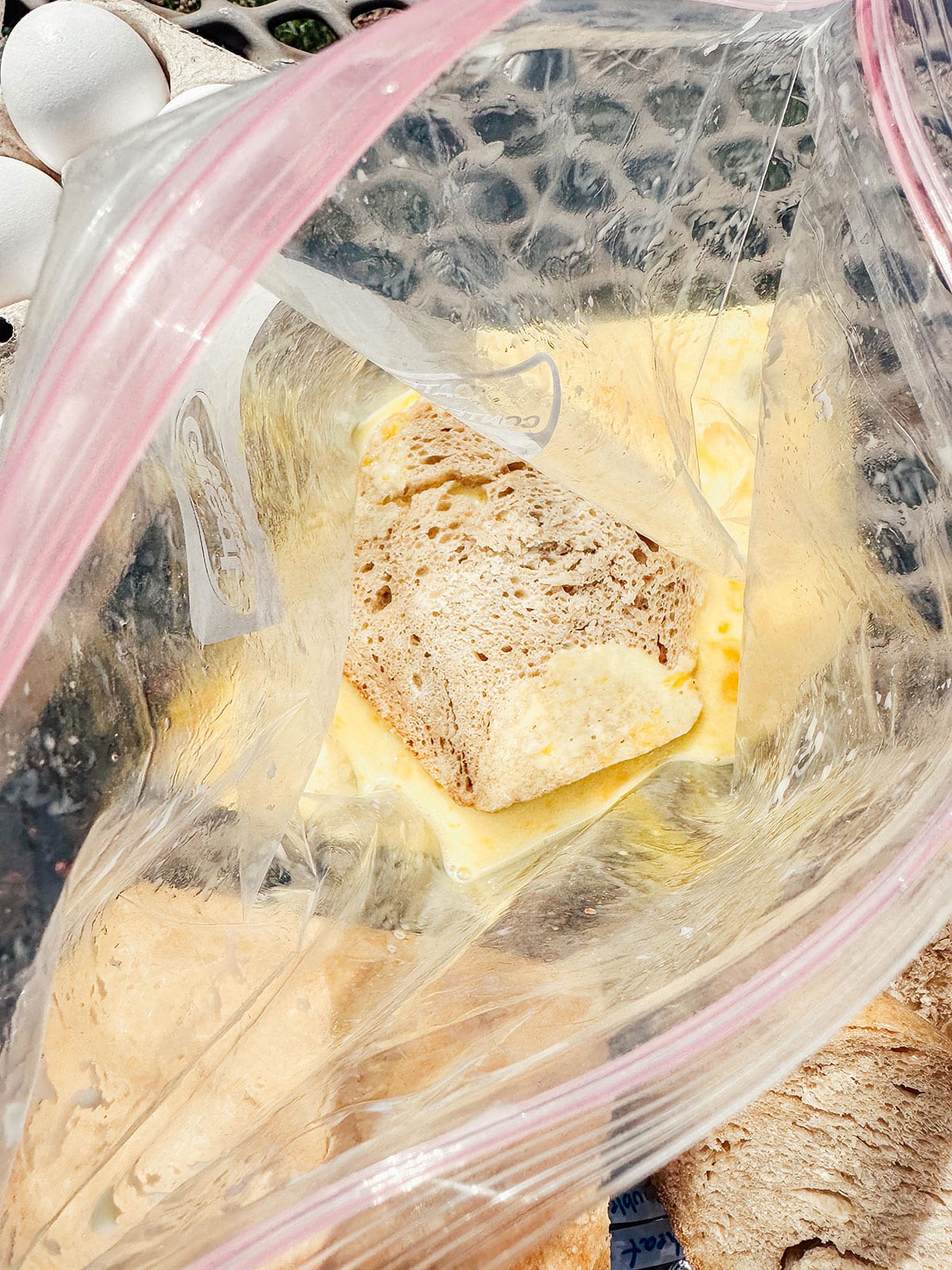
Add one slice of bread at a time to the bag with the egg mixture. Gently press the bread down to ensure it soaks up the liquid on both sides. Opt for thick slices of bread that can hold up well during the cooking process, ensuring you get a perfectly tender and delicious treat.
Step 3: Assemble the Foil Packets
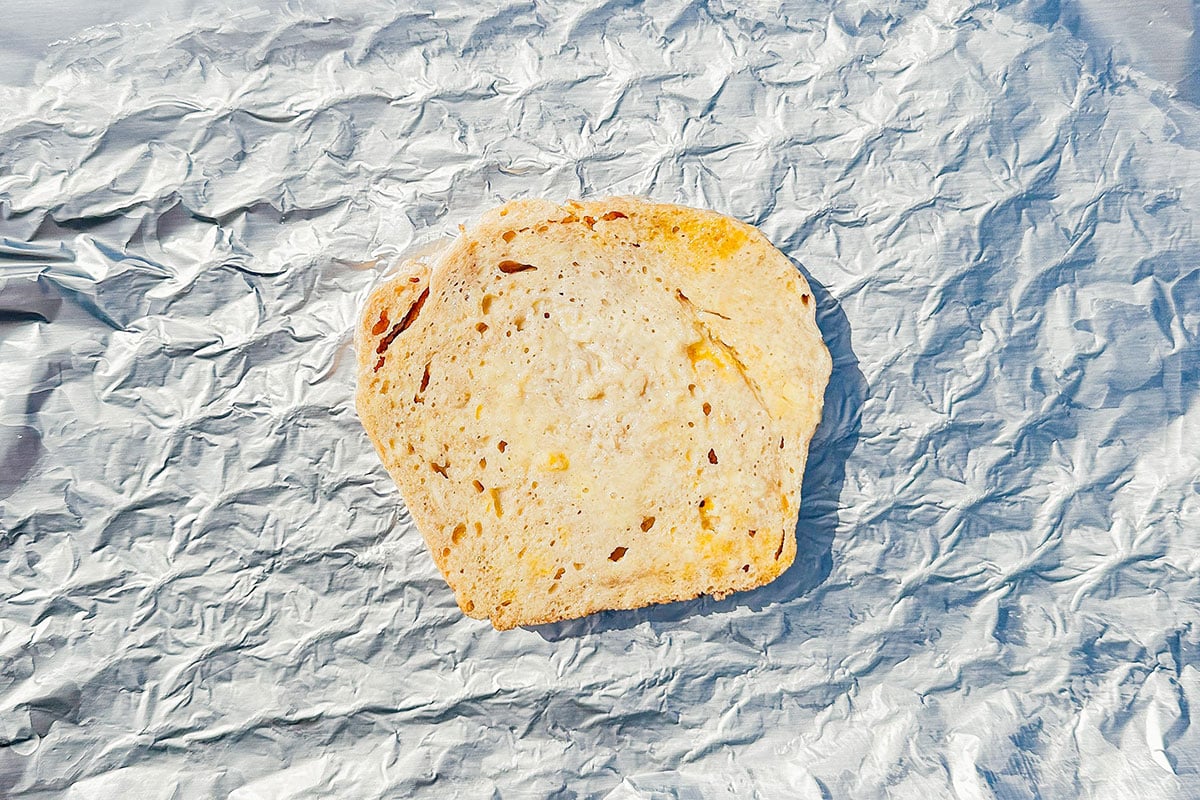
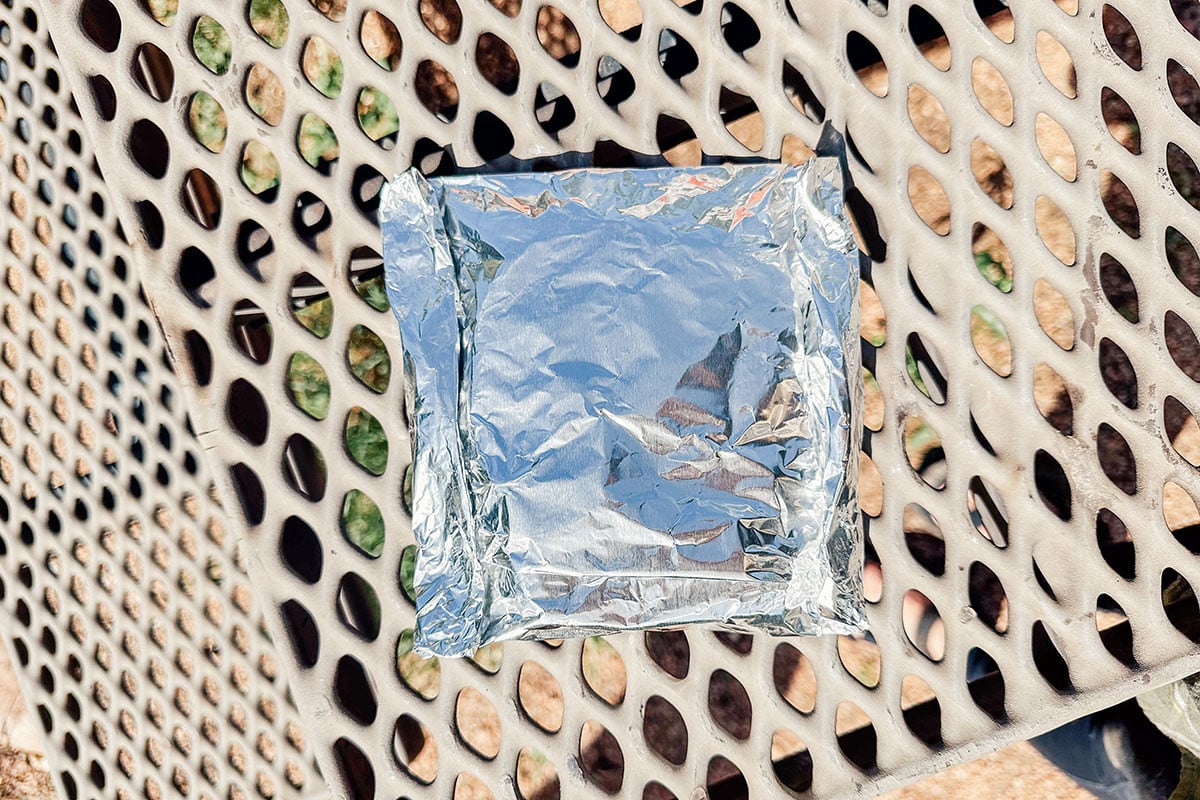
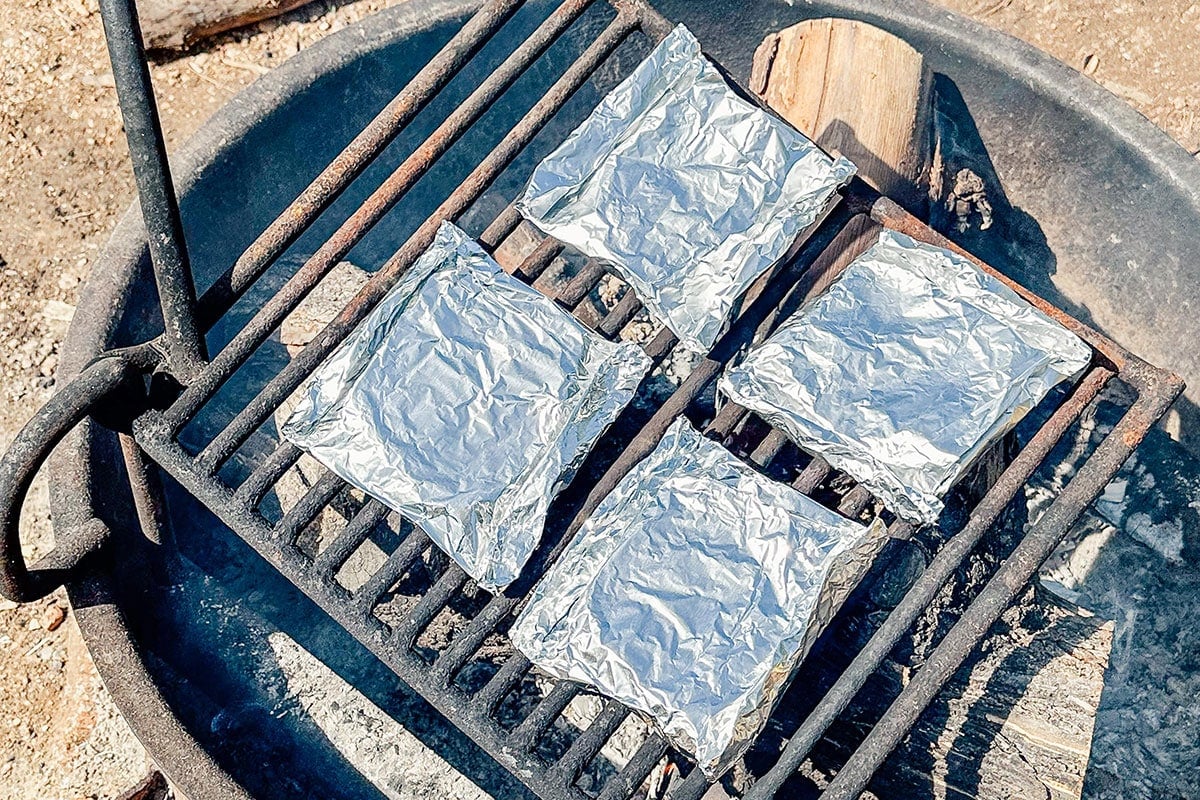
Tear off large squares of aluminum foil and lay them out on a flat surface. Make sure to generously coat the upper side of each piece with oil or cooking spray to prevent the French toast from sticking during cooking. Place one slice of egg-soaked bread onto each foil and fold up the sides to create individual foil packets.
Step 4: Campfire Cooking
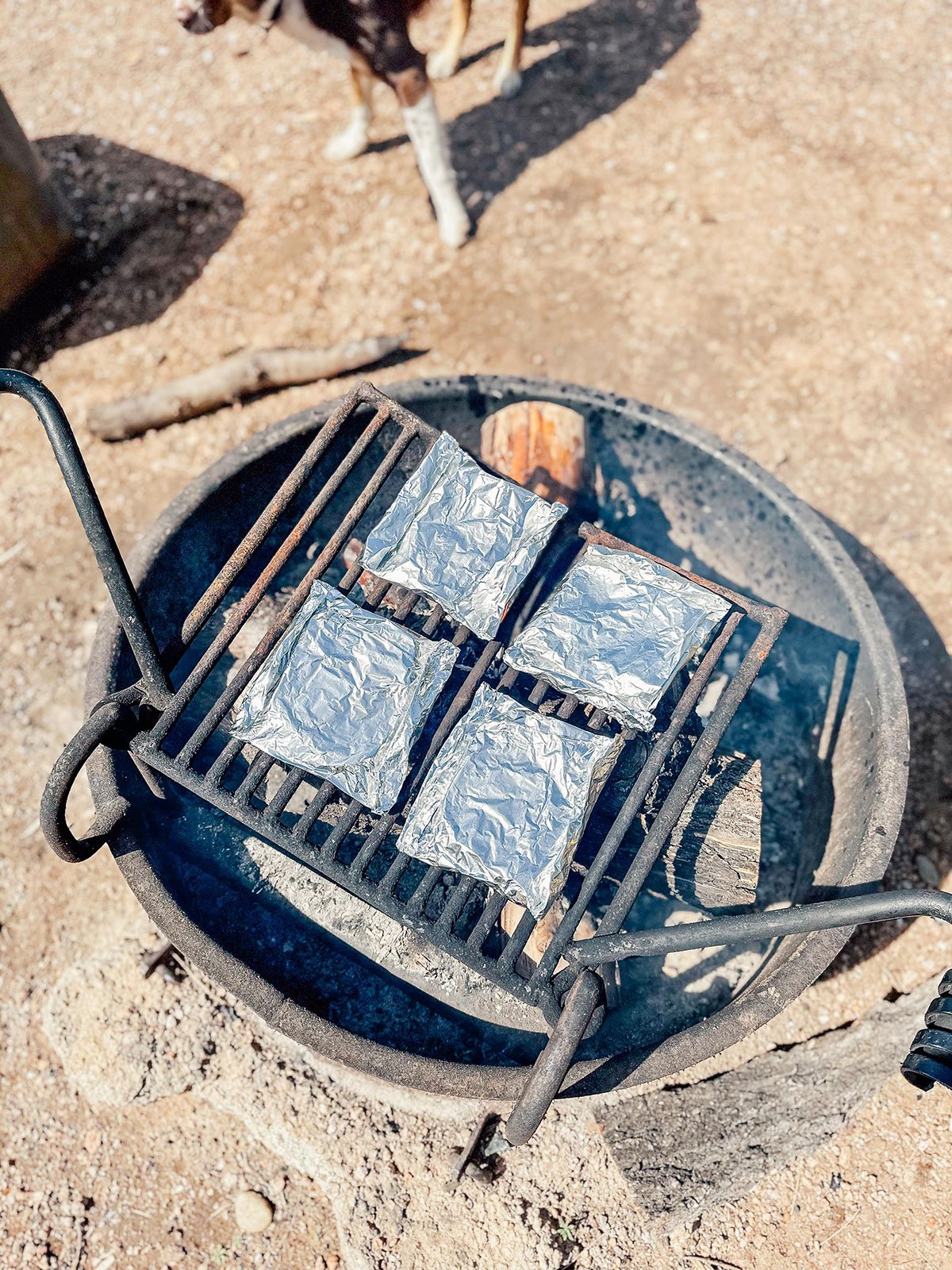
Now comes the fun part – cooking your campfire French toast! Set up your campfire with hot coals, or use a grill grate over a small open fire. Carefully place the foil packets on the grill or coals, ensuring they are stable and won’t tip over. Cook the French toast for a few minutes on each side or until it is no longer runny and the bread has turned slightly brown and toasty.
Step 5: Serve and Enjoy!
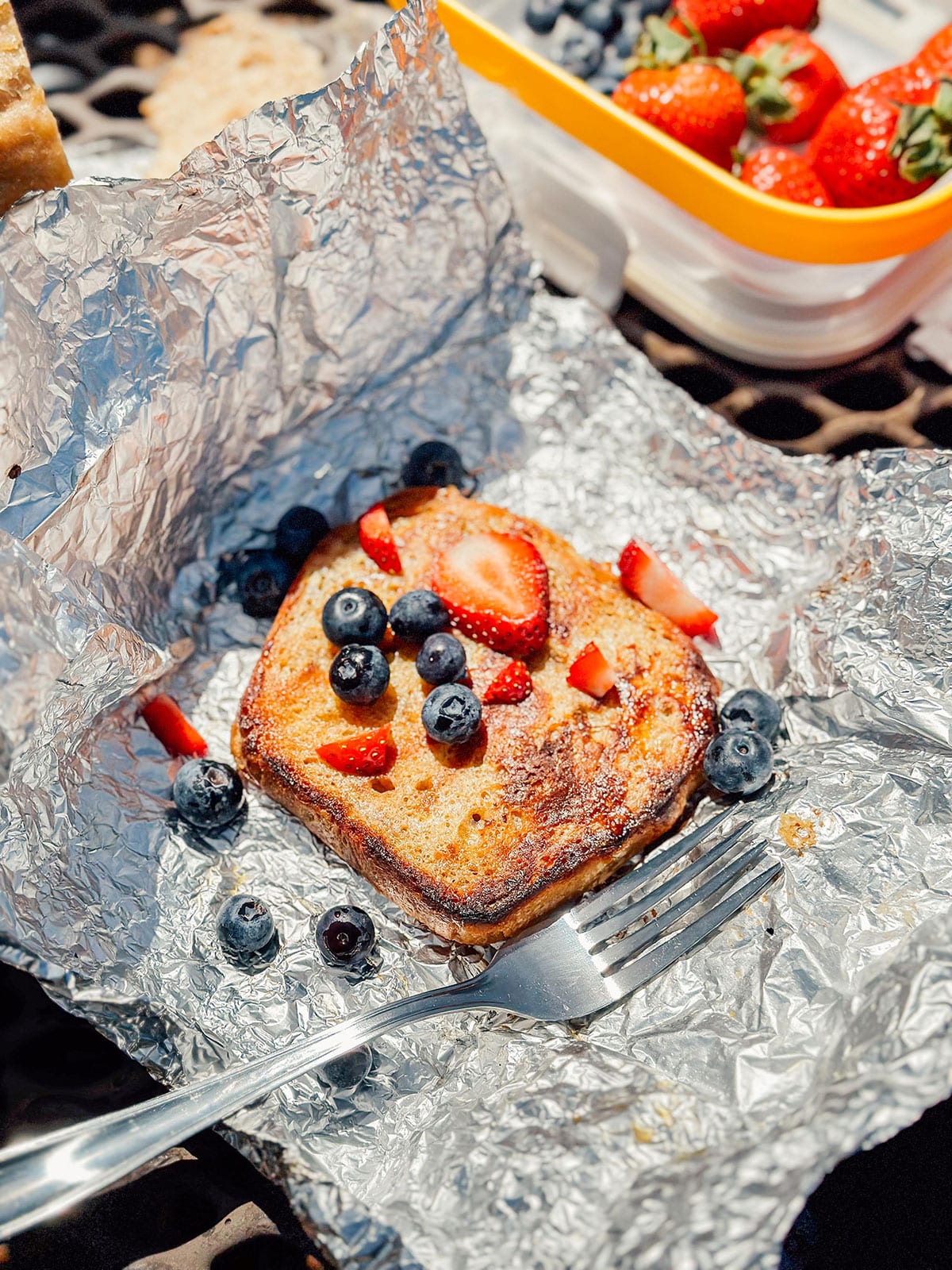
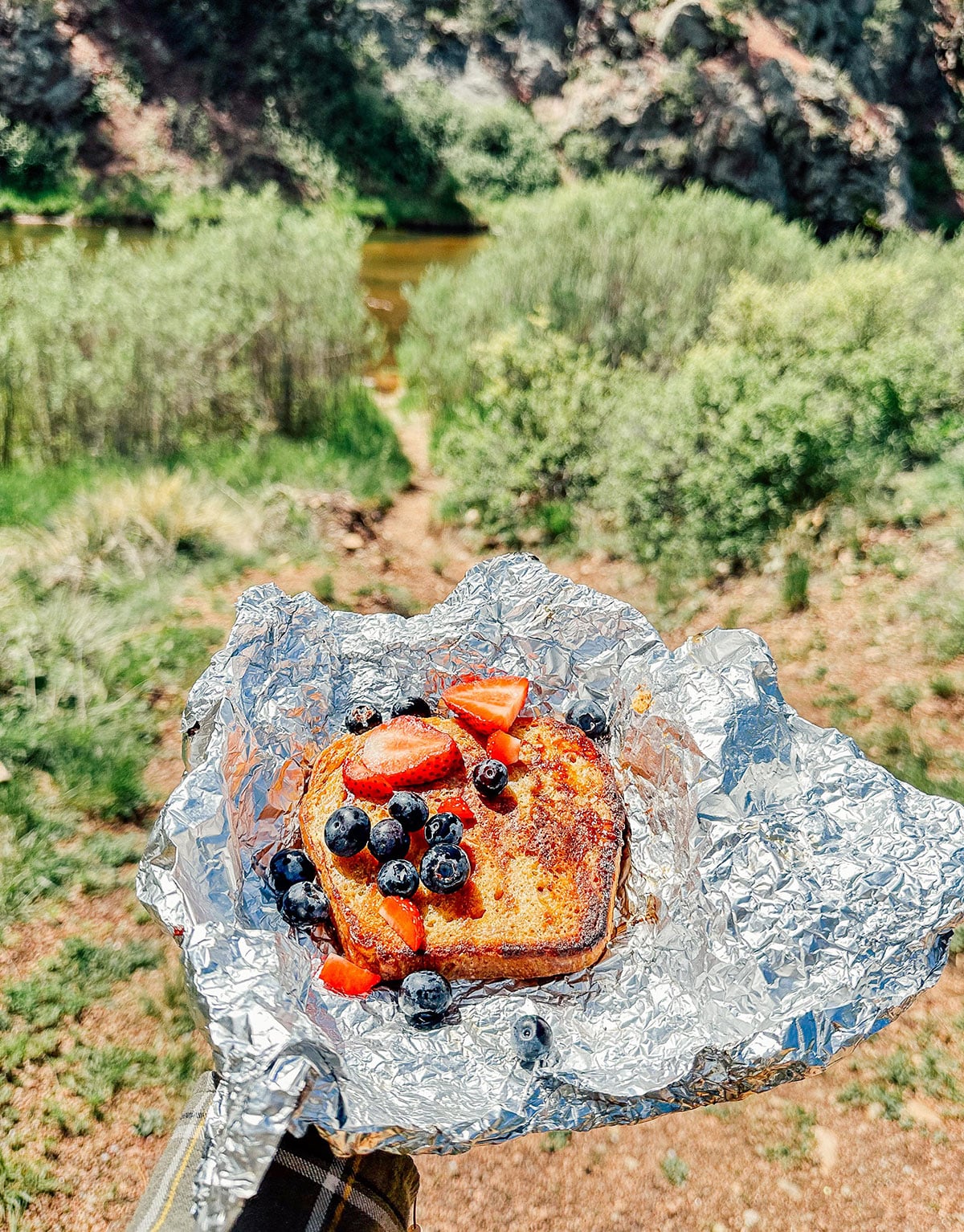
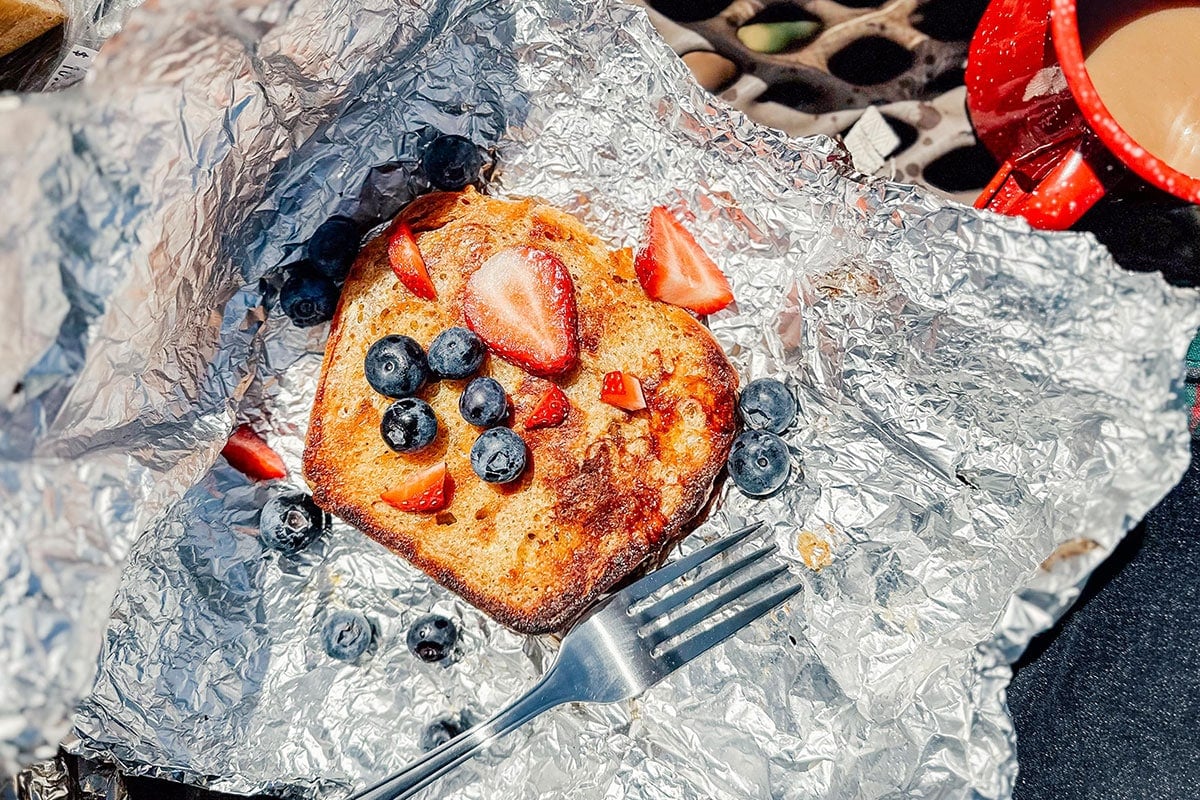
Once the French toast is cooked to perfection, carefully remove the foil packets from the campfire and let them cool slightly before unwrapping (if bread sticks to the foil, cook for longer). Serve it with your favorite French toast toppings, such as maple syrup, fresh berries, powdered sugar, or even a dollop of whipped cream.

Preheat your fire
Before cooking, ensure your campfire or grill has enough hot coals. The fire should be at medium heat to prevent burning and ensure even cooking of the French toast. Do not let the flames reach the foil packets, as this will burn them.
French Toast Flavors
Get creative with different variations. Add spices like cinnamon, nutmeg, or even a pinch of cardamom to the egg mixture. You can also include grated citrus zest for a refreshing twist.
campfire french toast on a camp stove
If you can’t access a campfire or grill, you can easily prepare the foil packets on a portable camp stove. Place the foil packets on the stove’s grate over medium heat, turning them occasionally for even cooking. This allows you to enjoy the same delicious campfire French toast experience without an open fire.
more camping meals


Campfire French Toast (Easy Foil Packet Recipe!)

Ingredients
- 3 large eggs
- ½ cup milk, can use dairy-free, 120 mL
- 1 Tbsp sugar
- 1 tsp vanilla extract, 5 mL
- 4 to 6 slices bread, can use gluten-free
- oil or cooking spray, for greasing the foil
- aluminum foil
Instructions
- Egg Mixture: Add eggs, milk, sugar, and vanilla extract to a large Ziploc bag. Seal shut and squish or shake it around evenly and mix everything.

- Soak Bread: Working one at a time, add a slice of bread to the bag and let it soak up the egg mixture.

- Assemble: Tear off large squares of aluminum foil and lay them all out. Coat the upper side of each piece very well with oil. Place one piece of egg bread onto each foil, then each up.
- Cook: Cook over hot coals or elevated over a fire until French toast is no longer runny and bread has turned a bit brown and toasty.
- Serve with your favorite French toast toppings!
Notes
Yes, you can! Preparing the egg mixture in advance is a great time-saving tip for camping. Mix the eggs, milk, sugar, and vanilla extract in a large Ziploc bag and keep it in a cooler or refrigerator until you’re ready to use it. This way, you can easily transport it to the campsite and have everything ready for a quick and delicious breakfast.
Nutrition
Nutrition information calculated by Sarah Bond, degreed nutritionist.
 did you make this?Leave a comment below and tag @liveeatlearn on social media! I love seeing what you’ve made!


