

This post contains affiliate links.

Between salads, soups, veggie dishes, and even baked goods, the uses for sorghum are endless. Here’s everything you need to know about this nutrient-rich grain (including where to buy it, store it, and how to cook it).
 save this recipe!
What is sorghum?
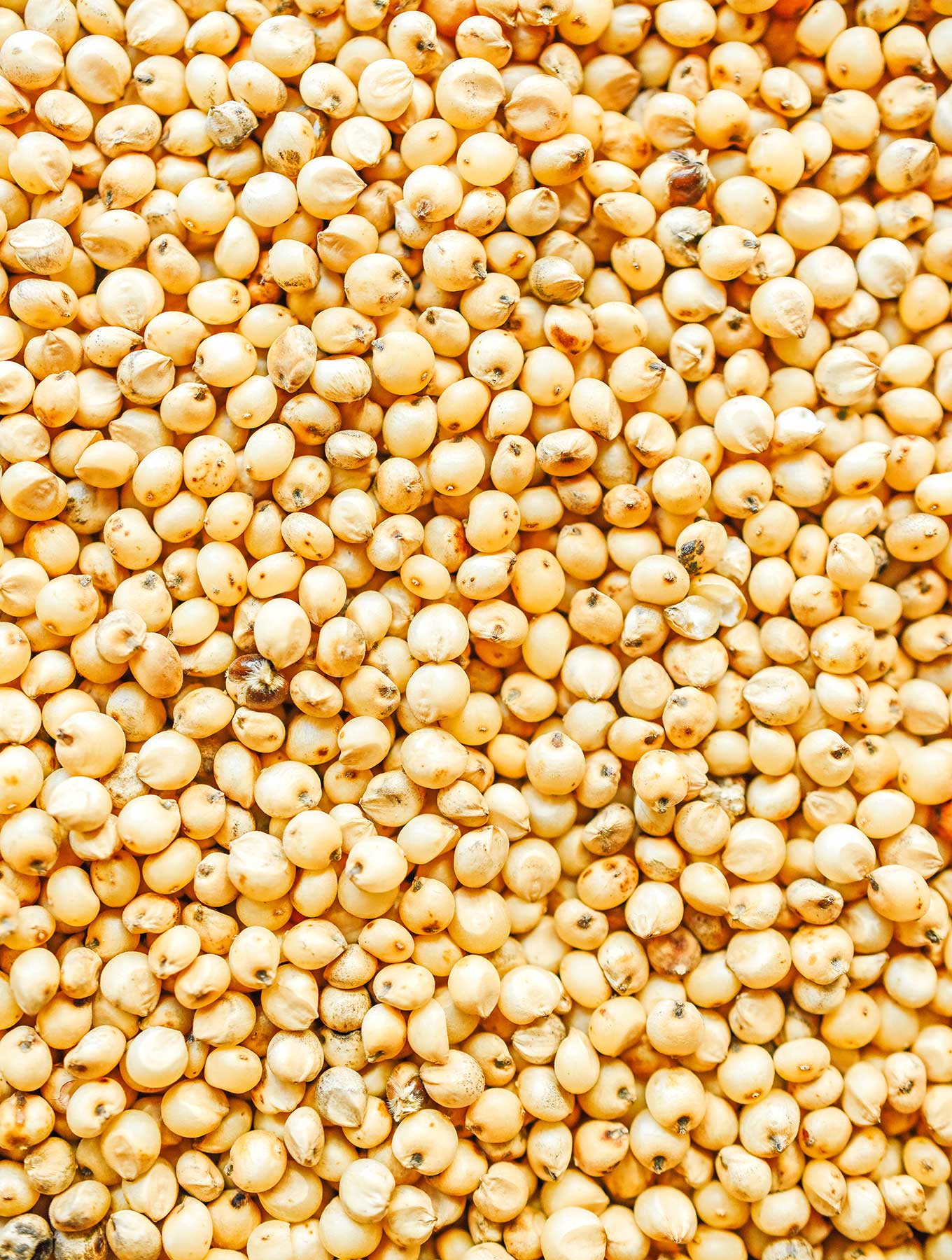
Get ready for your new favorite grain: sorghum. Referred to as a “super grain,” sorghum is commonly found in Asian and African cuisines.
It’s known as a very environmentally-friendly crop because it doesn’t use as many natural resources to grow as other grains. This makes it an ideal livestock feed — something it’s often used for.
It’s versatile in the ways that it can be cooked, making it great for including in all kinds of meals. Plus, its many forms allow it to be used across all types of cooking — it even comes as a syrup!
Where to buy sorghum
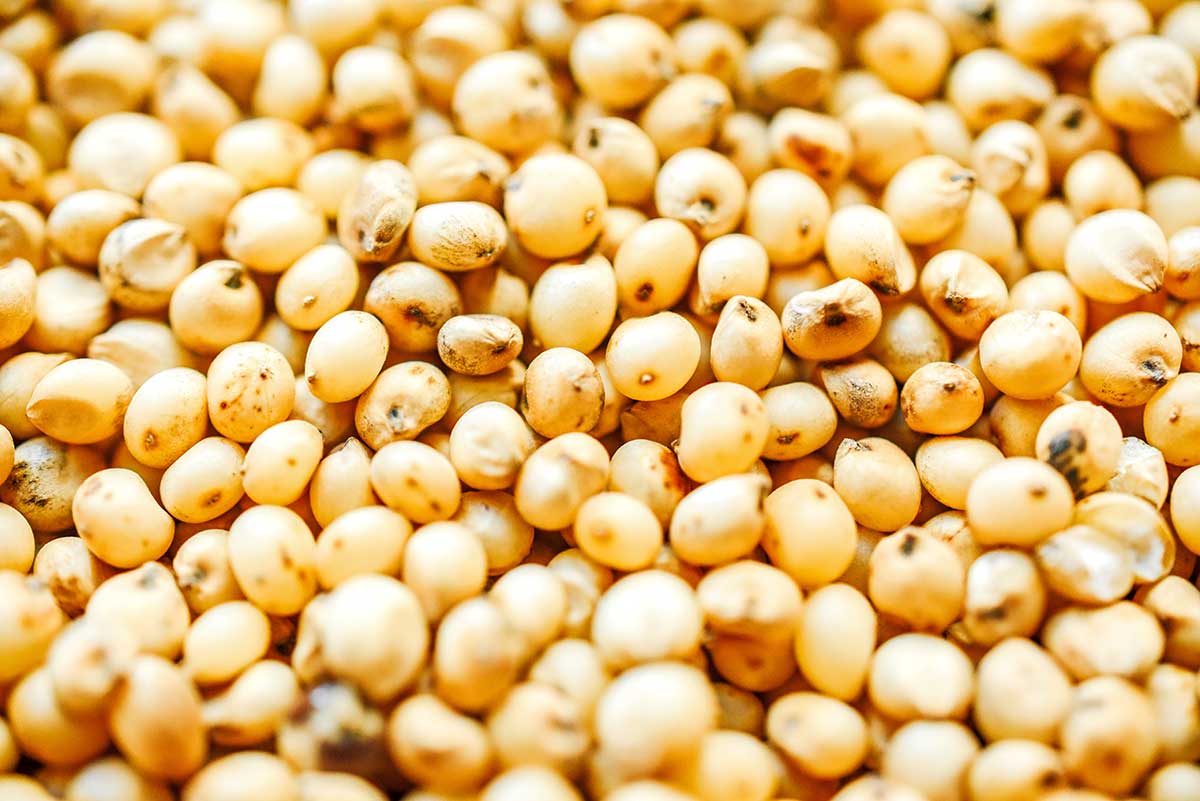
Sorghum can be found at some grocery stores alongside the grains and rice products. It can also be found online at places like Amazon, Bob’s Red Mill, and Nu Life Market.
Variations of sorghum
Sorghum comes in many different varieties, most of which will probably come as a surprise! For example, did you know you can use sorghum as a flour in baked goods? Yep!
- Whole grain: Whole grain sorghum comes with all of the parts of the grain intact.
- Pearled grain: Pearled sorghum comes with the bran and part of the germ removed, so it is mainly just the kernel.
- Flaked grain: Finally, flaked sorghum is just that – flaked! It is a crunchier option and looks more like a cereal than a round grain.
Apart from the grains, sorghum also comes in many other forms: flour (both white and whole grain), bran, syrup, and even popcorn!
The benefits of sorghum
Sorghum’s benefits extend beyonds its good rating with the environment. It’s healthy, too! Each cup of uncooked sorghum contains immense nutrients and vitamins.
- 20g protein
- 12g fiber
- Vitamins B1, B2, B5, & B6
- Copper
- Iron
- Magnesium
…and the list goes on! Thanks to these properties, sorghum is a very filling grain and a great option for using in place of rice or quinoa.
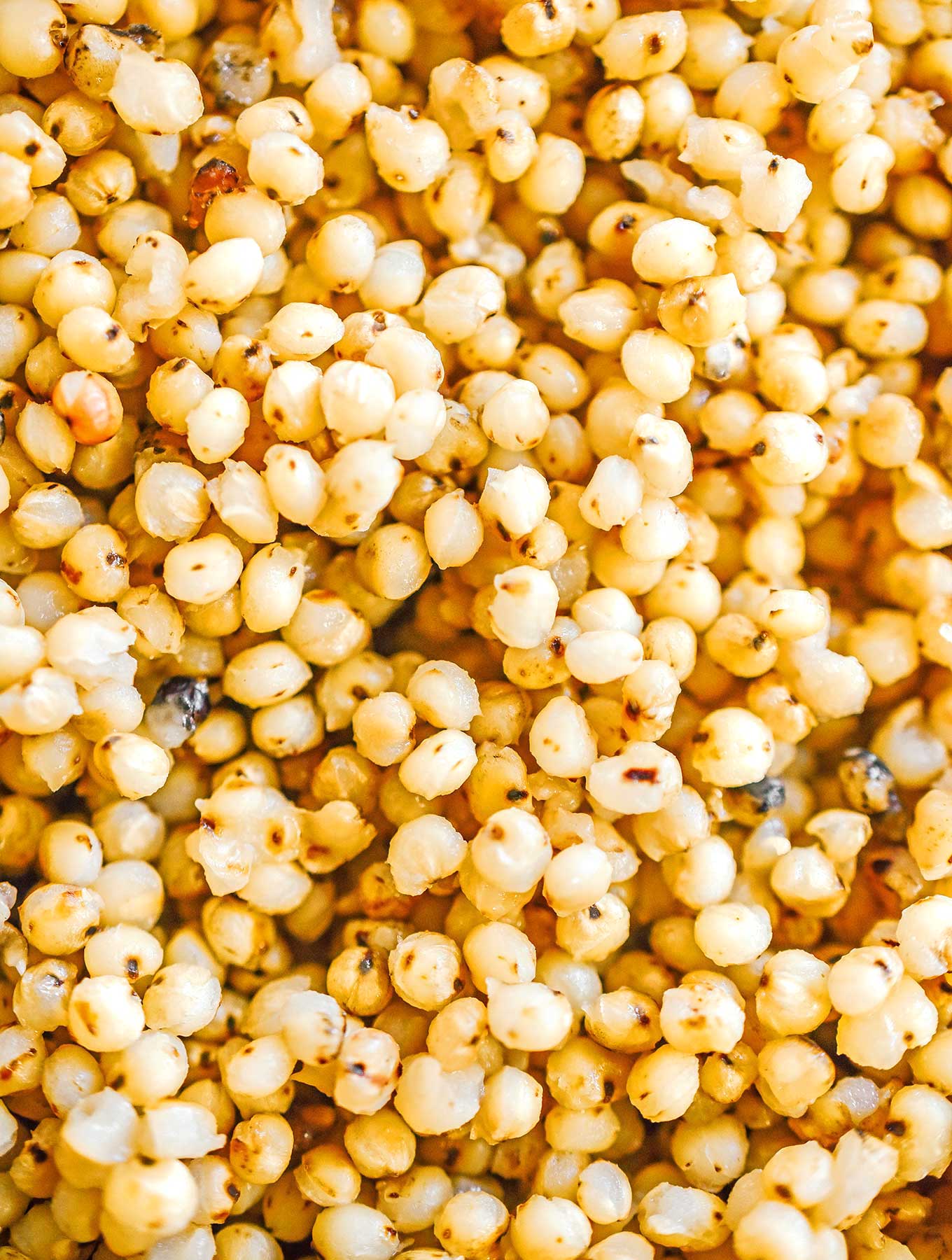
How to cook sorghum
Sorghum is a versatile grain in that it can be cooked multiple ways: stove top, slow cooker, oven, etc. I’ll be showing you how to cook it on the stove, just like rice!
- Sorghum: We will begin with 1 cup of dried sorghum.
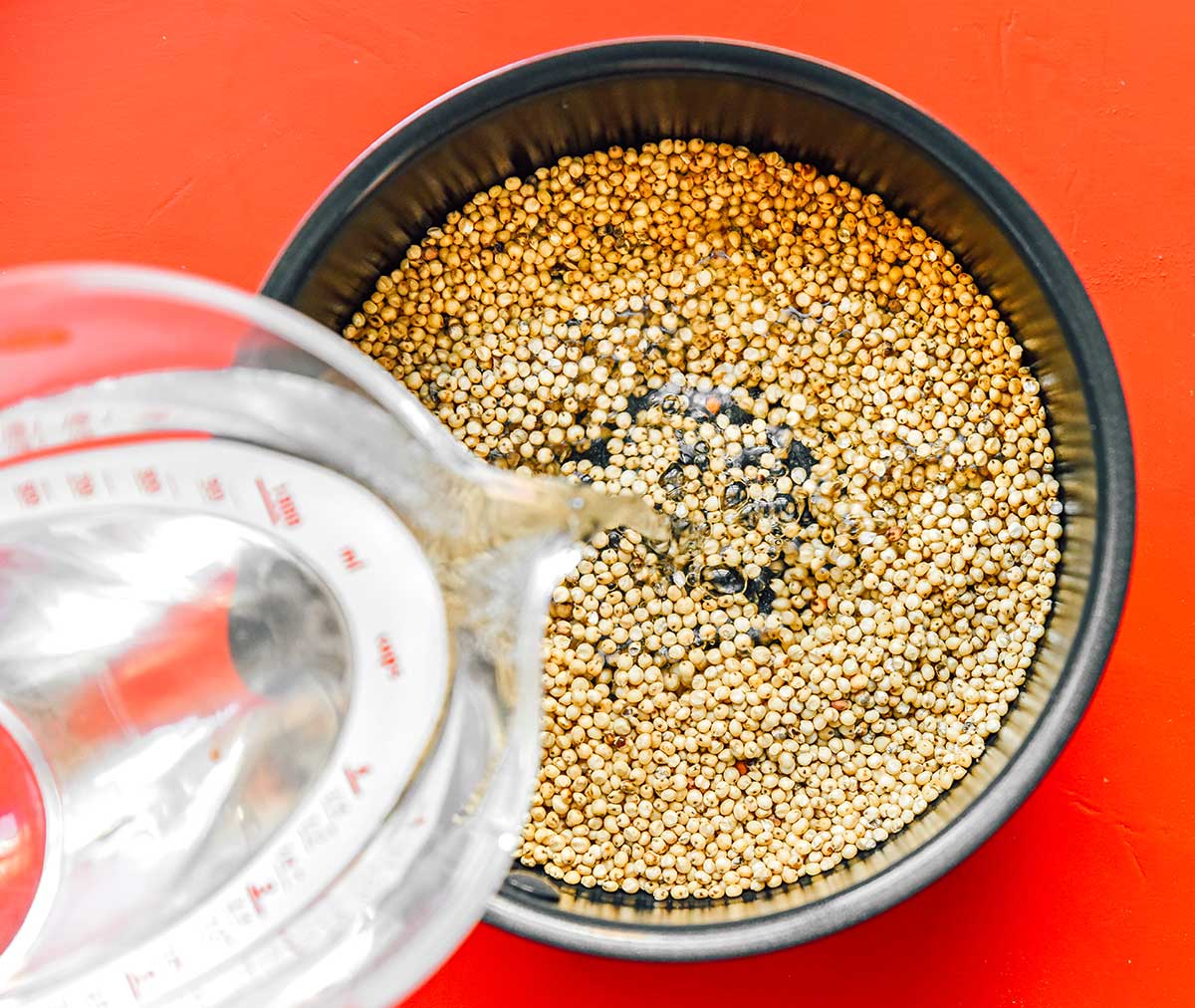
- Water or Broth: For each cup of sorghum, we need 3 cups of liquid. You can use either water or broth.
- Salt: Finally, you’ll want to use a pinch of salt to flavor things up a bit.
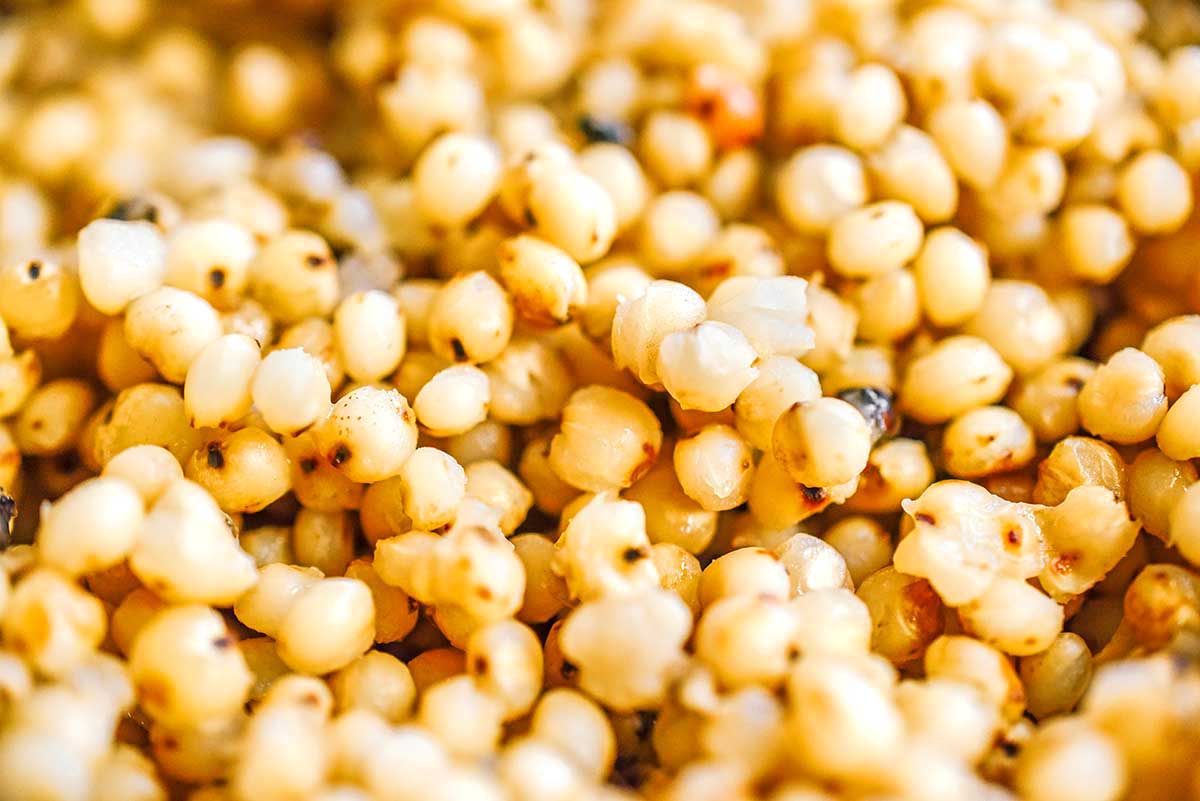
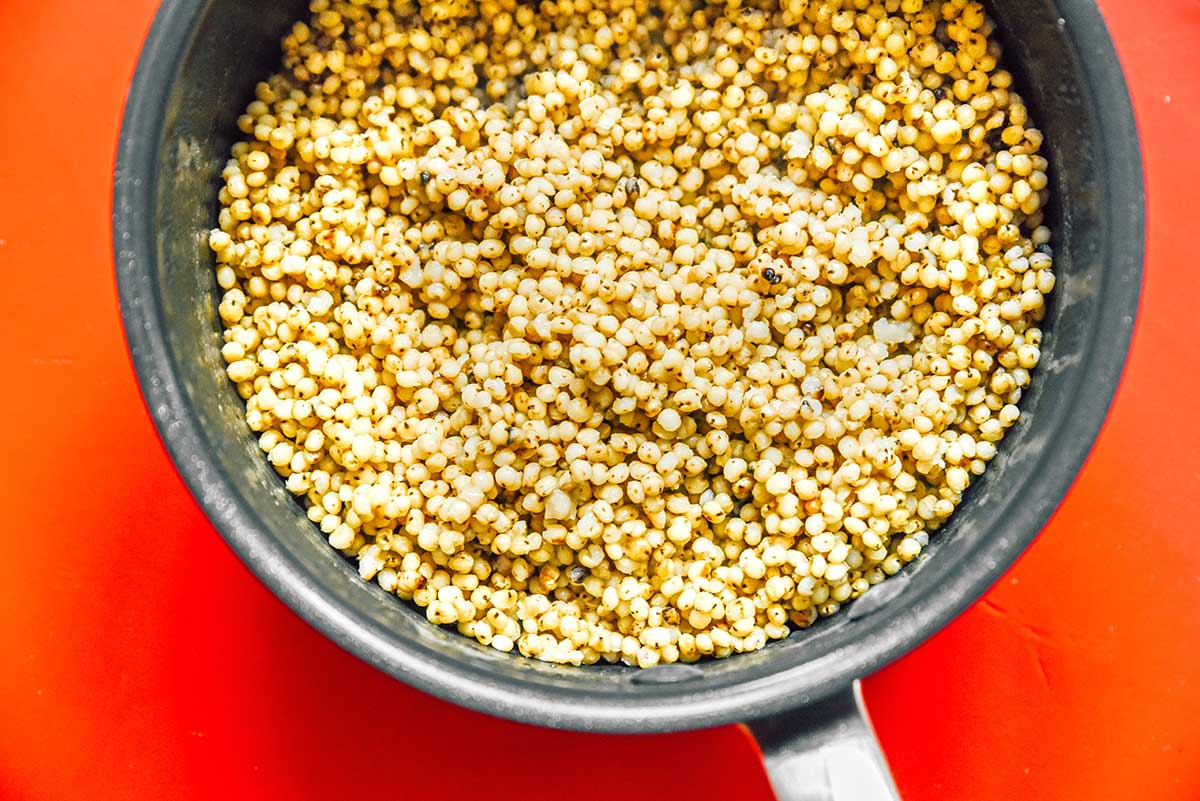
- Cook the sorghum: To start, combine the sorghum and water (or broth) in a large pot. If you’re using water, add a generous pinch of salt to the pot. Bring it to a boil, and then reduce to a simmer. Cover and cook for 45 to 60 minutes.
- Let it rest: After cooking, let the sorghum stand, covered, for 5 minutes. Drain the excess moisture from the pot and fluff with a fork. Season with salt to taste.
How to store sorghum
Sorghum can be stored for a pretty decent amount of time, much like other grains. It can also be frozen (after cooking!) and reheated later, which is great for having almost-ready meals on hand.
- Uncooked: Store uncooked sorghum grains in the pantry in a sealed, airtight container. They will stay fresh for about 4 months.
- Cooked: Cooked sorghum should be kept in the refrigerator and eaten within a couple of days. If freezing, eat within 6 months.
Does sorghum contain gluten?
Sorghum is gluten free! Not only does this make sorghum-based meals great for a crowd, it also means that the flour version can be used for gluten-free baking. I bet you never imagined using sorghum in your brownies!
How to serve sorghum
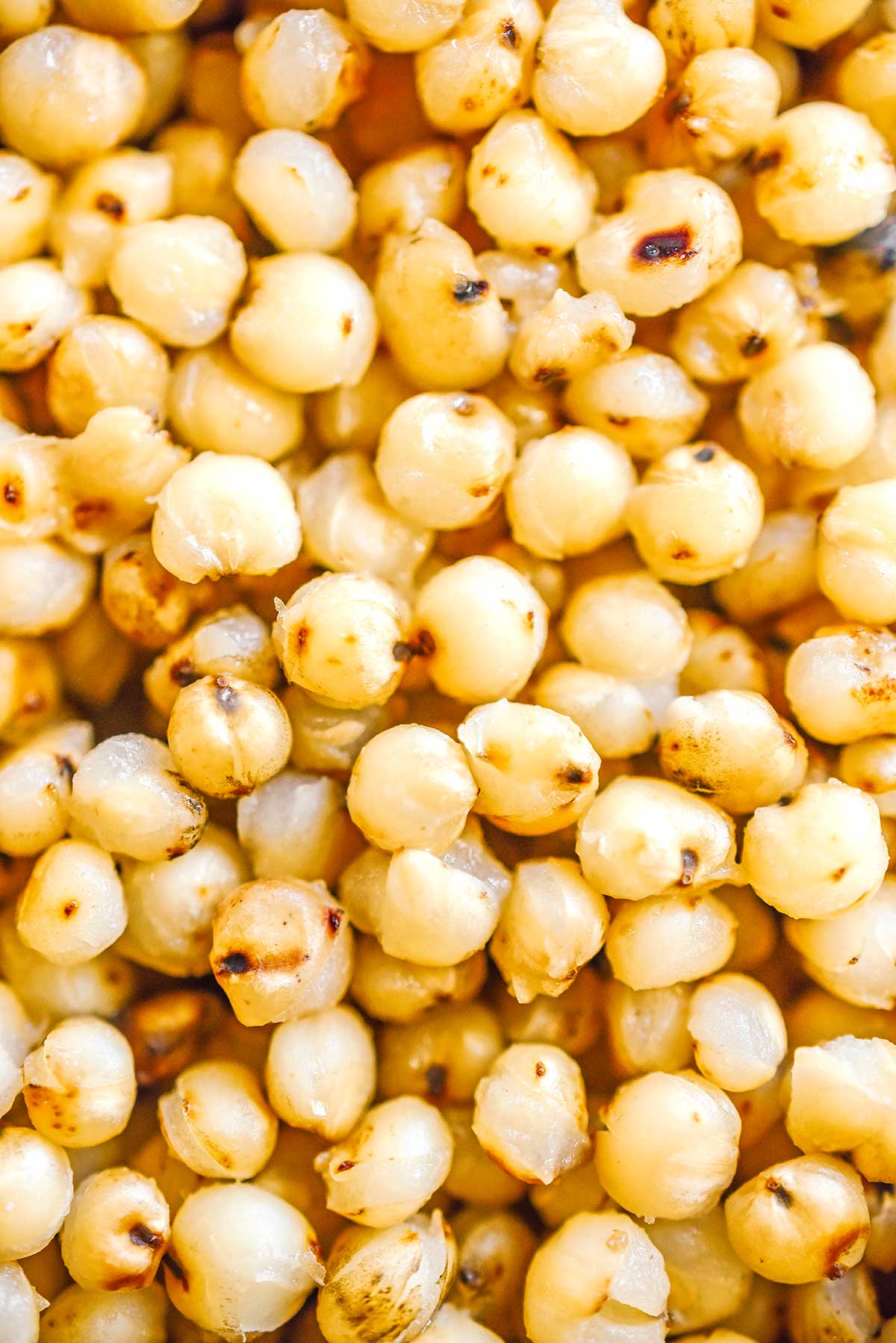
Sorghum may be a new ingredient to you, but the way you use it doesn’t have to be! This grain can be used anywhere you’d use rice or quinoa. Eat it with veggies, as a base to your Buddha bowls, or a filling component in your healthy meal prep! There are so many options. I can’t wait for you to see how delicious it is!

How to Cook Sorghum

Ingredients
- 1 cup sorghum, 180 g
- 3 cups water or broth, 708 mL
- Pinch of salt
Instructions
- Cook: Combine sorghum and water (or broth) in a large pot. If using water, add a generous pinch of salt to the pot. Bring to a boil, then reduce to a simmer. Cover and cook for 45 to 60 minutes.

- Rest: Let stand, covered, for 5 minutes. Drain excess moisture from the pot, then fluff sorghum with a fork. Season with salt, to taste.

Nutrition
Nutrition information calculated by Sarah Bond, degreed nutritionist.
 did you make this?Leave a comment below and tag @liveeatlearn on social media! I love seeing what you’ve made!


Hi Sarah,
You mentioned that sorghum can be cooked with broth or water, and you gave instructions for cooking it with water. How should it be cooked with broth”? Thanks.
Izzy
You would cook it the same exact way. You just won’t need to add any extra salt when serving!