

This post contains affiliate links.
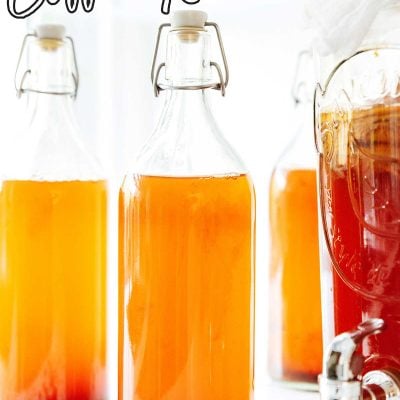
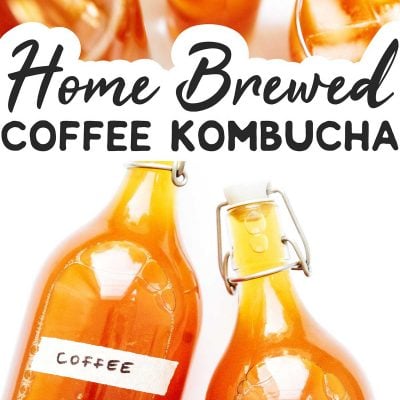
This coffee kombucha uses my foolproof kombucha-making technique but replaces the black tea with strong coffee. Inspired by fancy cafes serving this unique drink, I wanted to create a recipe that was much easier and cheaper. And while kombucha takes some time to ferment, this recipe only takes 5 minutes of actual work.

 save this recipe!
After falling in love with kombucha and building an entire second website around kombucha recipes, you could say I’m a bit of an expert. And I’ve also become passionate about showing you just how easy kombucha is to make!
While regular kombucha is typically made with black tea, I had tried coffee kombucha at a trendy cafe, and it got me thinking. Next thing you know, I’ve run multiple tests and eventually created a lightly bubbly and absolutely delicious fool-proof coffee kombucha at home. The trick is to add the coffee during the second fermentation! But we’ll get into that later.

phases of fermentation
There are two main fermentation phases when making homemade kombucha:
- First Fermentation: This is when you transform sweet tea into tart and delicious kombucha.
- Second Fermentation: This is when you carbonate and flavor the kombucha by adding sugars and flavors and then bottling it. This is when we’ll add the coffee!

Here’s what you’ll need
- Kombucha from a first fermentation: You’ve brewed your kombucha with the help of your SCOBY, and it’s the perfect balance of sweet and tart (step-by-step first fermentation instructions here). I used black tea kombucha, but I suspect green tea would also be great with coffee and will probably bring out the coffee flavors more.
- Coffee: Brew up some strong coffee (cold brew coffee works, too) and let it chill (or go with a cold brew for less acidity). Decaf will work, too!
- Sugar: Just a dash of white or cane sugar will help carbonate the kombucha, giving the bacteria and yeast something to “feed” on.
- Optional flavors: Feeling adventurous? Try adding vanilla extract or cocoa powder!
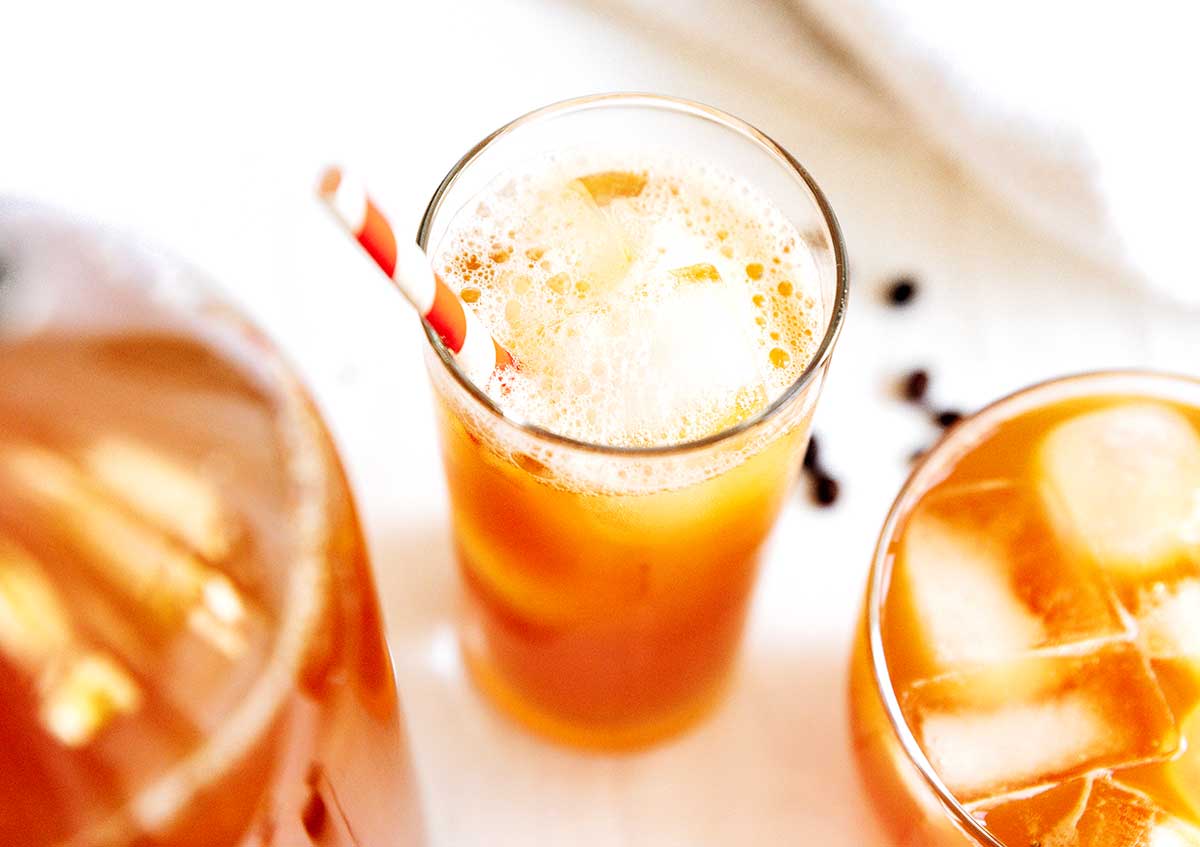
Making coffee kombucha is easy
The actual work required to make this coffee kombucha recipe is minimal; most of the time is spent waiting.
- Bottle Everything: Pour coffee, sugar, and optional flavors into each bottle. Pour in kombucha from a first fermentation, leaving 1 to 2 inches free at the top. Any large bottle or glass jar will work.
- Ferment: For 3 to 10 days until it reaches the carbonation level you like. It’s helpful to test different warm places in your house for where the kombucha does best.
- Enjoy: Chill in the fridge before serving.

Coffee In The 1st Ferm?
I do not recommend using coffee in the first fermentation. Coffee naturally contains many oils, which are more likely to go rancid and spoil your batch. This means you will need to have completed the first fermentation already and have some kombucha that’s ready to be carbonated!


Coffee Kombucha

Ingredients
- ½ gallon kombucha from a first fermentation, this is not store bought kombucha, 1.9 L
- ¼ to ½ cup strong coffee chilled*, 60 to 120 mL
- 2 tsp sugar
- Optional flavors: ½ tsp vanilla extract, 2 tsp unsweetened cocoa powder
Instructions
- Bottle: Evenly distribute coffee, sugar, and optional flavors into fermentation bottles**. Pour in first fermentation kombucha, leaving 1 to 2 inches free at the top.
- Ferment: Place in a dark, room temperature area for 3 to 10 days, until it reaches the carbonation level you like. This process will go faster in warmer climates, and slower in cooler climates.
- Enjoy: Chill in the fridge before serving. Can be stored in the fridge, tightly sealed, for several weeks.
Notes
Nutrition
Nutrition information calculated by Sarah Bond, degreed nutritionist.
 did you make this?Leave a comment below and tag @liveeatlearn on social media! I love seeing what you’ve made!


We’ve been doing 1st fermentation coffee kombucha: it has a body and tastes amazing. We always do decaf and cold brew (otherwise you kill the LAC bacteria); and use vanilla or amaretto for the second fermentation.
Using coffee in the second fermentation is great for taste, but you don’t get that almost creamy body from the first fermentation. NOMA, the restaurant in Copenhagen with a couple Michelin stars, have a recipe on it. Actually, their whole book on fermentation is a bible.
I’ll check out their recipe, thanks for the rec! 😀
Sound great, I will try it.
I wonder if you can use sweetened coffe creamer instead of sugar
I’d probably avoid mixing this with dairy because the acidity!
After making kombucha from your recipe for 4 years I am ready to try this. Thank you for all the tips and recipes over the years!
I usually do one flavour per bottle on second ferment, usually 750ml or a litre, depending on what I have available. And I’m just a bit confused about the quantities and ratios here of booch to coffee and sugar.
If I’m using an espresso machine, what’s the ratio of one espresso shot to, eg a litre-size bottle of kombucha?
(Presuming when you say a cup of coffee there’s no water added to that?)
I’m thinking a shot of coffee and maybe half a teaspoon of sugar to 750ml booch or thereabouts?
Love that you’re diving into coffee kombucha after four years—so fun to switch things up!
Yes, when I say “a cup of coffee,” I mean brewed (like drip or French press), not just espresso. But if you’re using espresso, your instincts are spot on—start with 1 shot (about 30–40mL) per 750mL to 1L of kombucha, plus ½ teaspoon of sugar to feed carbonation. Espresso is intense, so go light at first—you can always add more in your next batch if you want a stronger flavor.