

This post contains affiliate links.
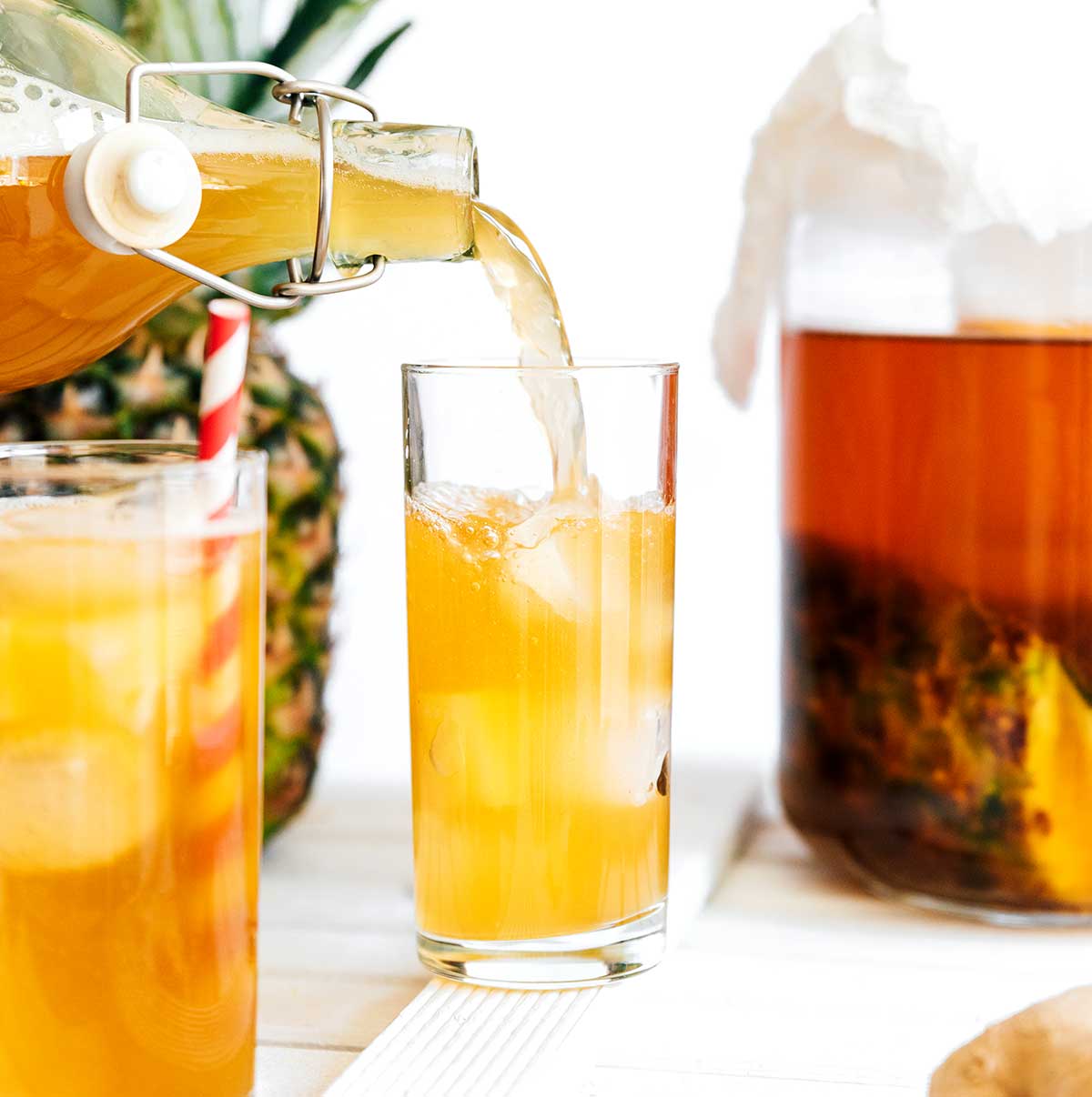
This foolproof guide will teach you how to make pineapple tepache, a fizzy fermented Mexican drink made from just 3 ingredients!
 save this recipe!
This pineapple tepache is the result of countless test batches and fine-tuning—and trust me, this is the only recipe you need!
Here’s how it works: Yeast lives virtually everywhere, and it can be harnessed to make tasty things! Yeast on flour makes sourdough, yeast on tea makes kombucha, and yeast on pineapple skin makes…tepache!
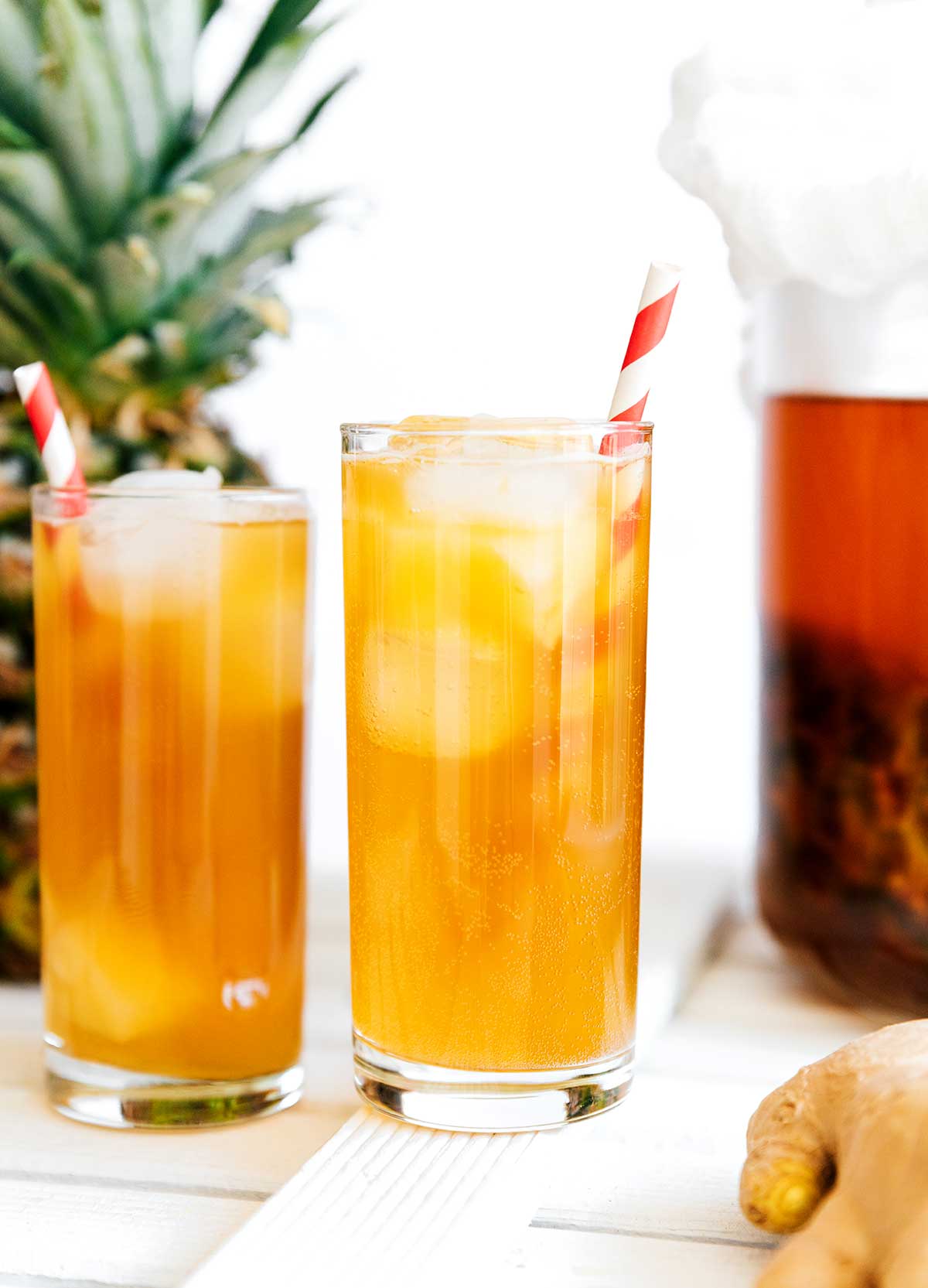
Simply feed it what it loves (sugar) to create both flavor and carbonation. Once brewed, tepache ranges from cider-like and sweet to more yeasty-like. Basically, the result is a delicious fermented pineapple drink that falls somewhere between soda, kombucha, and beer.
Reader rating
Tepache Ingredients
Jump to the recipe card for all the measurements. This is just an overview!
- Pineapple Peel: Since we’re using the peel, aim for an organic pineapple. Pineapples are a pesticide-intensive crop, and you don’t want that in your tepache!
- Sugar: Use either piloncillo (the traditional Mexican sugar) or light brown sugar.
- Water: No need to overcomplicate things – tap water is just fine here!
Tepache Contains Alcohol
Tepache has an alcohol content of about 2% ABV, though this can be less if you let it ferment for a shorter time or more if you let it go longer or are in a warmer climate.
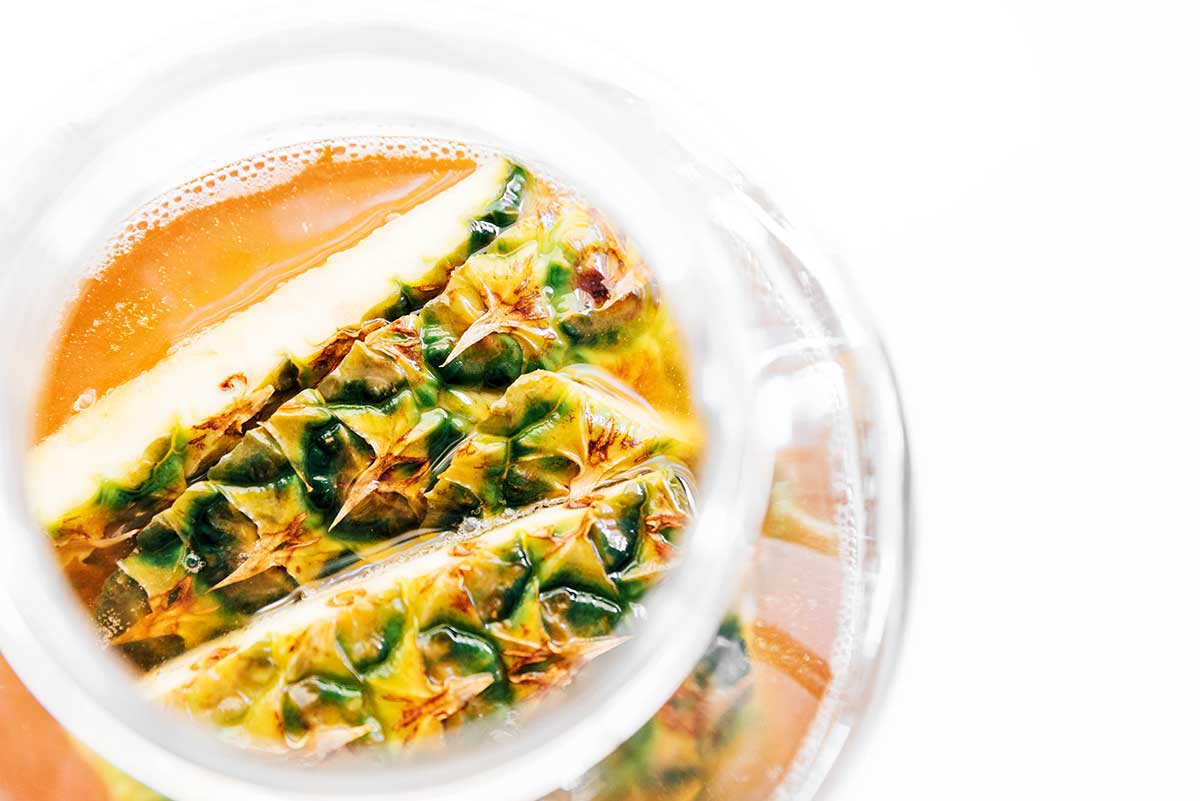
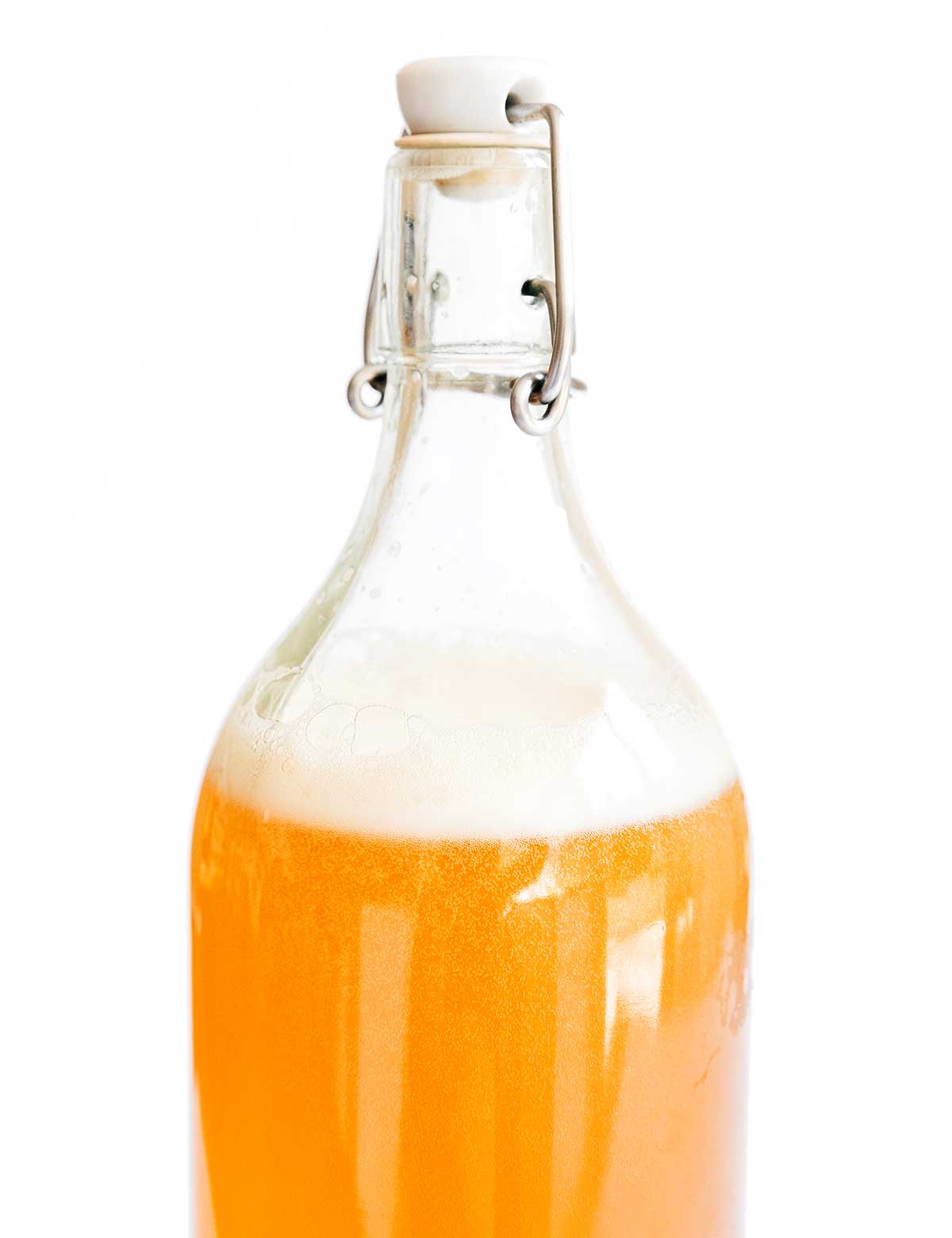

Watch The Pressure
Please note that carbonating tepache does involve pressure buildup inside the bottles, which is why I recommend bottles specifically made for fermentation. As with any second fermentation, there is a risk of bottles exploding, so check on your bottles regularly and move them to the refrigerator when done.
Flavor Variations
Since pineapple tepache is so unbelievably versatile, you can make it your own by adding more flavors to the brew! Here are some ideas:
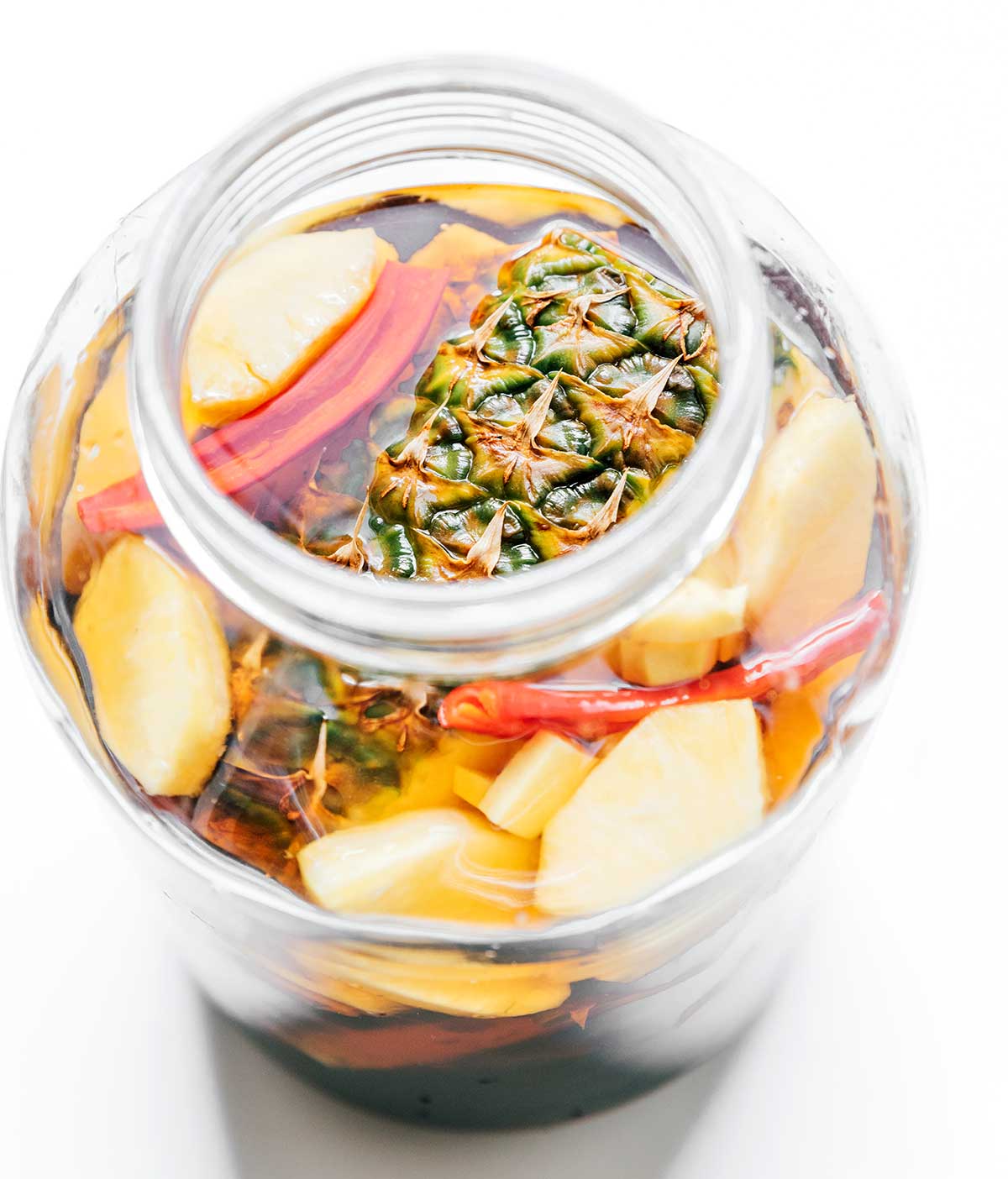
To the first fermentation, add 2 thumbs of fresh sliced ginger (highly recommend), whole cloves, cinnamon sticks, chilis, pineapple flesh, or even diced mango. Just be sure all ingredients are fully submerged to prevent mold.
To the second fermentation, you can add virtually any fruit juice or fruit puree. Get some ideas from our kombucha flavors!
Why isn’t my tepache bubbling?
If your tepache isn’t bubbly, it is likely because the yeast isn’t working well. This could be because you washed or submerged the pineapple in hot water (which would kill the yeast) or because your pineapple wasn’t ripe enough (meaning there wasn’t much yeast on it to begin with). If your tepache does not bubble in the first fermentation, consider starting over. If it did bubble in the first but not in the second fermentation, add a little sugar or juice to the bottles to give the yeast something to eat.

Foolproof Pineapple Tepache (Step-By-Step)

Ingredients
- 1 ripe pineapple
- 1 cup light brown sugar, 200 g, or 1 large cone piloncillo
- 8 cups water, 1.9 L
- Optional: 2 thumbs sliced fresh ginger, ½ red chili, 1 cinnamon stick, 3 whole cloves
Instructions
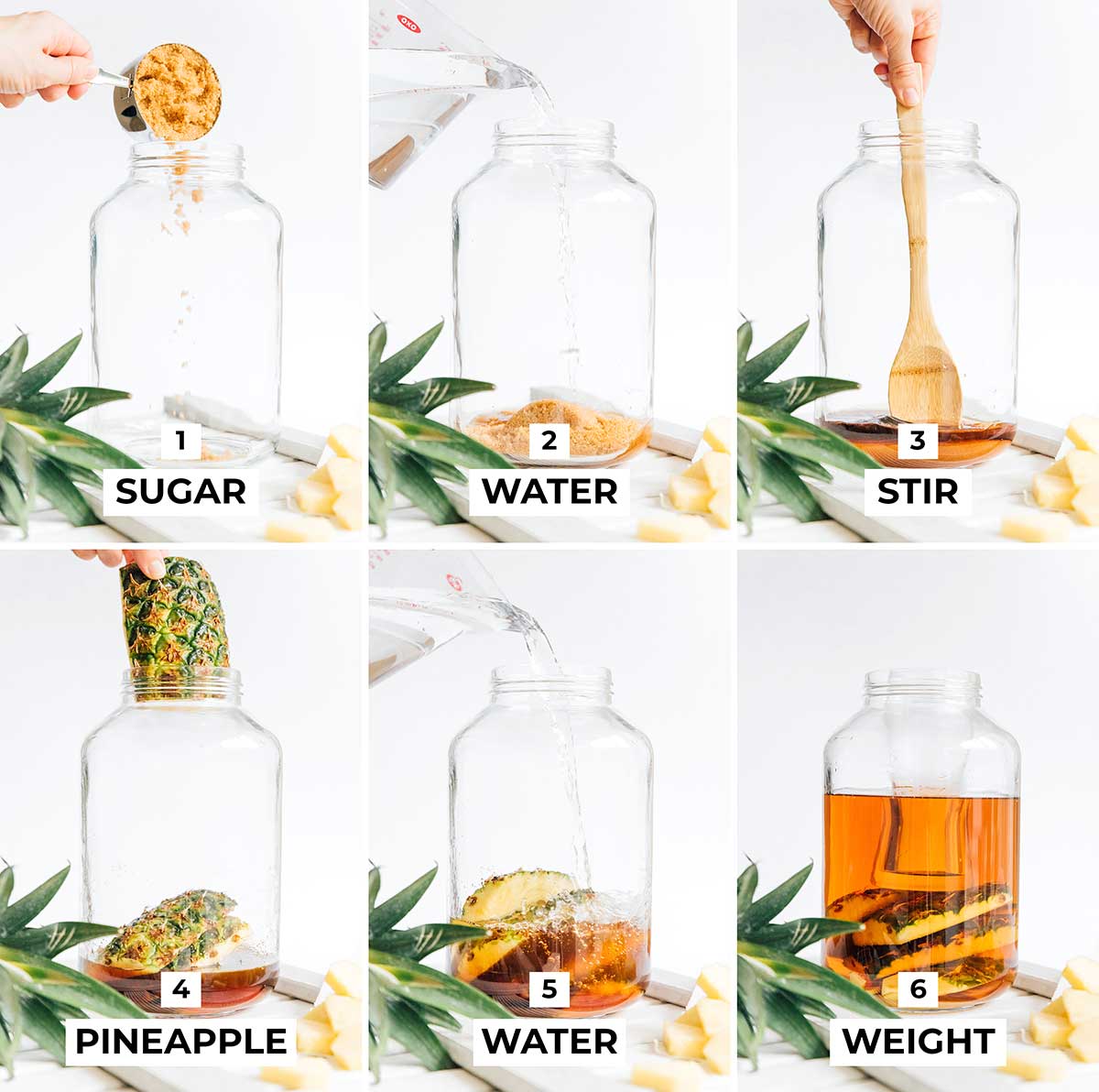
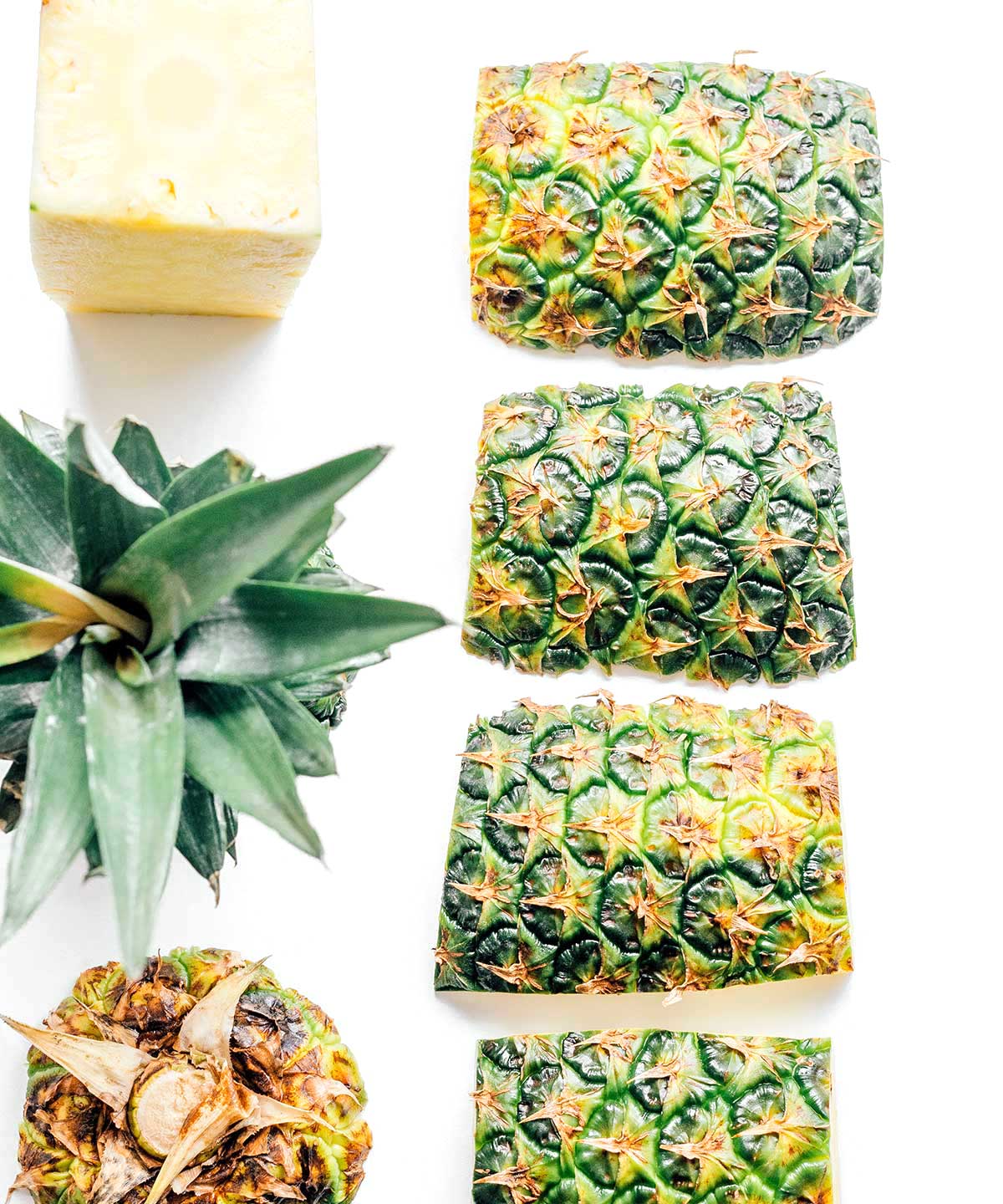
- Cut: Remove the crown and base of the pineapple, then rinse the body of the pineapple with cool tap water to remove potential pests or dirt. Cut the peel from the pineapple in big chunks, leaving about ½ inch of the pineapple flesh on the peel.
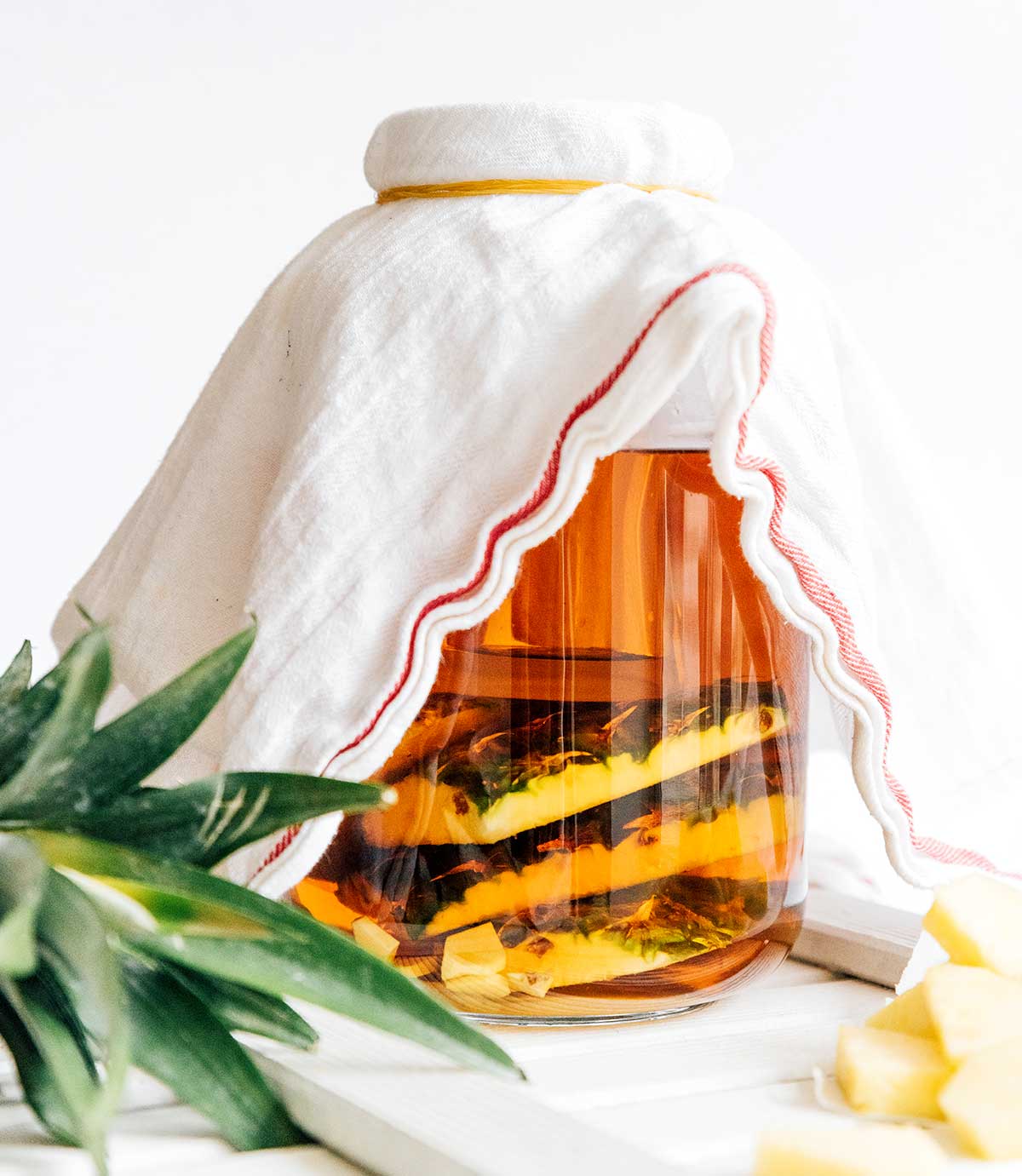
- Assemble: Add sugar (or piloncillo) and 1 cup of the water to a clean, large glass or ceramic jar, stirring well to dissolve sugar. Add optional flavors and cover with pineapple rinds, then add remaining water. Submerge all ingredients in the liquid to prevent mold by weighing it down using either a glass, ladle spoon, or fermentation weight.
- Ferment: Cover with a clean dish towel or a few layers of paper towels, then secure with a rubber band. Set somewhere dark and room temperature (ideally 75-80°F, 24-26°C), letting it ferment for 1 to 3 days.
- Drink or Bottle: The tepache is finished when you see many small bubbles on top and it tastes how you want it to (test by drawing some out with a paper straw, using your finger to keep the tepache in the straw). Either refrigerate and drink the tepache as is, or carbonate it in the second fermentation.
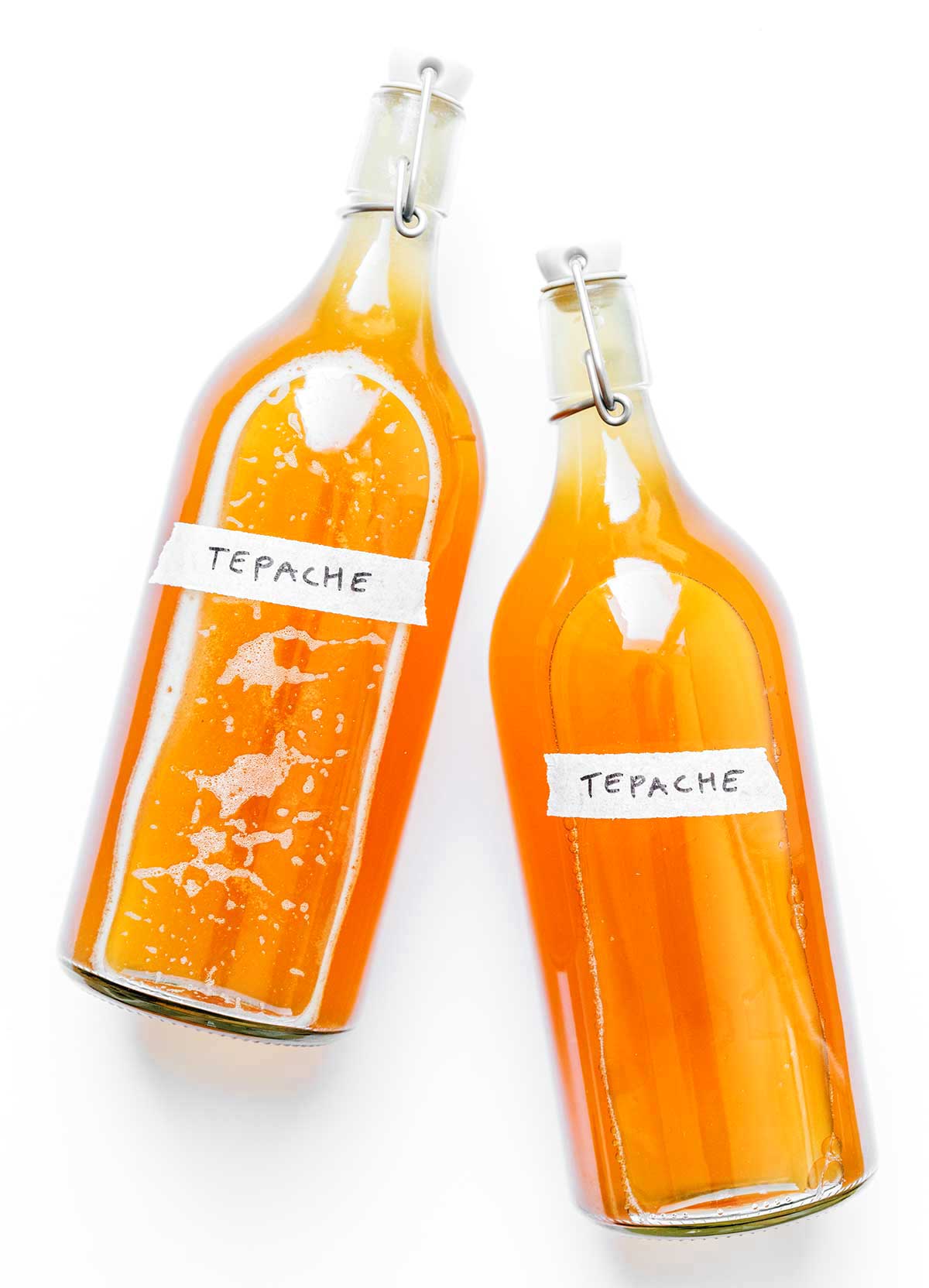
- Second Fermentation (Optional): Funnel the liquid into fermentation-grade bottles, leaving about 2 inches free at the top of each bottle. Set somewhere room temperature and dark, then allow it to ferment for another 1 to 3 days. After 24 hours, pop open a bottle to see how carbonated it has become and to gauge how much longer they will need. When the tepache has reached a carbonation level that you like, transfer the bottles to the refrigerator to stop the fermentation.
Notes
Nutrition
Nutrition information calculated by Sarah Bond, degreed nutritionist.
 did you make this?Leave a comment below and tag @liveeatlearn on social media! I love seeing what you’ve made!


Will have to try this!
However, fermentation is an anaerobic process. That’s why you weight down your produce to keep it under the surface of whatever salt or sugar brine you are using.
Yeast is digesting the sugars and the CO2 is a byproduct of that process.
I read somewhere that you can add fresh blueberries & raspberries to the pineapple too. I tried it but after 3 days, i am not getting any foam yet. Smeels yeasty tho. Is it bad or is it still fermenting?
Probably just fermenting! Usually bad tepache will have visible signs of mold or a foul odor.
I made the tepache and it’s turned out beautifully! I am a bit worried though. I bottled it today after straining through cheese cloth and closed them for the second fermentation. I decided to check it 12 hrs later and it fizzed all over. One, did I lose all of my carbonation now? And two, will it explode now if i reseal it and refrigerate it?
I would try “burping” it every few hours to let out that excess carbonation in the future! But in the fridge the fermentation will slow down so it shouldn’t be as explosive in there. Happy it turned out so well otherwise! 😀
Very clear directions. I have made this a few times and it turned out great. If you can get ahold of a pink pineapple, they are sweeter. I’ve used brown sugar and pincello and they both worked out the same.
Have made this many, many times over this Summer. Gotta do the 2nd ferment as it’s so much better. I do two days 1st ferment and then two days 2nd ferment. Really perfect for us. It has worked perfectly every time. Oh, and I always use Mexican cone sugar. Thanks! A great recipe and guide you have here!
How long does the tepache last after the FIRST fermentation? And does it have the healthy gut stuff (probiotics) without the 2nd ferment?
It has virtually the same benefits without the 2nd fermentation – just won’t be bubbly! It can be stored indefinitely in the fridge 😀
Can I use teacher in secondary kombucha fermentation?
I haven’t tried it, but I think you probably could use tepache in the 2nd ferm!
Hi,
I made this after watching Brad on Bon Appetite and finding your site. I had good fermentation on my first try and after straining it for the second fermentation in bottles it has a thick slimy consistency. What would be causing this? The flavor is right but the slime is off-putting!
Isn’t Brad the best?! Tepache is a “wild” fermentation, meaning we’re *hoping* the right yeasts get to work on fermenting. Sometimes the balance of yeasts and bacteria can get off a bit, which would cause the sliminess. It’s very likely still safe to drink, but I’d say just try again with a clean container to reset your brew!
Back in 1950 my grandma started the drink people would line up to get her beer. Pineapple beer
Hello,
I just opened up my tepache after 4 days and I was surprised to find that it wasn’t a watery thin liquid. Instead, as I was removing the pineapple peels, a viscous, syrupy liquid was flowing off each piece. Likewise, when I poured a portion into a mug, it was thick and bordering on gelatinous.
Can you help me troubleshoot?
This is probably from an overgrowth of the wrong bacteria type (Pediococcus). Tepache is a “wild fermentation”, meaning really any bacteria and yeast *can* be present, which is probably why this happened. I would say just try again after cleaning everything well!
Do you ever use this to make cocktails or is it better drinking on its’ own? I would think the fermentation might yield a small amount of alcohol. Is that correct? I’ve used your kombucha recipe in the past and it was wonderful just takes a bit of getting used to the ‘look’ 🙃 of the end result
There is a small amount of alcohol in this, yes! Probably not enough to be considered an alcoholic beverage. I do love using it as a cocktail base though! 😀