

This post contains affiliate links.
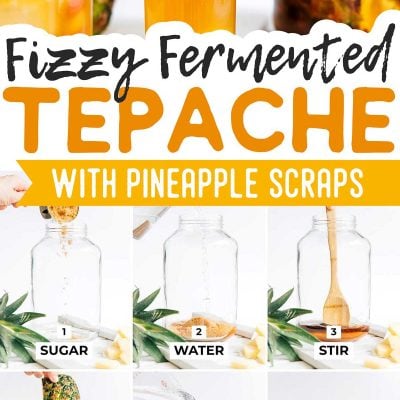
This foolproof guide will teach you how to make pineapple tepache, a fizzy fermented Mexican drink made from just 3 ingredients!
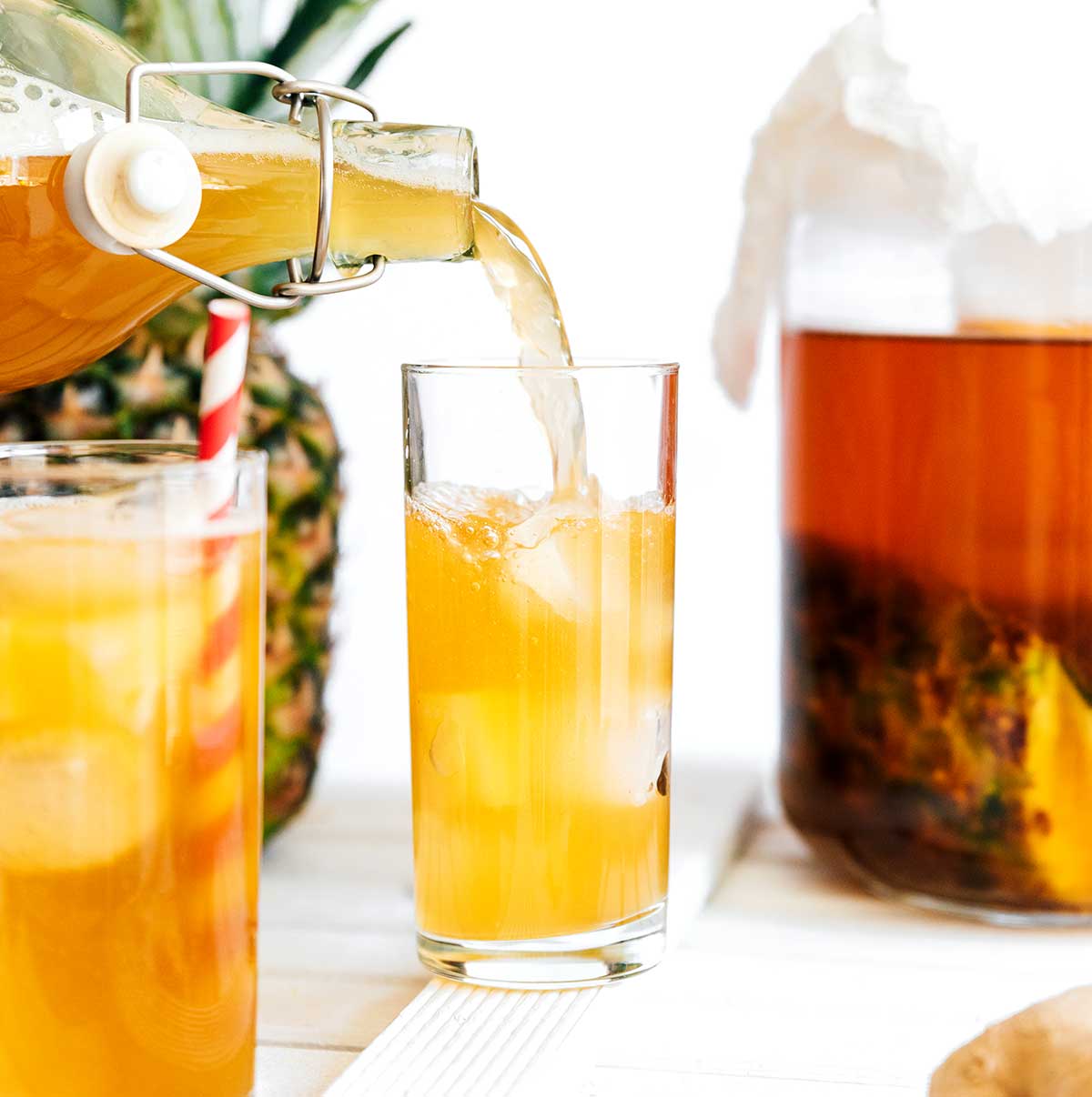
 save this recipe!
This pineapple tepache is the result of countless test batches and fine-tuning—and trust me, this is the only recipe you need!
Here’s how it works: Yeast lives virtually everywhere, and it can be harnessed to make tasty things! Yeast on flour makes sourdough, yeast on tea makes kombucha, and yeast on pineapple skin makes…tepache!
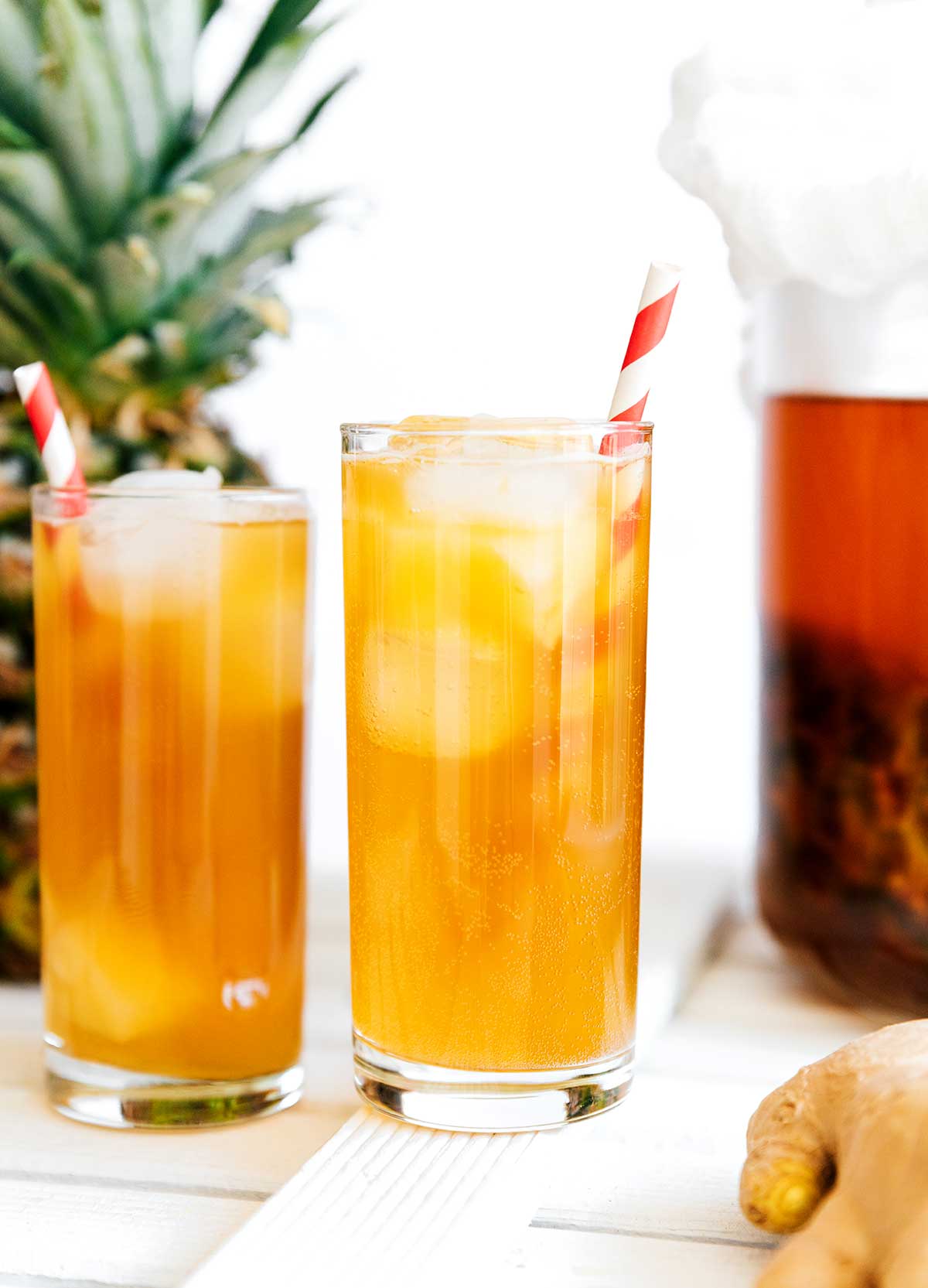
Simply feed it what it loves (sugar) to create both flavor and carbonation. Once brewed, tepache ranges from cider-like and sweet to more yeasty-like. Basically, the result is a delicious fermented pineapple drink that falls somewhere between soda, kombucha, and beer.
Reader rating
Tepache Ingredients
Jump to the recipe card for all the measurements. This is just an overview!
- Pineapple Peel: Since we’re using the peel, aim for an organic pineapple. Pineapples are a pesticide-intensive crop, and you don’t want that in your tepache!
- Sugar: Use either piloncillo (the traditional Mexican sugar) or light brown sugar.
- Water: No need to overcomplicate things – tap water is just fine here!
Tepache Contains Alcohol
Tepache has an alcohol content of about 2% ABV, though this can be less if you let it ferment for a shorter time or more if you let it go longer or are in a warmer climate.
Watch The Pressure
Please note that carbonating tepache does involve pressure buildup inside the bottles, which is why I recommend bottles specifically made for fermentation. As with any second fermentation, there is a risk of bottles exploding, so check on your bottles regularly and move them to the refrigerator when done.
Flavor Variations
Since pineapple tepache is so unbelievably versatile, you can make it your own by adding more flavors to the brew! Here are some ideas:
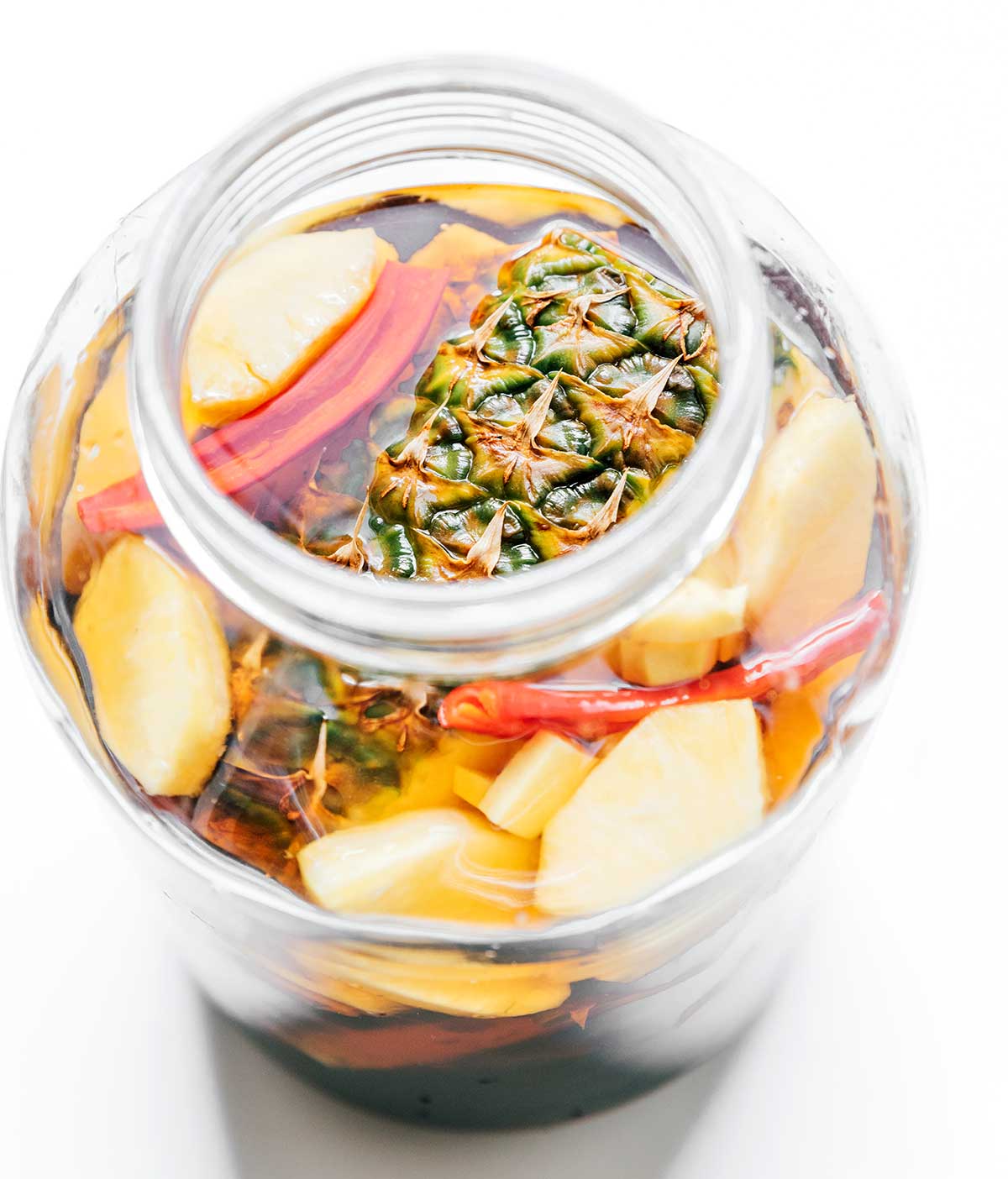
To the first fermentation, add 2 thumbs of fresh sliced ginger (highly recommend), whole cloves, cinnamon sticks, chilis, pineapple flesh, or even diced mango. Just be sure all ingredients are fully submerged to prevent mold.
To the second fermentation, you can add virtually any fruit juice or fruit puree. Get some ideas from our kombucha flavors!
Why isn’t my tepache bubbling?
If your tepache isn’t bubbly, it is likely because the yeast isn’t working well. This could be because you washed or submerged the pineapple in hot water (which would kill the yeast) or because your pineapple wasn’t ripe enough (meaning there wasn’t much yeast on it to begin with). If your tepache does not bubble in the first fermentation, consider starting over. If it did bubble in the first but not in the second fermentation, add a little sugar or juice to the bottles to give the yeast something to eat.

Foolproof Pineapple Tepache (Step-By-Step)

Ingredients
- 1 ripe pineapple
- 1 cup light brown sugar, 200 g, or 1 large cone piloncillo
- 8 cups water, 1.9 L
- Optional: 2 thumbs sliced fresh ginger, ½ red chili, 1 cinnamon stick, 3 whole cloves
Instructions
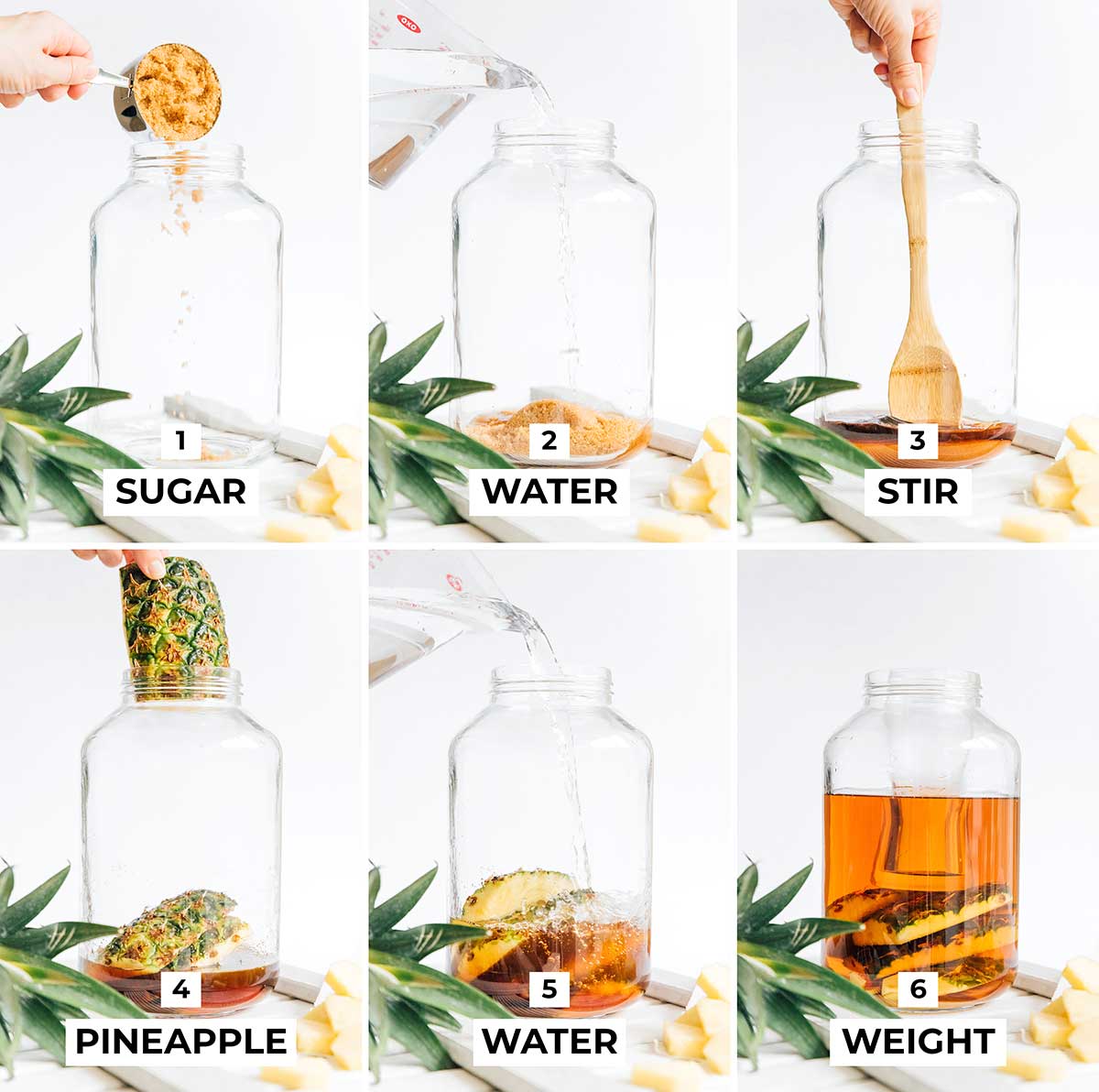
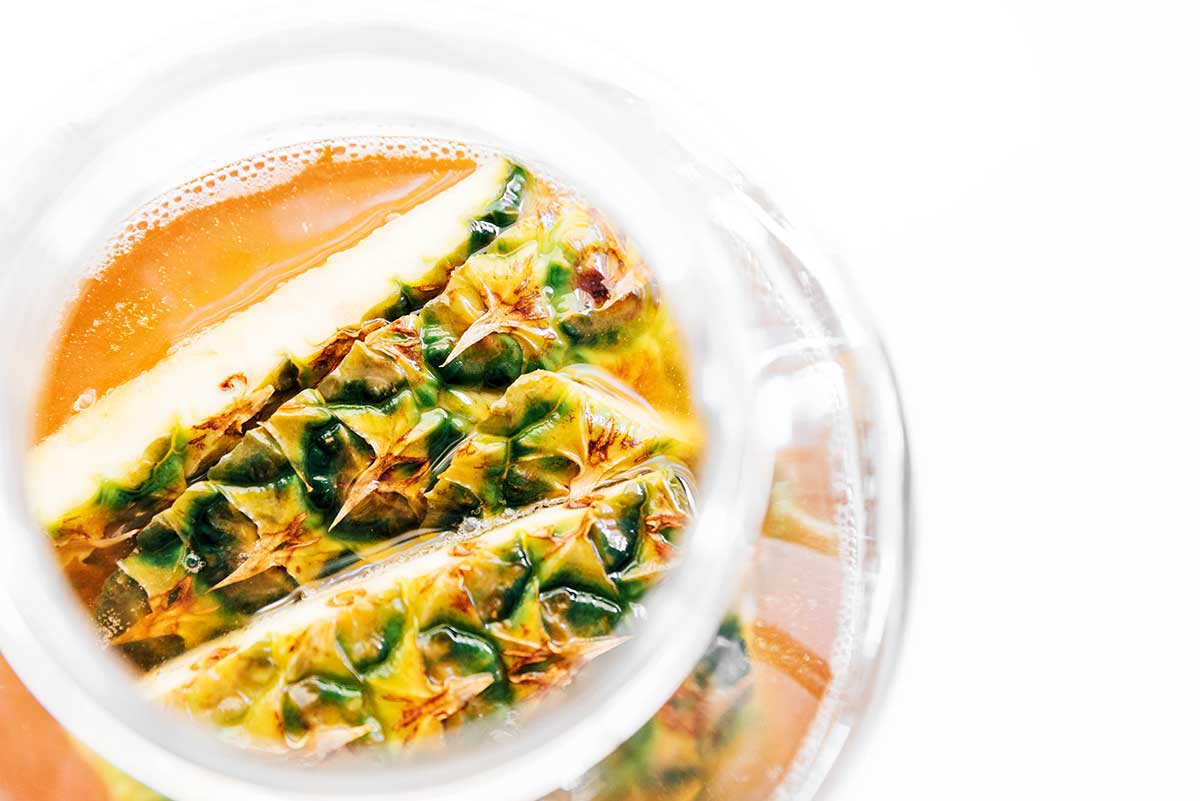
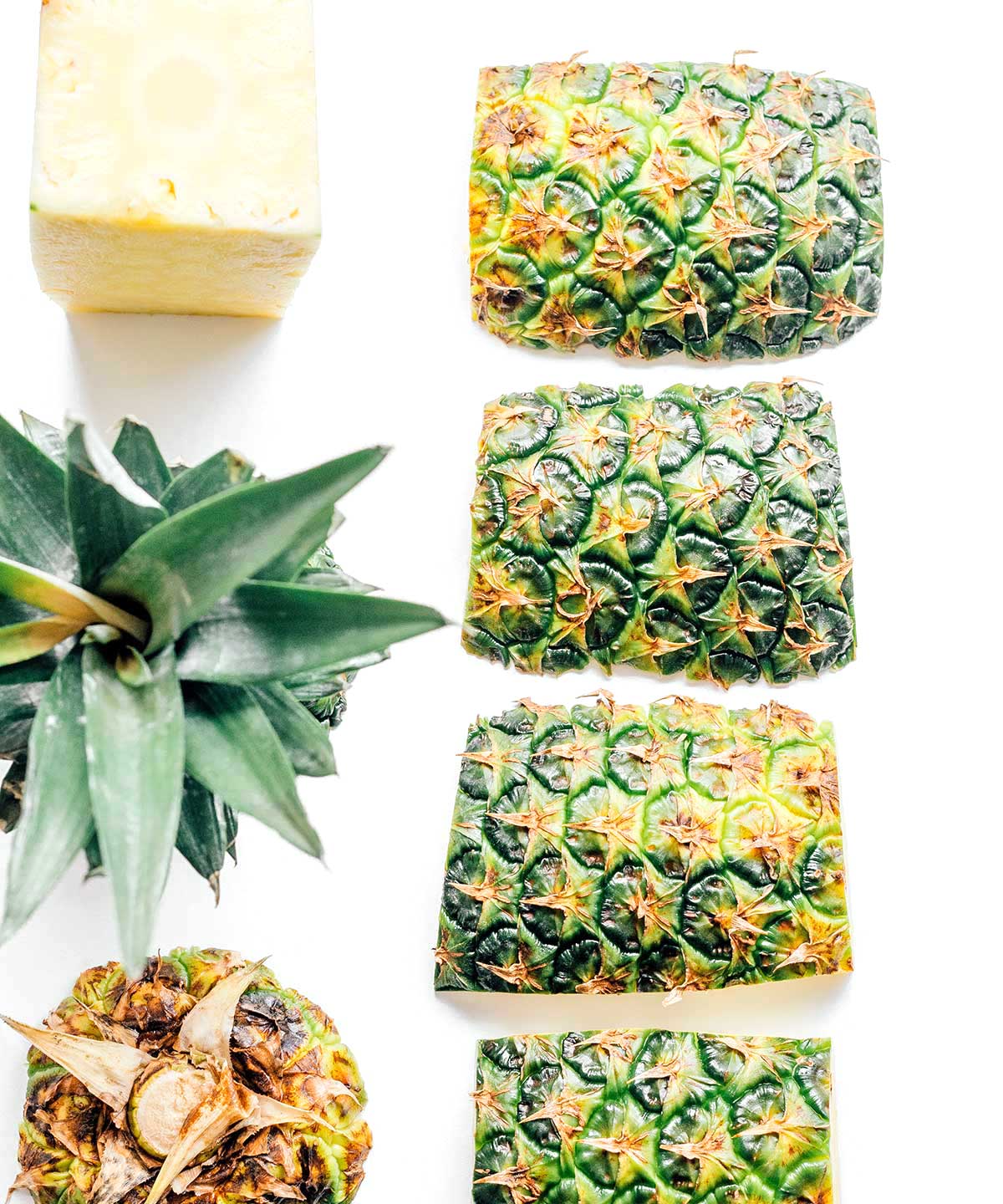
- Cut: Remove the crown and base of the pineapple, then rinse the body of the pineapple with cool tap water to remove potential pests or dirt. Cut the peel from the pineapple in big chunks, leaving about ½ inch of the pineapple flesh on the peel.
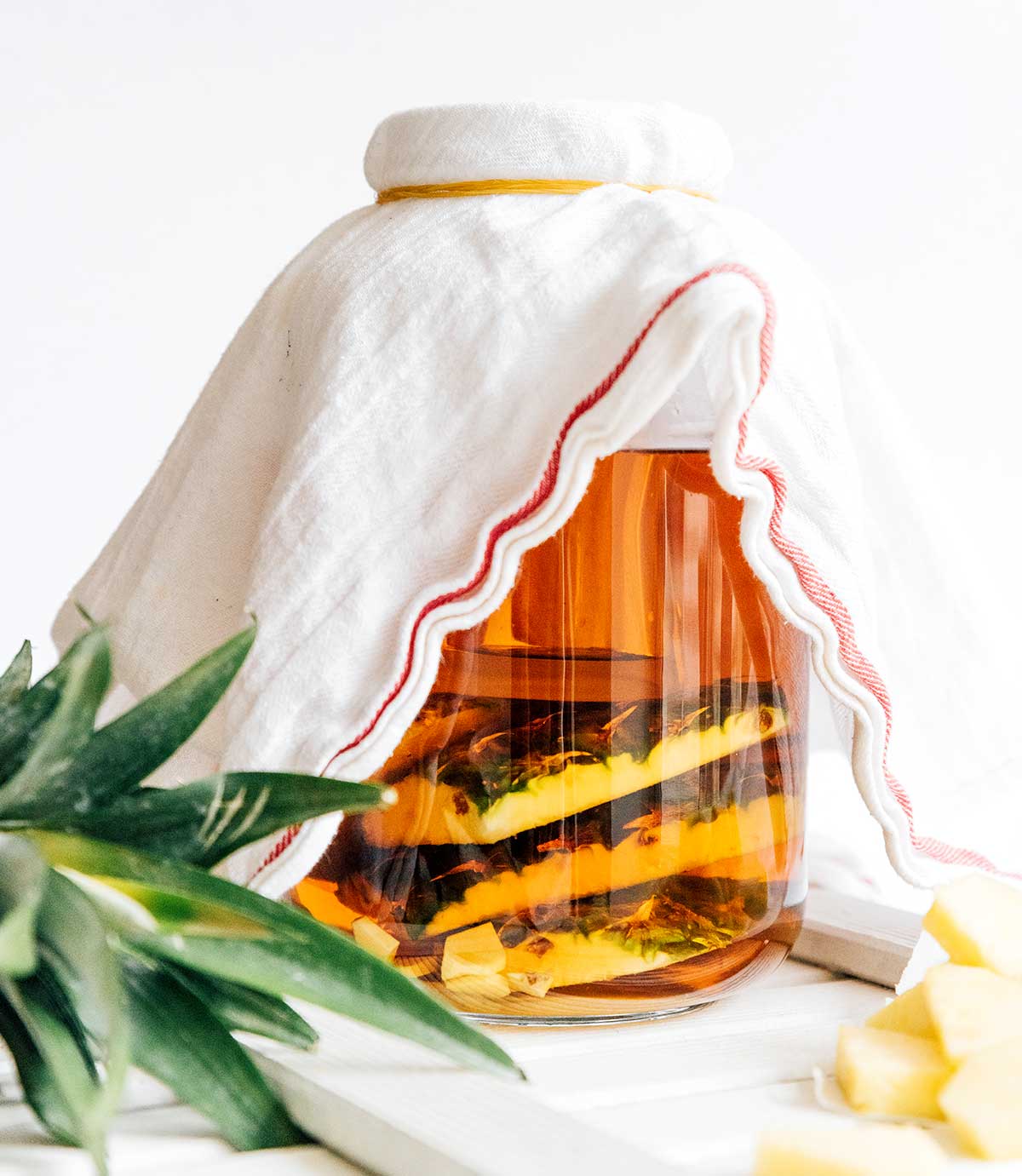
- Assemble: Add sugar (or piloncillo) and 1 cup of the water to a clean, large glass or ceramic jar, stirring well to dissolve sugar. Add optional flavors and cover with pineapple rinds, then add remaining water. Submerge all ingredients in the liquid to prevent mold by weighing it down using either a glass, ladle spoon, or fermentation weight.
- Ferment: Cover with a clean dish towel or a few layers of paper towels, then secure with a rubber band. Set somewhere dark and room temperature (ideally 75-80°F, 24-26°C), letting it ferment for 1 to 3 days.
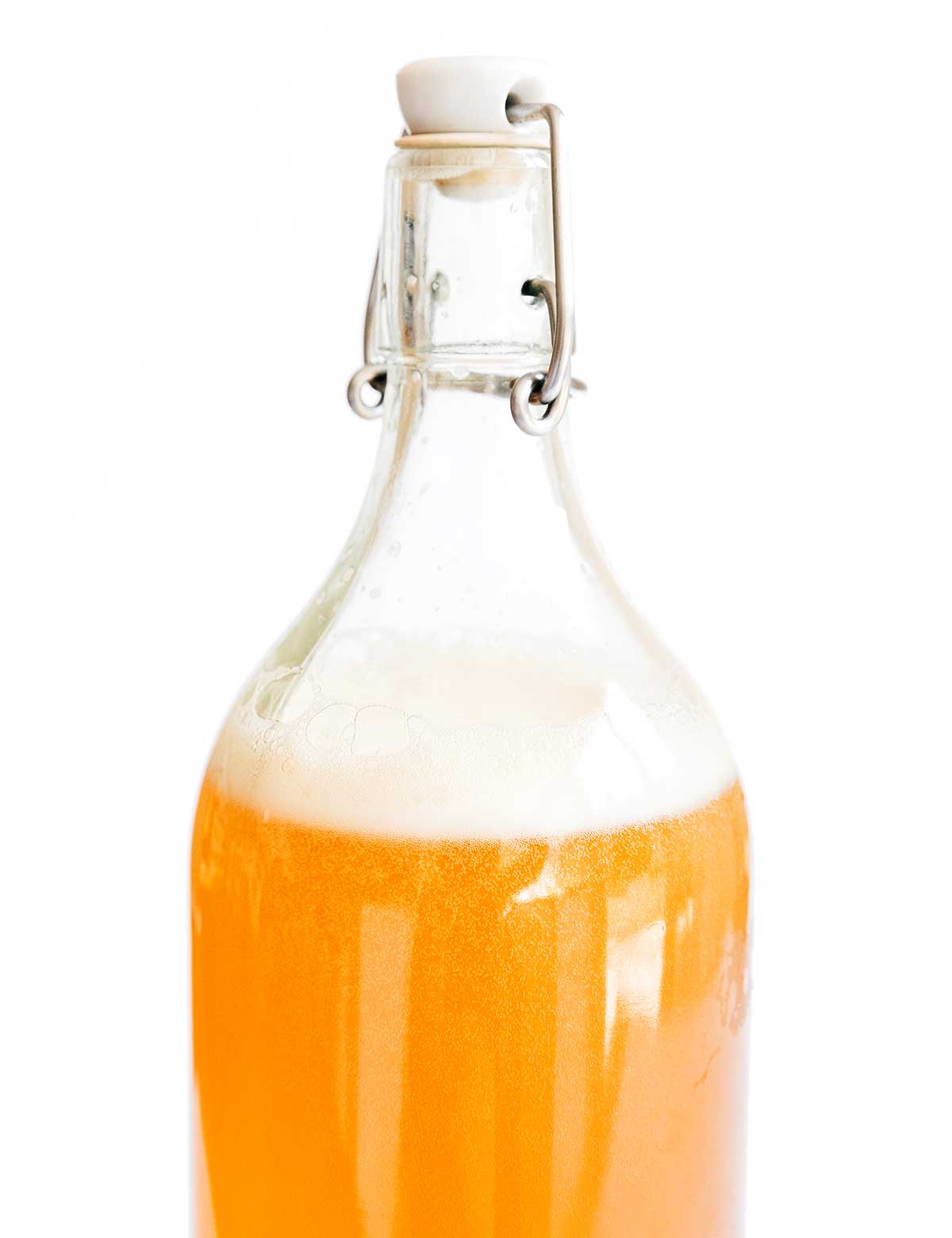
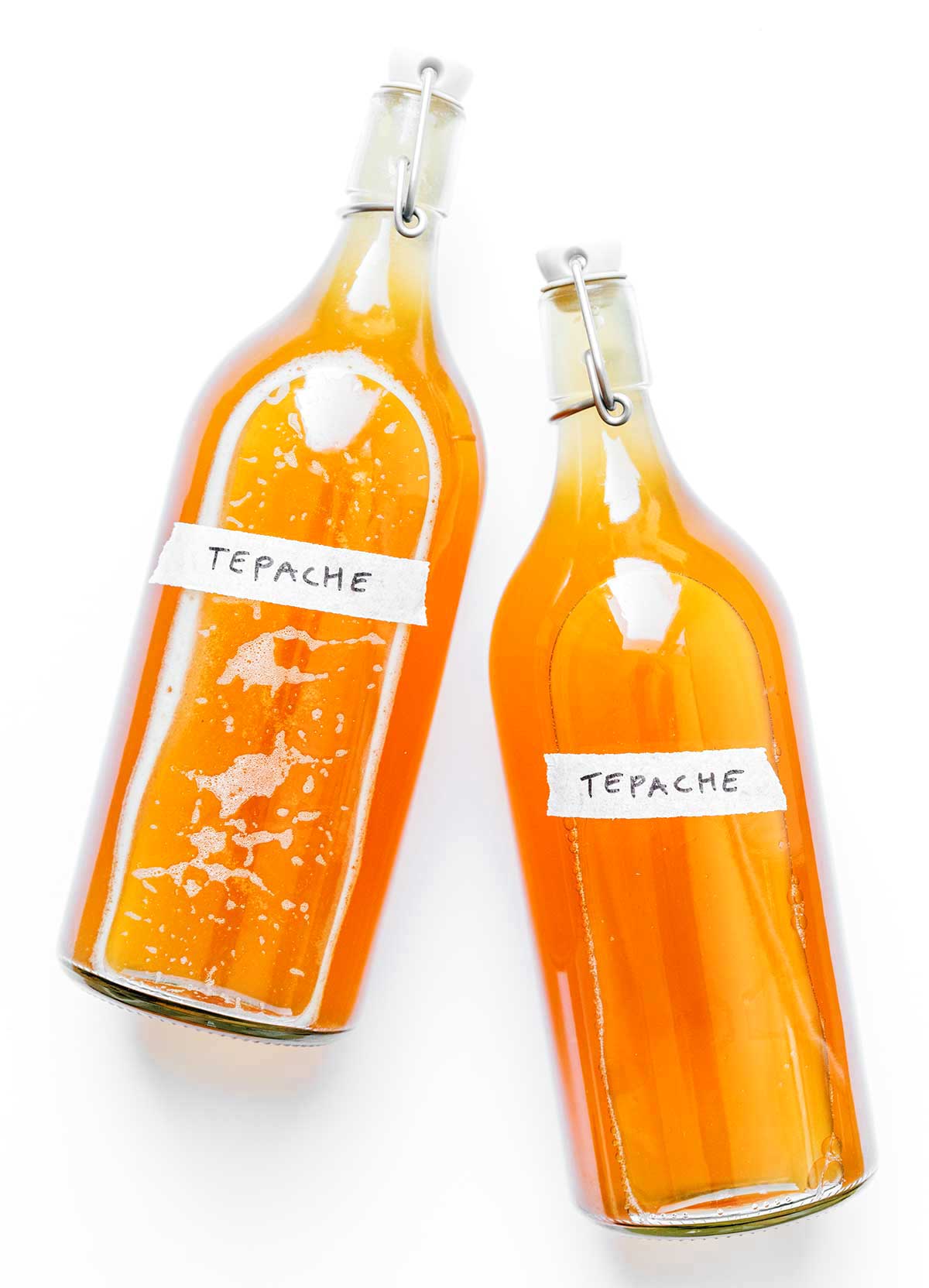
- Drink or Bottle: The tepache is finished when you see many small bubbles on top and it tastes how you want it to (test by drawing some out with a paper straw, using your finger to keep the tepache in the straw). Either refrigerate and drink the tepache as is, or carbonate it in the second fermentation.
- Second Fermentation (Optional): Funnel the liquid into fermentation-grade bottles, leaving about 2 inches free at the top of each bottle. Set somewhere room temperature and dark, then allow it to ferment for another 1 to 3 days. After 24 hours, pop open a bottle to see how carbonated it has become and to gauge how much longer they will need. When the tepache has reached a carbonation level that you like, transfer the bottles to the refrigerator to stop the fermentation.
Notes
Nutrition
Nutrition information calculated by Sarah Bond, degreed nutritionist.
 did you make this?Leave a comment below and tag @liveeatlearn on social media! I love seeing what you’ve made!


hello there ! the recipe is simple to make and everything but there is a smell of rotten egg…is that normal ?
Thank you
Hmm rotten egg smell isn’t normal. It should smell yeasty, like beer or bread. Are there any traces of mold on the surface? And is your pineapple fully submerged?
That’s also a sign the yeast is distressed. This happened with my ginger beer and I have tried to figure out if it was too much sugar or not enough oxygen. I still don’t know…
I’m so excited that people are making tepache! Thank you for putting this recipe out there and spreading the gospel! I can second adding the chili and ginger. I definitely second the cloves and cinnamon too, but they are kind of a must so I feel less emphatic about them. Other things to play with are black peppercorns, whole cardamom pods, cumin seeds and grains of paradise.
1 to 3 days for the secondary ferment sounds like a suicidal length of time though! I’d cut it at 6-12 for a first batch using only the wild yeast on the pineapple. I lost a lot of tepache the first few times I made some by letting it carbonate over night 🙁 . I use an heirloom starter from my previous batches (going on 8 generations of tepache now I think?) and now it’s so vigorous that 2 days first ferment is almost too long at 72 degrees and more than 2 hours secondary ferment is way too much pressure built up. Now that I’ve gotten the hang of it, I prefer this because it’s much quicker and more predictable. I usually let it go too long now and get very dry then I add simple syrup or pineapple juice as I’m bottling to nail the sweetness that I want and play with interesting added flavors. It also ensures a higher alcohol content (like 2%…)
Of course everything depends on the strength of the ferment, how much sugar is left in the mix at bottling and the temperature. But that’s my 2 cents about the 2nd ferment at bottling.
Can i add potassium sorbate to preserve the recipe
I can’t say for sure as I’ve never tried it, sorry about that!
Hi, I live in northern USA and pineapples would have to be imported. Even if organic wouldn’t there be a lot of crap on the peels, being that they are so three-dimensional? How might this affect the kombucha and myself? Is there a way to rinse them without losing any yeast? Thank you
Just give them a good rinse with cool water! I usually look for any visible dirt or nasties, but haven’t scrubbed or done any deeper cleaning than that.
Hello Sarah. This recipe looks amazing. I have brewed a lot of beer in the past, some from kits using wort, others from boiling hops and using more traditional methods. I must say that the kits are easier, and far less smelly, as boiling the hops gives off an awful stench that lingers for days.
I wish I had known this recipe when I lived in Glass House Mountains, north of Brisbane. I was there for 14 years and tidally surrounded by vast farms full of organic pineapples. I knew a lot of the owners and could always have as much as I wanted. I live back in the U.K. now, so no such luck.
I did have one question about your instructions above. You mention putting a tea towel, or tissues, over for top to allow oxygen in. My understanding was that fermentation was an anaerobic process. Have I missed something in my understanding? Is something else going on here?
I have another tip for anyone living in cold climates. When I was living in Australia the summers were ridiculously hot (daily temps L: 20°C, H: 40°C), and the winters would be a little less hot (L: 15°C H: 27°C). This made it very difficult to brew anything unless you lived with the aircon on constantly to maintain a steady and adequate temperature for the yeast. In the U.K. I find that buying one of the brewers electric heater belts, or pads does the job really well. If I am brewing up a larger batch of something (40 pints or more) I have found that using a good quality tropical fish tank heater, one that has accurate temperature adjustment, to be an excellent temperature regulator. The fish tank heaters are also far cheaper than buying specialised brewing specific ones.
Thanks for the great recipe. I can’t wait to try it.
Nope, it’s aerobic! 😀 You only seal it airtight when you want to build carbonation. Happy brewing!
Can you use natural/unrefined cane sugar or honey?
I’m not sure about unrefined cane sugar but would not advise using honey which can contain different strains of bacteria and be harmful. From having brewed kombucha, I don’t think the unrefined cane sugar would work well either, but you can always give that one to go!
Hi There
Can I put the pineapple skins in a plastic container?
Thanks very much.
I don’t recommend using plastic in fermentations because it is porous and can house bacteria. Glass will be your best bet!
Good day,
My question is about reusing the pineapple rinds.
When reusing the rinds, do I add Sugar to the mixture again or only water?
Thank you for sharing this recipe!
Add sugar! 😀
There’s no way for me to get an organic pineapple. Do you think it would be okay to use a non-organic one if I wash it really well? I’m so excited about this recipe and would love to try it!
Yep that should be fine! Just don’t use hot water or soap, which would remove the good yeast on that pineapple skin!
If you can’t get organic pineapple and want to try to make this anyway then do indeed clean your nonorganic pineapple well. I would recommend backslopping with other tepeche and if you don’t have any another technique is to pour some of the clear liquid that forms on top of yogurt that you have stored in the refrigerator. I have boosted slow batches with the clear yogurt fluid and it has worked quite well. I have read that you can also backslop with kombucha if you have some. Just tricks I have picked up from other tepeche sites online. It is all good.
Hello, is it possible to juice the pineapple fruit and use that as a portion of the water amount along with the peels?
I haven’t tried this, but I suppose you could! 😀 Would love to hear how it goes if you try it out!