

This post contains affiliate links.
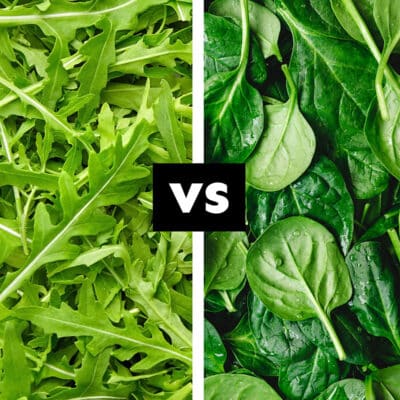
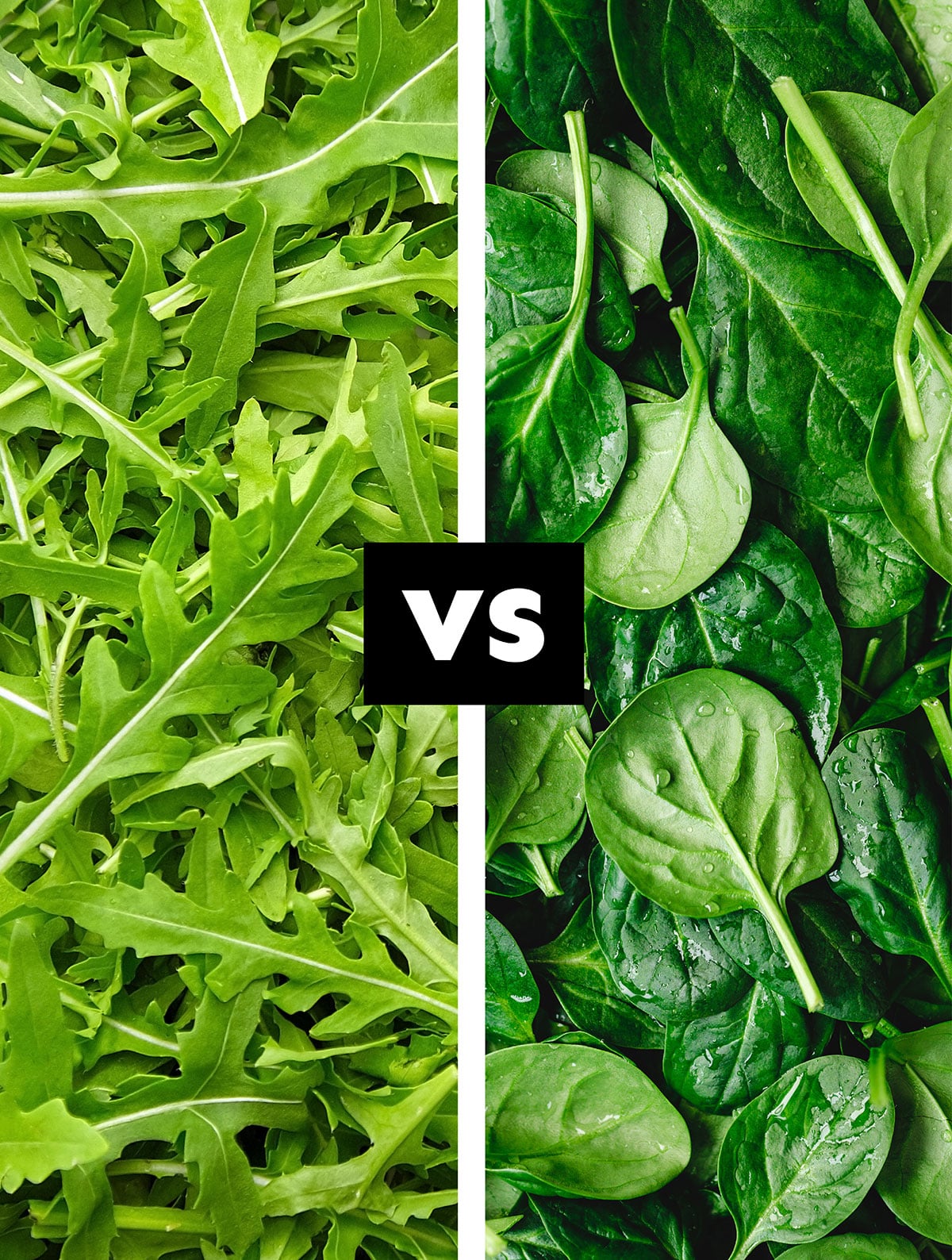
Two leafy greens with a reputation for being extremely healthy. But how are they different? And which is better? Arugula vs spinach – let’s break it all down!
Origin and History
Arugula: Also known as “rocket”, arugula is a leafy green vegetable that belongs to the Brassicaceae family, which includes other well-known plants like broccoli, cabbage, and mustard. Its origins can be traced back to the Mediterranean region where it was consumed by ancient civilizations, including the Greeks and Romans. It remained an important green in Italy long after the Roman empire fell, and spread across Europe from there.
Spinach: Spinach is native to SW Asia and is believed to have been first cultivated in Persia, modern-day Iran, over 2,000 years ago. Spinach was brought to Europe in the 11th Century by the Moors (Muslims), and didn’t reach the USA until 1806, but it came to stay. Today 90% of the spinach grown in the USA is grown in California and Arizona.
Appearance
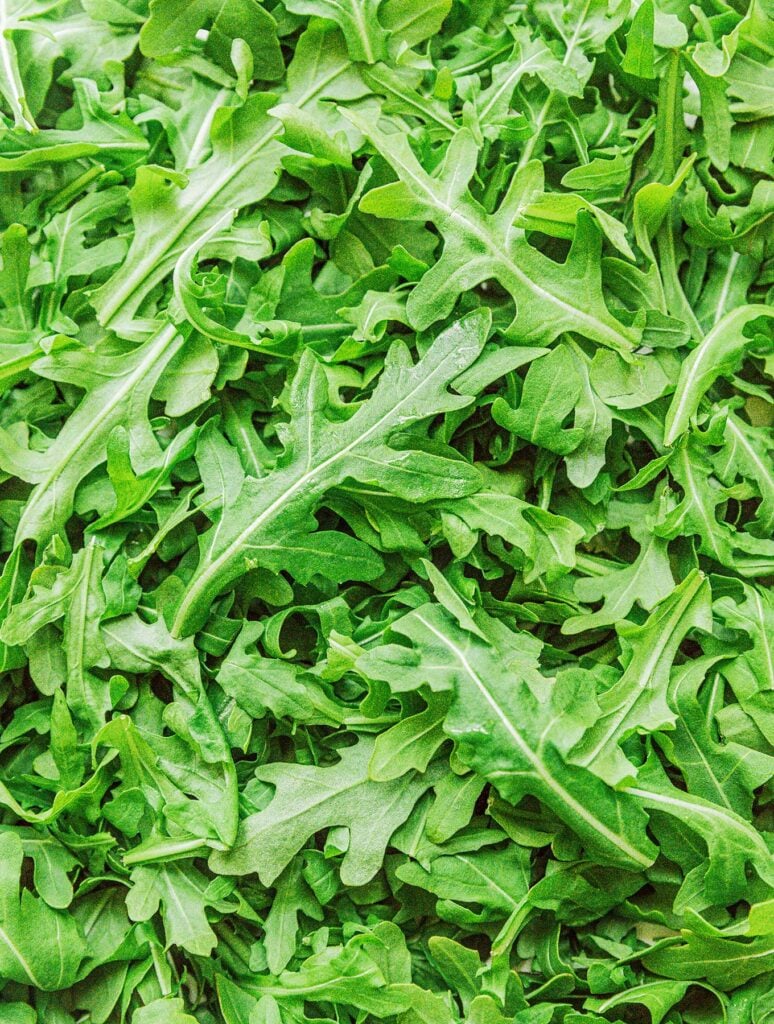
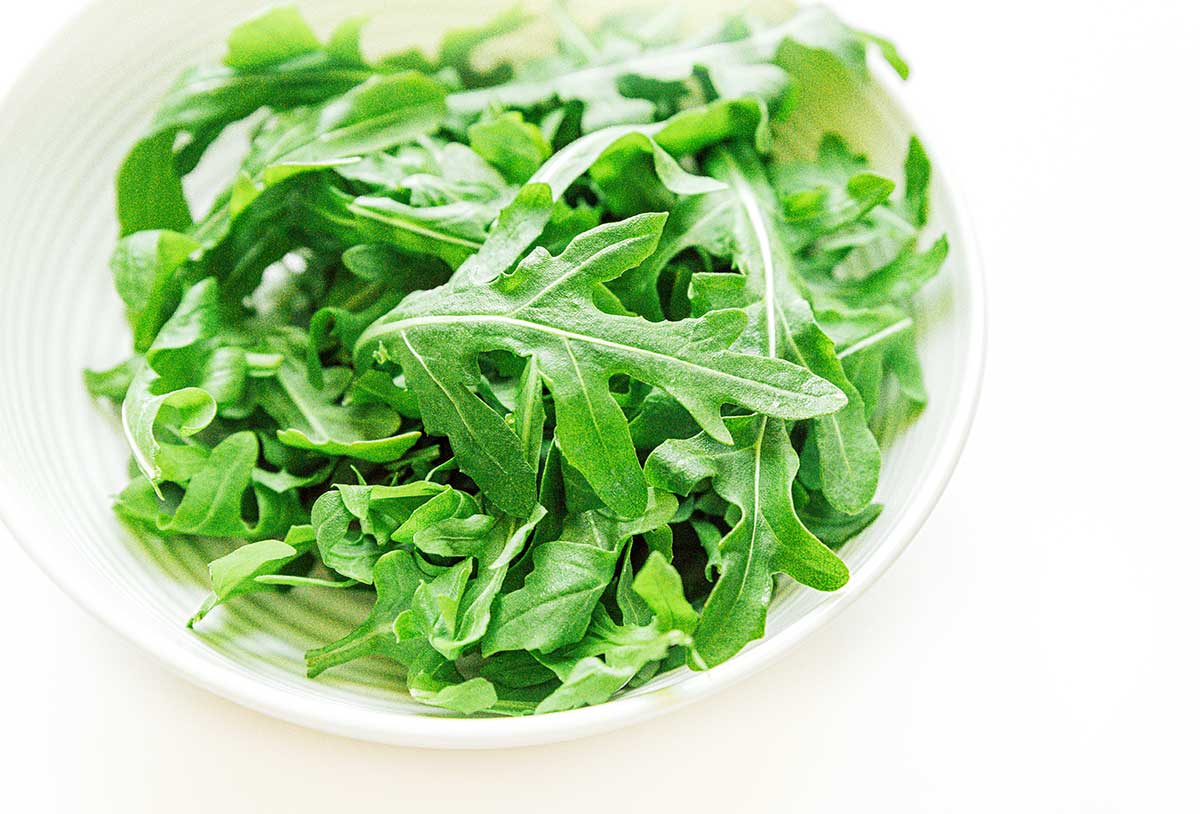
Arugula: This bright green veggie has elongated, deeply lobed leaves that look like dandelion leaves. The 2-3 inch long leaves are slightly curled, spiky, and serrated and don’t have the same smooth mouthfeel of lettuce or spinach. Their shape is what got them the nickname “rocket”.
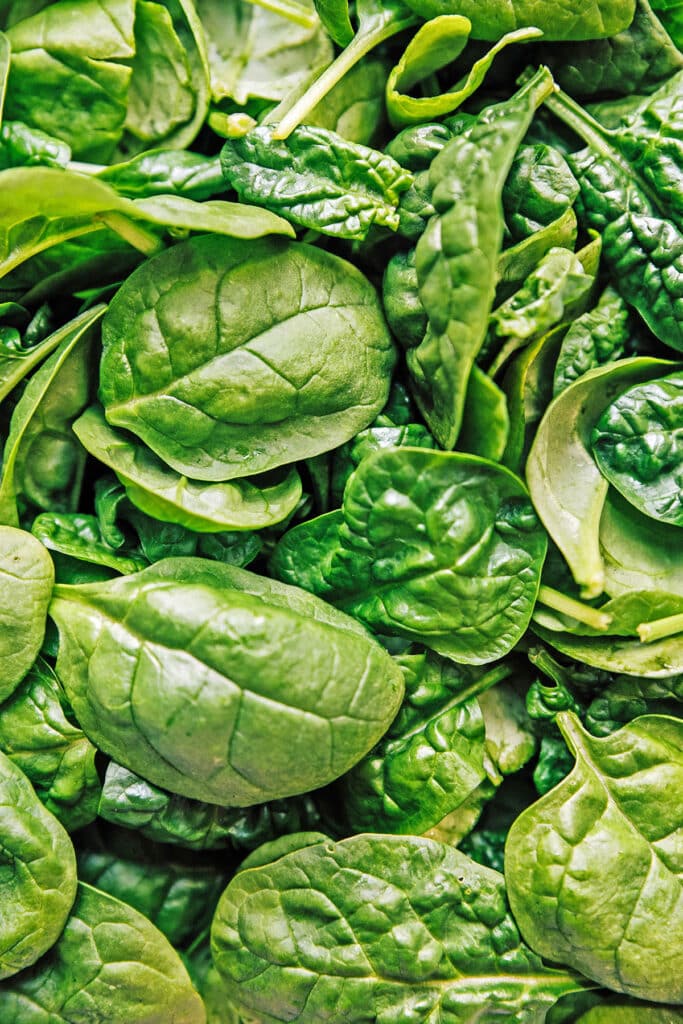
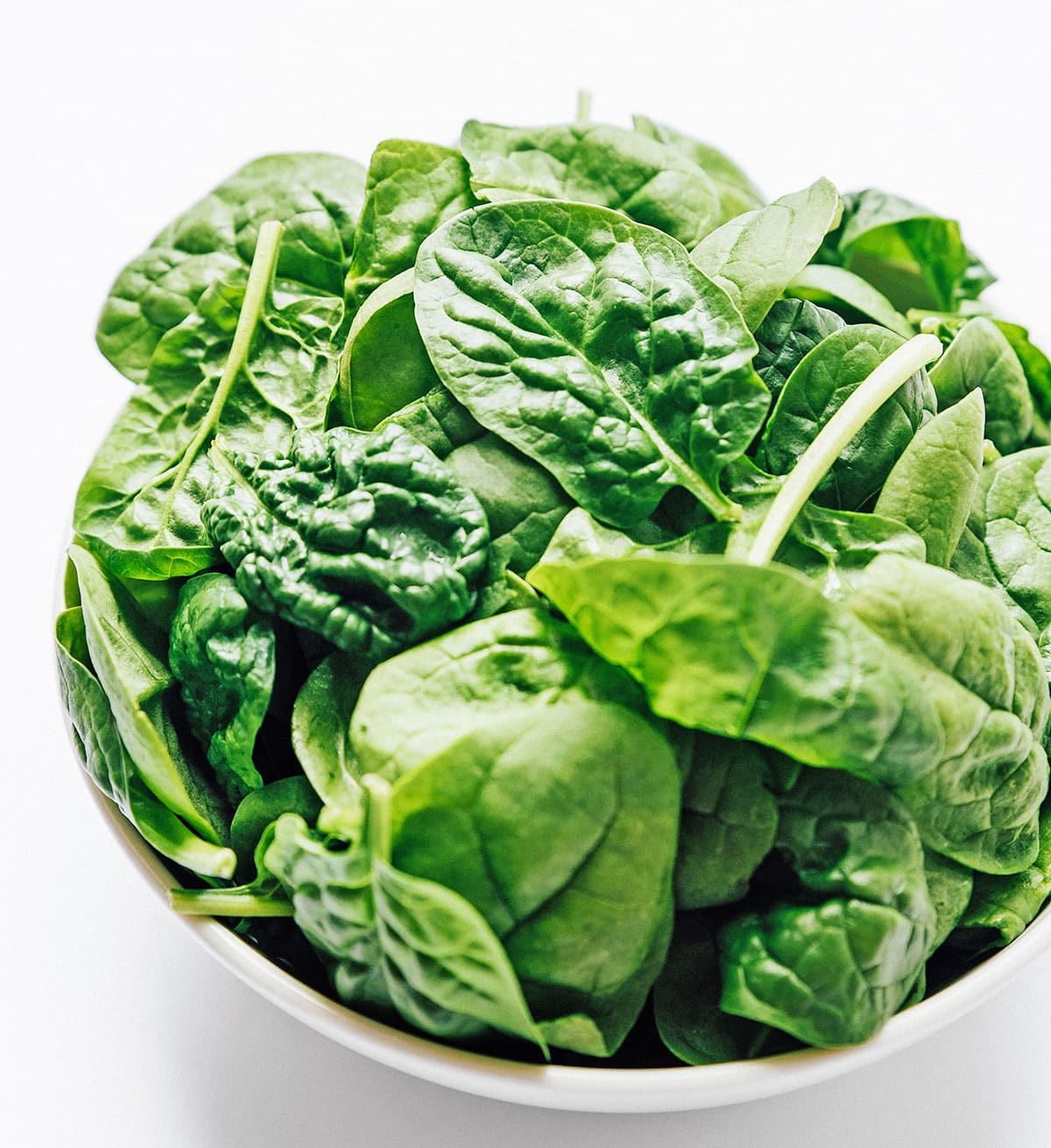
Spinach: Spinach has flat, broad, smooth, dark green leaves. The leaves are thin and delicate and are typically around 2-3 inches long. When cooked, spinach leaves shrink in size and become limp.


Aroma, Taste, and Texture
Arugula: Arugula has a faintly peppery aroma and a sharp flavor that intensifies as the leaves mature. Young leaves are decidedly more mild and delicate. The older leaves are more bitter with pronounced spiciness.
Spinach: Spinach has a mild and slightly sweet aroma, with a hint of earthiness. The smell becomes stronger when the leaves are cooked, but it is not overpowering. That said, cooked spinach does release a slightly bitter smell that some people find unpleasant. Spinach has a slightly sweet grassy flavor when eaten raw or cooked. It can get very soggy when cooked, and many people don’t like its “slimy” mouthfeel.
To sum up a flavor comparison, spinach is sort of sweet but grassy, arugula is peppery and more bitter! Why not consider salad with spinach and arugula? They have complimentary flavors and health benefits.
Culinary Uses
Arugula: Arugula can be used in many of the same ways that you would use in other lettuce recipes. It is great as a salad base, in wraps, or as a sandwich addition. You can even make an arugula smoothie as arugula is an easy substitute for spinach in green smoothies. We think, however, that Arugula comes into its own when cooked in favorites like arugula pizza, or a both sweet and savory twist on a classic in a Blueberry Balsamic Grilled Cheese.
You might also try arugula microgreens. These are simply very young arugula plants, harvested just days after germination with a fresh, crisp texture. They are a wonderful sandwich topper or salad addition.
If you’re cooking with an arugula bunch (versus from the ready-to-eat bags), be sure to cut off any thick stems. Rinse it thoroughly and dry in a salad spinner.
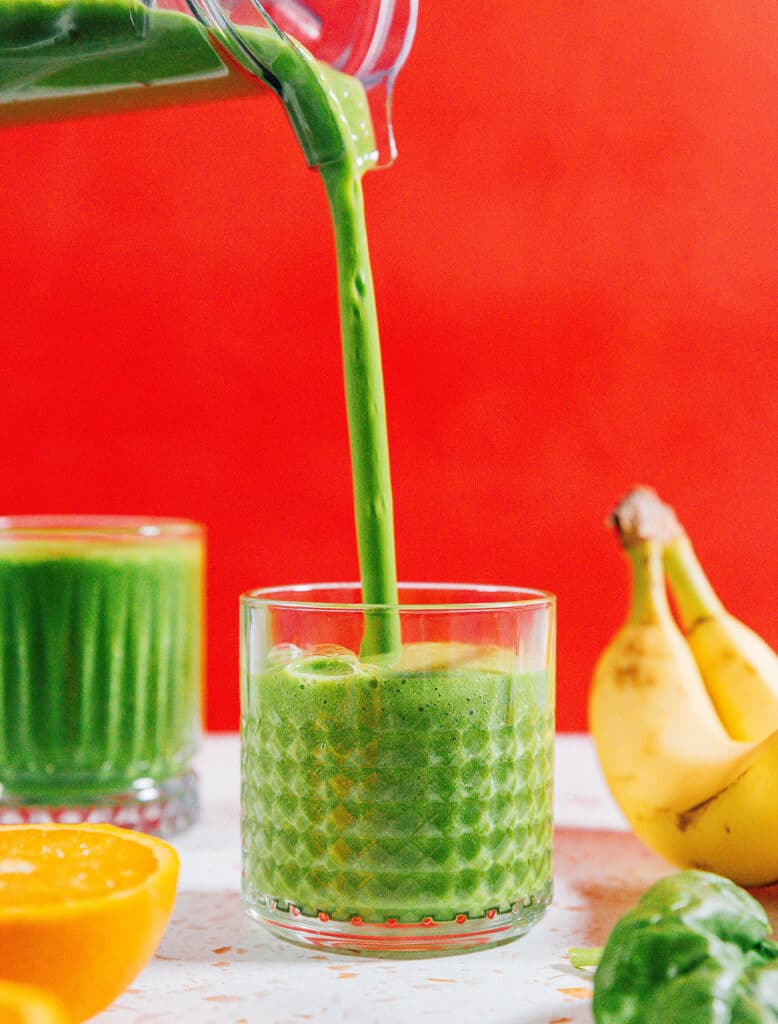
Spinach: Spinach is a versatile green that can be eaten raw or cooked. Its mild, slightly sweet flavor pairs well with a variety of cuisines. Raw spinach can be used in salads, smoothies, and sandwiches, while cooked spinach can be used as a side dish or added to soups and stews. There are a lot of great ways to cook spinach including roasting, sauteing, or you can even air fry spinach. Spinach is also a popular ingredient in quiches and omelets. See all of our spinach recipes here, or our favorites below!
- How to Make Green Smoothies People Will Like
- Leafy Greens Pesto with Spinach
- Greek Spanakopita Triangles
- Hidden Spinach Guacamole

Storing
Storing Arugula in the Refrigerator: Place the arugula in a plastic bag or an airtight container. You can add a paper towel to help absorb excess moisture, which will help extend its freshness. Store the bag or container in the vegetable crisper drawer if you have space. Arugula will typically last around 3 to 7 days in the refrigerator, but don’t wait long as it wilts.
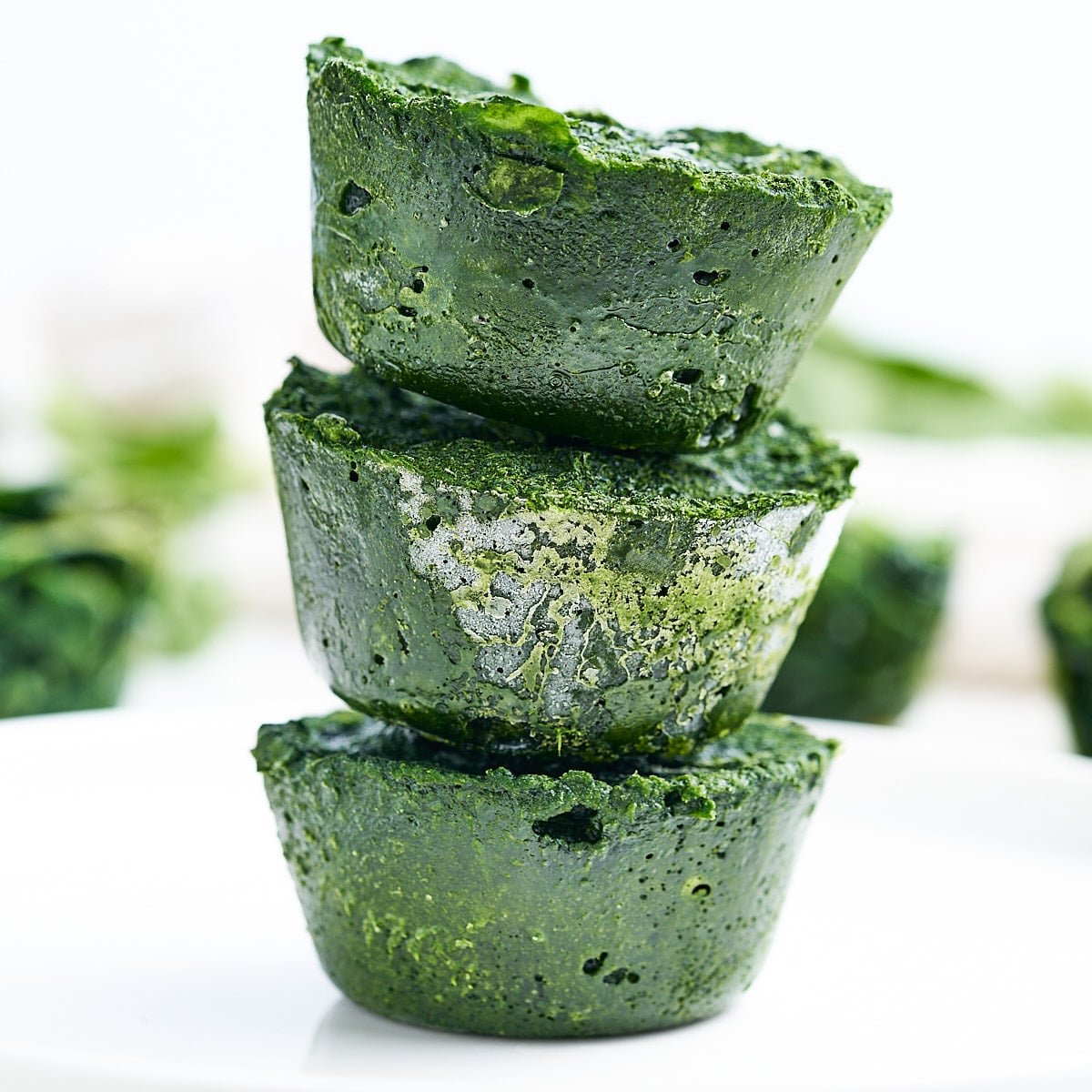
Freezing Arugula: While arugula can be frozen, it’s important to note that its texture may change upon thawing, making it better suited for use in cooked dishes rather than salads. We recommend you blanch the arugula in boiling water for about 15 to 30 seconds, then immediately transfer it to an ice water bath to cool quickly and stop the cooking process. Drain the arugula well and squeeze out excess moisture. Divide the arugula into portion-sized amounts and place them in airtight freezer-safe bags or containers. Label the bags or containers with the date and use within 2 to 3 months for best quality. Thaw the frozen arugula directly in dishes as you cook them, or just throw them right into a smoothie.
Storing Spinach in the Refrigerator: Similar to arugula, spinach should also be stored in the refrigerator not at room temperature. Place the spinach in a plastic bag or an airtight container. Adding a paper towel can help absorb excess moisture and prolong freshness. Keep the spinach in the crisper drawer, and it should last around 5 to 7 days.
Freezing Spinach: Freezing spinach can alter its texture, making it more suitable for use in cooked dishes. Like arugula we recommend you blanch it in boiling water for about 1 to 2 minutes. Transfer the blanched spinach to an ice water bath to cool quickly. Drain and squeeze out excess moisture, then divide the spinach into portion size airtight freezer-safe bags or containers. For best quality use within 6 to 12 months. Again, thaw frozen spinach directly in dishes as you cook. If I freeze spinach, it is generally because I am freezing spinach for smoothies. It is the ultimate nutritional booster for any smoothie, and an easy use for those baggies in the freezer.
Varieties
There are numerous varieties of both spinach and arugula. Like most other fruits and vegetables, over the centuries growers cross bred plants to develop new varieties to achieve specific tastes, hardier plants, and other desirable characteristics.
Arugula: Some of the most common and popular types of arugula include:
- Apollo
- Astro
- Athena
- Auricular
- Dragon’s Tongue
- Italian
- Rustic
- Sylvetta
- Wasabi
- Wild arugula
Spinach: This list includes some of the most common spinach varieties, but there are many more worldwide.
- Bloomsdale
- Corvair
- Flat Leaf (the most commonly found spinach in the USA)
- Giant Noble
- Malabar
- Matador
- New Zealand
- Palco
- Red Kitten
- Renegade
- Tyee
Substitutes
Arugula: The 5 most common substitutes for arugula are listed below. If arugula just isn’t to your taste, give any of these a try as a recipe substitute.
- Spinach: As we said in this article, Spinach is a versatile leafy green with a mild flavor that can work well as a substitute for arugula in salads and sandwiches. While it lacks the peppery kick, it provides a fresh and tender base for your dishes.
- Baby Kale: Baby kale is milder than mature kale and has a similar nutrient profile to arugula. It can provide a slightly earthy taste and is a good option for salads and wraps.
- Watercress: Watercress has a peppery flavor similar to arugula, making it a suitable replacement in salads and as a garnish. Keep in mind that watercress can be quite delicate, so handle it gently.
- Endive: Endive has a slightly bitter taste and a crisp texture, making it a good substitute for arugula in salads. Its leaves can add a nice crunch to your dishes.
- Radish Greens: Radish greens have a peppery flavor similar to arugula. If you buy radishes with their greens still attached, you can use the greens in salads or sautés.
Spinach: The 5 most common substitutes for spinach are:
- Kale: Kale is another leafy green that is rich in nutrients and vitamins. It has a slightly stronger flavor than spinach, but it can be used in similar ways, such as in salads, smoothies, and sautés.
- Swiss Chard: Chard has a similar taste and texture to spinach, with slightly larger leaves and colorful stems. Both the leaves and stems are edible and can be used in various dishes as a substitute for spinach.
- Collard Greens: Collard greens have a tougher texture than spinach, so they must often be cooked longer to become tender. They have a slightly bitter taste but are nutrient-dense and can be used in soups, stews, and sautés in place of spinach.
- Arugula: Arugula, also known as rocket, has a peppery and slightly bitter flavor. No need to say much more as we have already walked that dog in this article, but it is a great option for salads and can be used as a spinach substitute in many dishes.
- Watercress: Watercress has a slightly spicy and peppery flavor. It’s often used in salads, and can also be added to sandwiches or used as a garnish for various dishes.


