
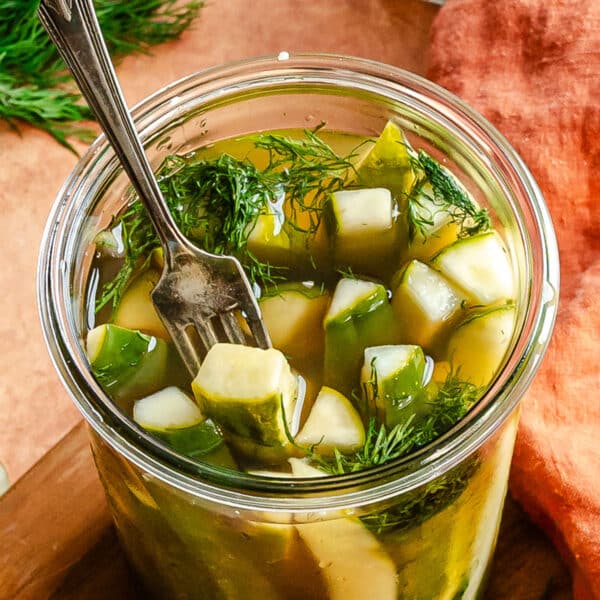
This post contains affiliate links.
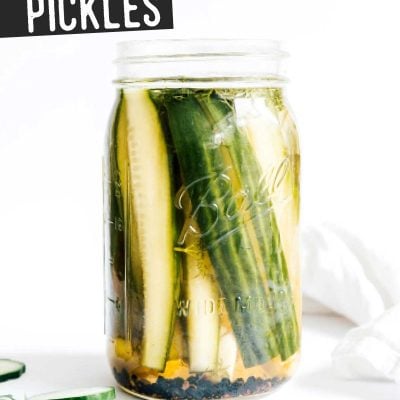
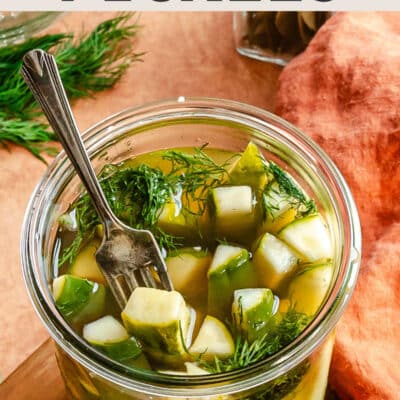
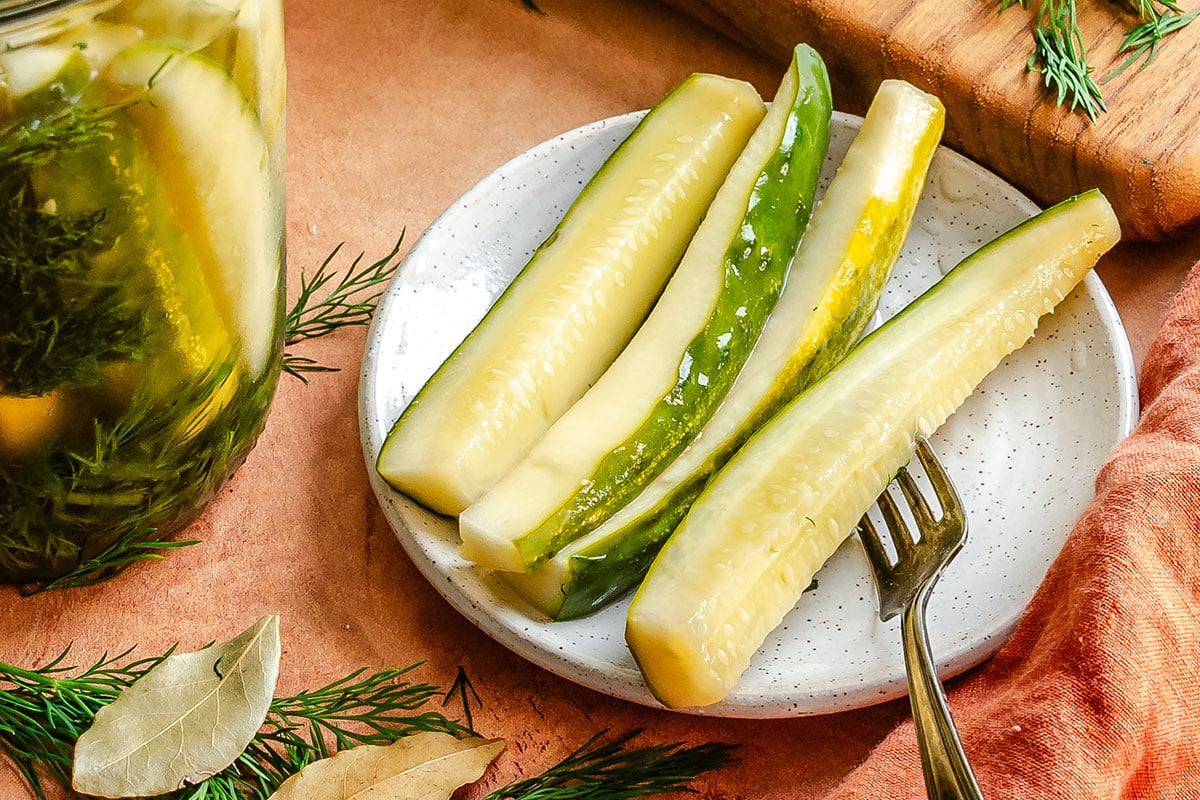
My refrigerator pickles are crisp, tangy, and packed with flavor. Made with five ingredients (and absolutely no cooking, canning equipment, or boiling required). They’re ready to eat in an hour, though one day in the brine is when they really hit their stride.
 save this recipe!
The difference between a refrigerator pickle and a traditional canned pickle comes down to one thing: heat.
Traditional pickling uses boiling brine and a water bath to create a shelf-stable seal. Refrigerator pickles skip all of that. The vinegar and salt do the preserving work without any heat involved, which keeps the cucumbers noticeably crunchier.
The trade-off is that they live in the fridge rather than the pantry, and they won’t last as long. But most batches disappear long before that’s ever a problem.
Reader rating
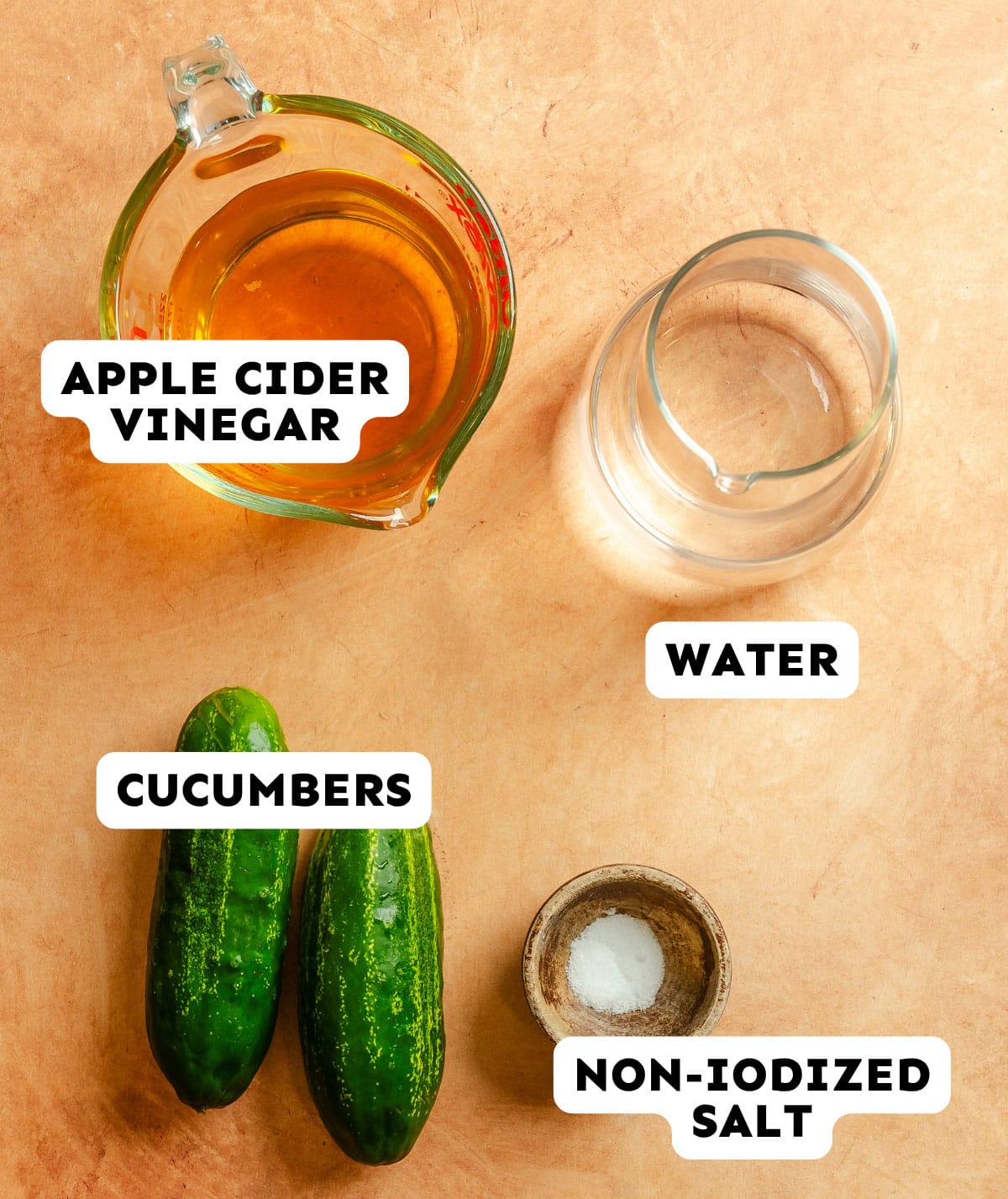
Ingredients for Refrigerator Dill Pickles
You can easily double these ingredients if you’re looking to keep a larger stash. This is just an overview, and you can jump to the recipe card for full measurements and printable instructions.
- Pickling cucumbers: The best choice for crunch. Look for firm cucumbers without any soft spots, since soft spots accelerate how quickly the texture deteriorates in brine. Smaller cucumbers with thinner skins pickle faster and more evenly than larger ones.
- Apple cider vinegar: Produces a slightly softer, more rounded tang than white vinegar. White vinegar is sharper and more neutral. Both work, the choice comes down to how assertive you want the pickle flavor to be.
- Non-iodized salt: Dissolves completely into the brine without any clouding or darkening. Kosher salt and pickling salt are both fine here.

non-Iodized salt only
Iodized salt contains additives that react with the brine and can cause the liquid to turn cloudy and the cucumbers to darken. Non-iodized salt, whether kosher or pickling salt, keeps the brine clear and the color bright.
Cucumbers 101
Pickling cucumbers have thinner skins and a drier, crispier flesh that holds up in brine without getting soft. English cucumbers work and are easier to find, but they soften more quickly the longer they sit. If you use English cucumbers, eat the pickles within the first few days for the best texture.
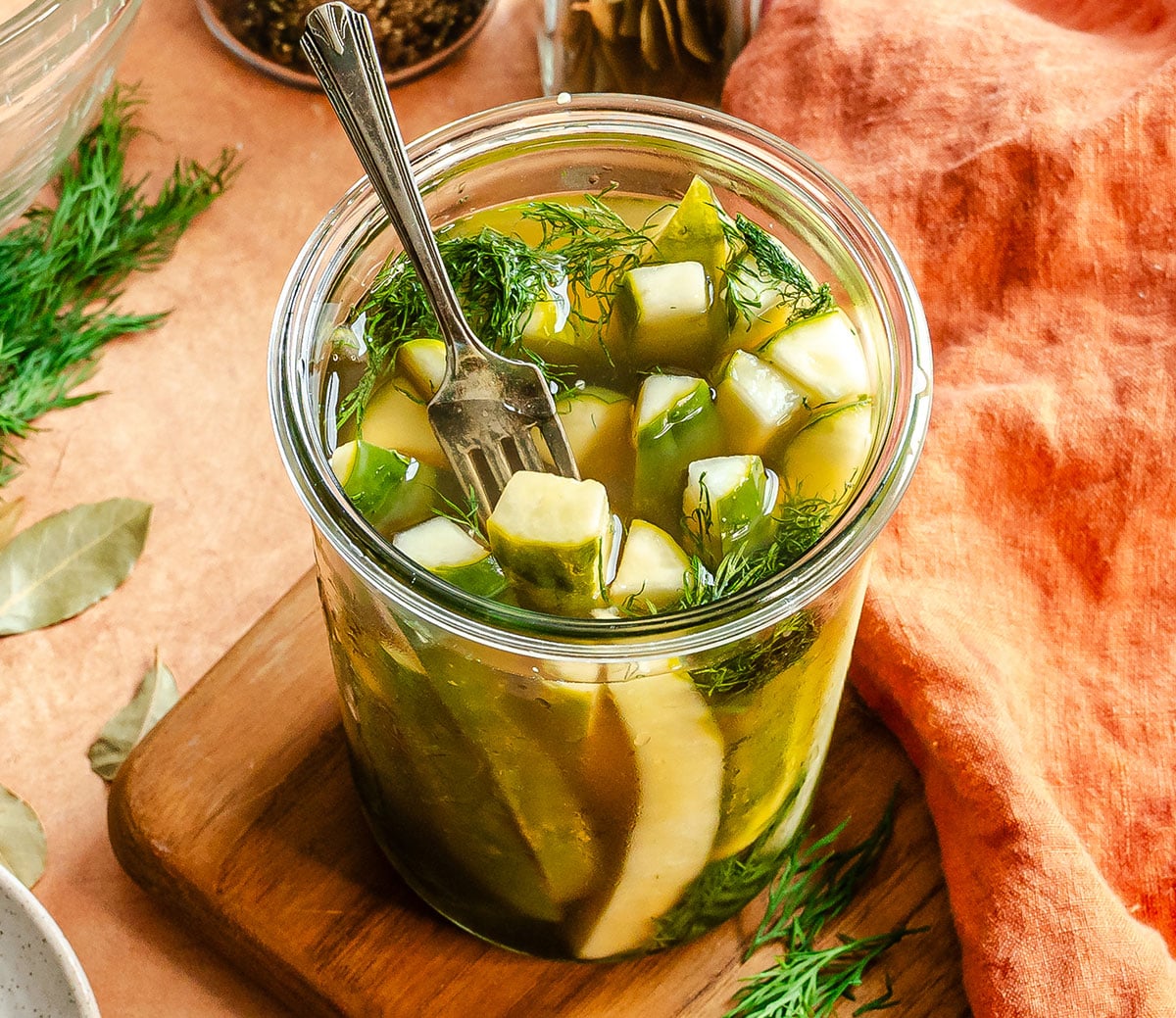
How to Make Refrigerator Dill Pickles
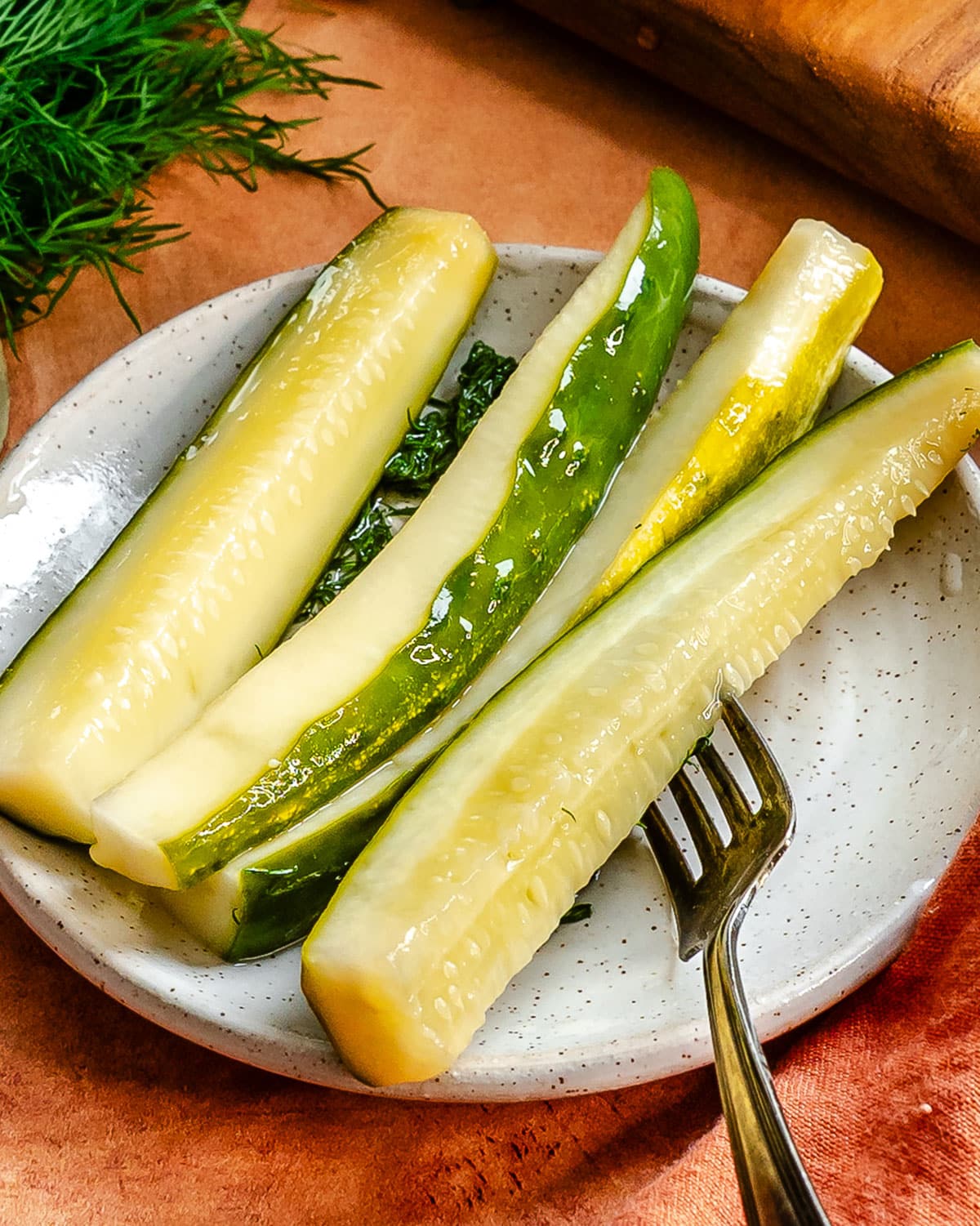
- Cut the cucumbers. Slice into spears or rounds, whichever you’ll actually reach for later.
- Load the jar. Add your dill, garlic, bay leaf, peppercorns, and red pepper flakes to a glass or ceramic container first, then pack the cucumbers in on top.
- Build the brine. Heat water until steaming, stir in non-iodized salt until it fully dissolves, then stir in the vinegar.
- Pour and cool. Pour the warm brine over the cucumbers until they’re fully covered, then let the jar cool to room temperature before sealing. Pouring hot brine over the cucumbers and sealing them right away traps heat against the flesh and softens it faster than it needs to.
- Chill. Refrigerate for at least an hour before eating. Give it a full 24 hours if you can. That’s when the flavor really settles in.
Refrigerator Pickles Recipe Flavor Variations
The basic brine works as a foundation for a lot of different flavor directions. Here are four worth trying:
- Classic dill: The recipe as written. Fresh dill, garlic, peppercorns, and a pinch of red pepper flakes for background heat.
- Bread and butter: Add two tablespoons of sugar and a quarter teaspoon of turmeric to the brine. The sugar balances the vinegar into something sweeter and more mellow, and the turmeric gives the brine a golden color.
- Spicy: Double the red pepper flakes and add a sliced jalapeño to the jar. The heat infuses gradually, so day three pickles are significantly spicier than day one.
- Garlic only: Skip the dill and double the garlic. Clean, sharp, and versatile enough to go on almost anything.
Why are my pickles soft?
Soft refrigerator pickles almost always come down to one of three things.
- The cucumber variety. English cucumbers have a higher water content than pickling cucumbers and soften faster in brine. If you used English cucumbers and they’ve been sitting for more than a few days, that’s likely the culprit.
- Too long in the brine. Refrigerator pickles are at their crunchiest in the first few days. The longer they sit, the softer they get as the vinegar continues to break down the cucumber cell walls. If you want maximum crunch, eat them within the first week.
- The cucumbers weren’t fresh enough. Cucumbers with soft spots or any give before pickling will only get softer in brine. Start with the firmest cucumbers you can find, ideally the day you buy them.
How to Store This Refrigerator Pickles Recipe
These pickles live in the fridge, not the pantry, so plan on eating them within two weeks.
Keep them in a sealed glass jar. Glass won’t absorb the vinegar smell or react with the brine the way some plastic containers can over time.
Texture peaks in the first week. After that, the vinegar keeps working on the cucumber’s cell walls and the pickles gradually soften. Still good to eat, just less snappy.
Freezing isn’t an option here. Cucumbers hold too much water, and they turn limp and watery the moment they thaw.
For a second batch, you can reuse the brine once. Add fresh cucumbers straight into the spent liquid and refrigerate again. The flavor will be a touch more muted the second time, and after that, mix a new batch. Skip reusing it if the brine ever looks cloudy or smells off.
How to Serve These Easy Refrigerator Pickles
These quick pickles are the natural topping for black bean burgers, chickpea burger patties, or halloumi burgers where you’d normally reach for a store-bought jar!
Refrigerator Pickle Recipe FAQs
No boiling required. I heat the water just enough to dissolve the salt fully.
Apple cider vinegar gives a softer, more rounded tang, while white vinegar is sharper and more neutral. I default to apple cider vinegar for my classic dill pickles, but white vinegar works well if you want the cucumber flavor to come through more.
Give them at least an hour in the brine before you dig in. That’s enough time for a light pickle flavor. For the real thing, wait 24 hours. The flavor keeps deepening from there.
Start with actual pickling cucumbers, not English cucumbers, since their thinner skin and drier flesh hold up better in brine. Use non-iodized salt so the brine stays clear. And eat them within the first week, since crunch fades the longer they sit.
Not for this method. Some pickling techniques call for a dry salt cure to pull moisture out of the cucumbers first, but a refrigerator pickle skips that step entirely. The brine handles all the work on its own.
Yes. Cut them into spears or rounds before they go in the jar. Smaller pieces have more surface area exposed to the brine, so they pick up flavor and texture change faster than a whole cucumber would.
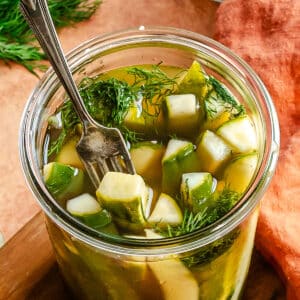
Refrigerator Dill Pickle Recipe (No Cooking or Canning Required)

Ingredients
Core Ingredients
- 2 pickling cucumbers, can sub 1 English cucumber, see notes
- 1 cup water, 236 mL
- 1 tsp non iodized salt
- 1 cup apple cider vinegar, can sub white vinegar, 236 mL
Optional Flavorings (can use all or a few)
- 10 sprigs fresh dill, about 2 tsp when chopped
- 4 cloves garlic, crushed
- 1 bay leaf
- 1 tsp whole black peppercorns
- Pinch crushed red pepper flakes
Instructions
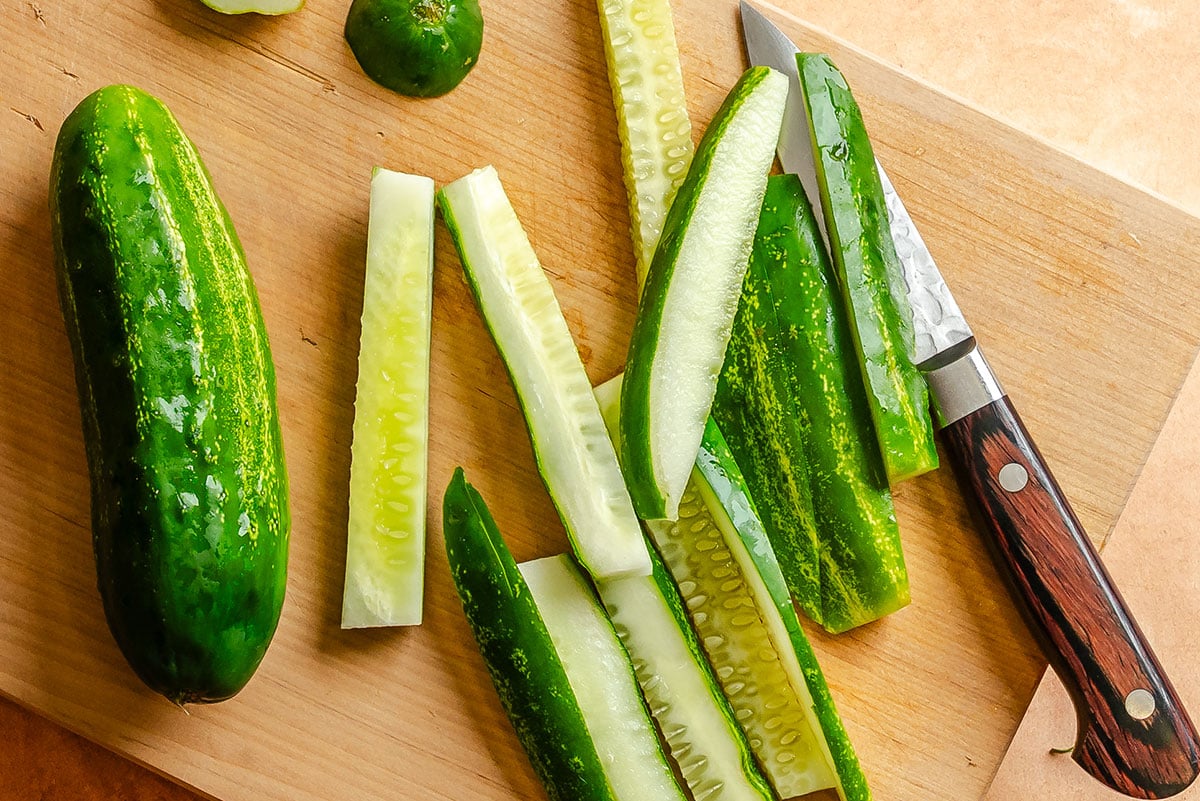
- Prep: Cut 2 pickling cucumbers into spears or rounds. Add your chosen optional flavors to a lidded non-reactive container (like a glass jar or ceramic vessel, then pack in cucumber.
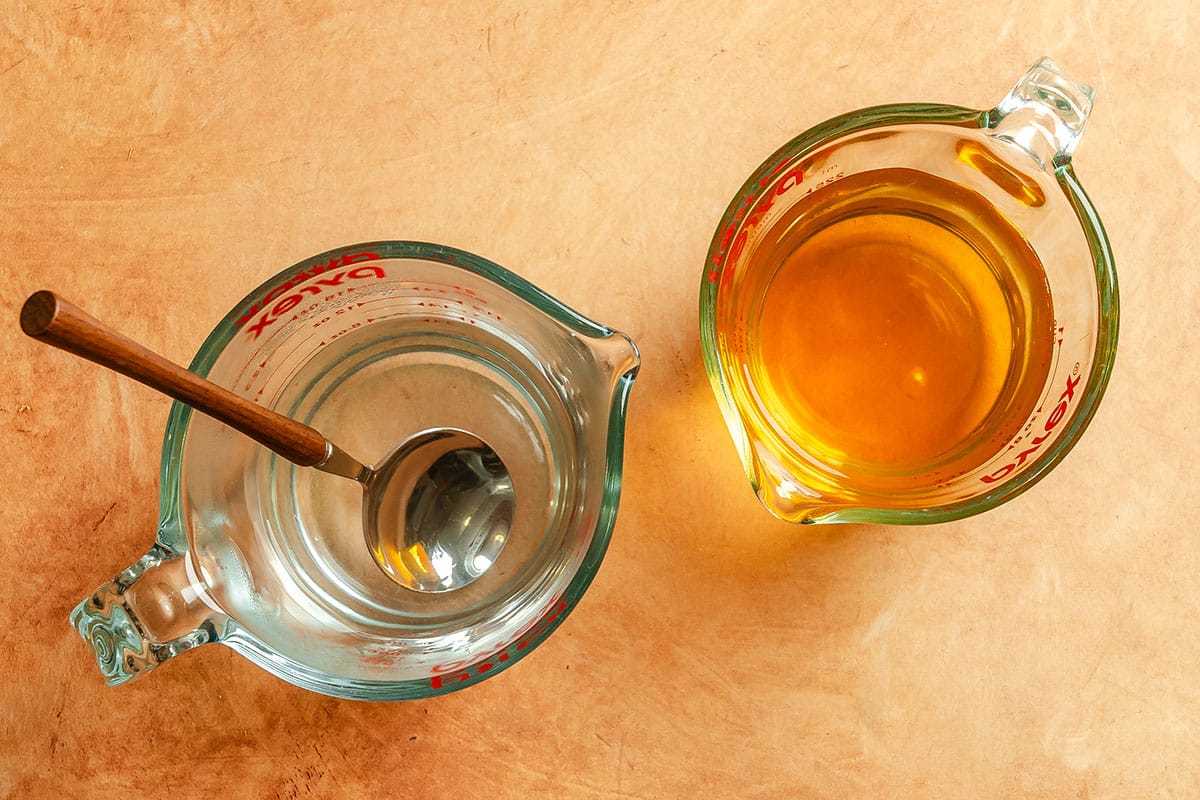
- Brine: Heat 1 cup water in either a kettle, the microwave, or on the stove until steaming hot. Stir in 1 tsp non iodized salt until dissolved. Stir in 1 cup apple cider vinegar.
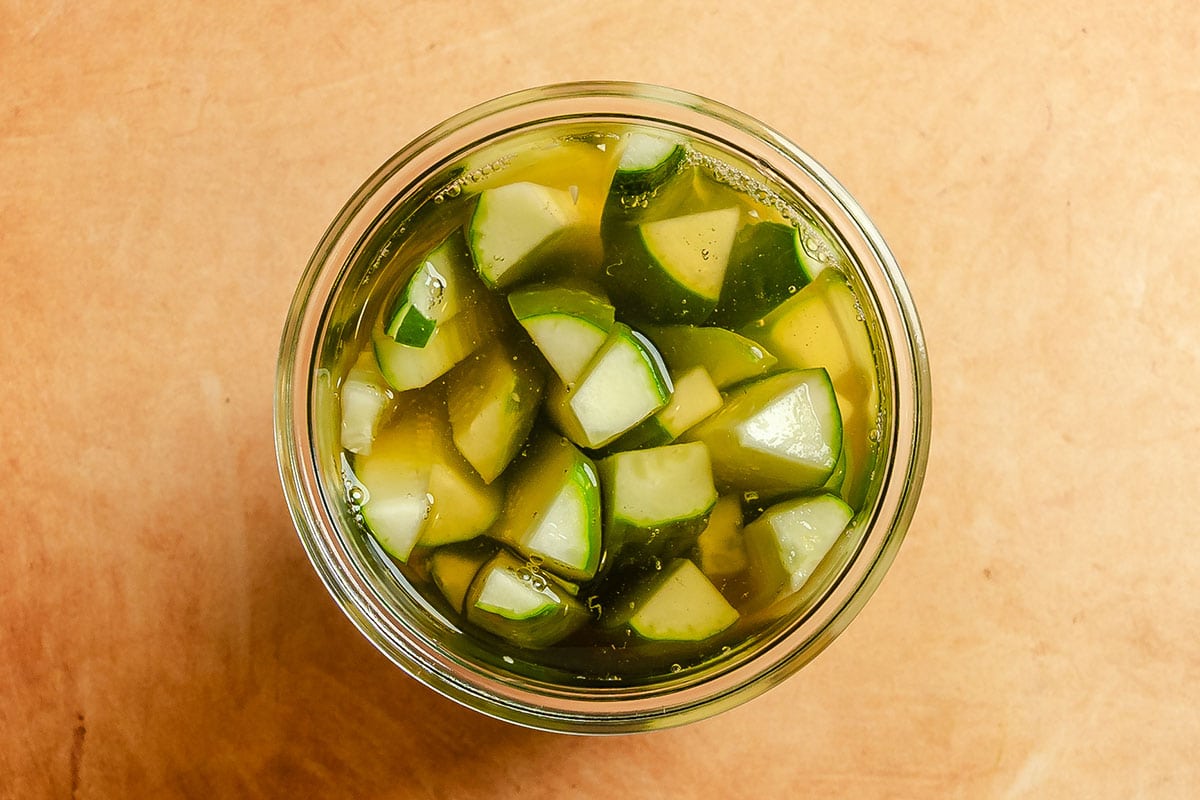
- Combine: Pour vinegar mixture over cucumbers so that they are covered (you may not need all of the liquid). Let cool to room temperature, then seal shut and transfer to the refrigerator. Let pickle for at least 1 hour before digging in, optimally 24 hours.
Notes
Nutrition
Nutrition information calculated by Sarah Bond, degreed nutritionist.
 did you make this?Leave a comment below and tag @liveeatlearn on social media! I love seeing what you’ve made!
Love pickling?
Once you have the basic brine down, quick pickling almost anything is just as easy. Pickled cauliflower is crisp and slightly funky in the best way, easy pickled red cabbage is the go-to topping for tacos and sandwiches, and quick pickled grapes are the unexpected one worth trying if you’ve never had them. For a catch-all guide that covers nearly any vegetable, quick pickled vegetables has everything you need.


I made a batch of your refridgerator pickles,I used an old ceramie jar I bought at a thrift store.
I added garlic to the mix and checked the second day and the Garlic TURNED BLUE ! is this a safety problem because of the old ceramic jar leaching lead? please let me know if you find anything out on this subject. thank you
This is a normal reaction garlic can have in the pickling process. Totally fine and should be safe to eat! 😀
Hi will this keep in a cool dark cupboard also?
I haven’t tried this so I can’t say for sure. I would keep it in the fridge to be sure!
I’m making your pickles right now. Added all your seasonings plus a pinch of turmeric and sliced onion. 😁 I Hope they will be tasty!
I tasted my pickles I made yesterday. They are delicious! Thank you for the recipe
Do I have to put them in an airtight seal jar? Can I use a plastic or glass Tupperware with a snap closing ?
Yes that would be fine!
Can you put the pickles in a “bath” for 15 minutes to can and store on the shelf?
I haven’t tried this with this recipe, but I think it would work here!
Easy
Can I use less vinegar?
You could, but it might be difficult to get the vinegar to cover the cucumbers completely!
I can’t wait to try this recipe! Can I leave out the salt? Thanks!
You can, but it probably won’t last as long in the fridge without it!
I tried the recipe with field cucumbers (instead of pickling cucumbers) because I had just harvested a few. I was pleasantly surprised that they stayed firm, but they became too sour to eat without mixing them with something else… Do you think decreasing the amount of vinegar would work in that case? Is there a trick to balance the sourness?
Yes that would work, or adding a touch of sugar! 😀