

This post contains affiliate links.

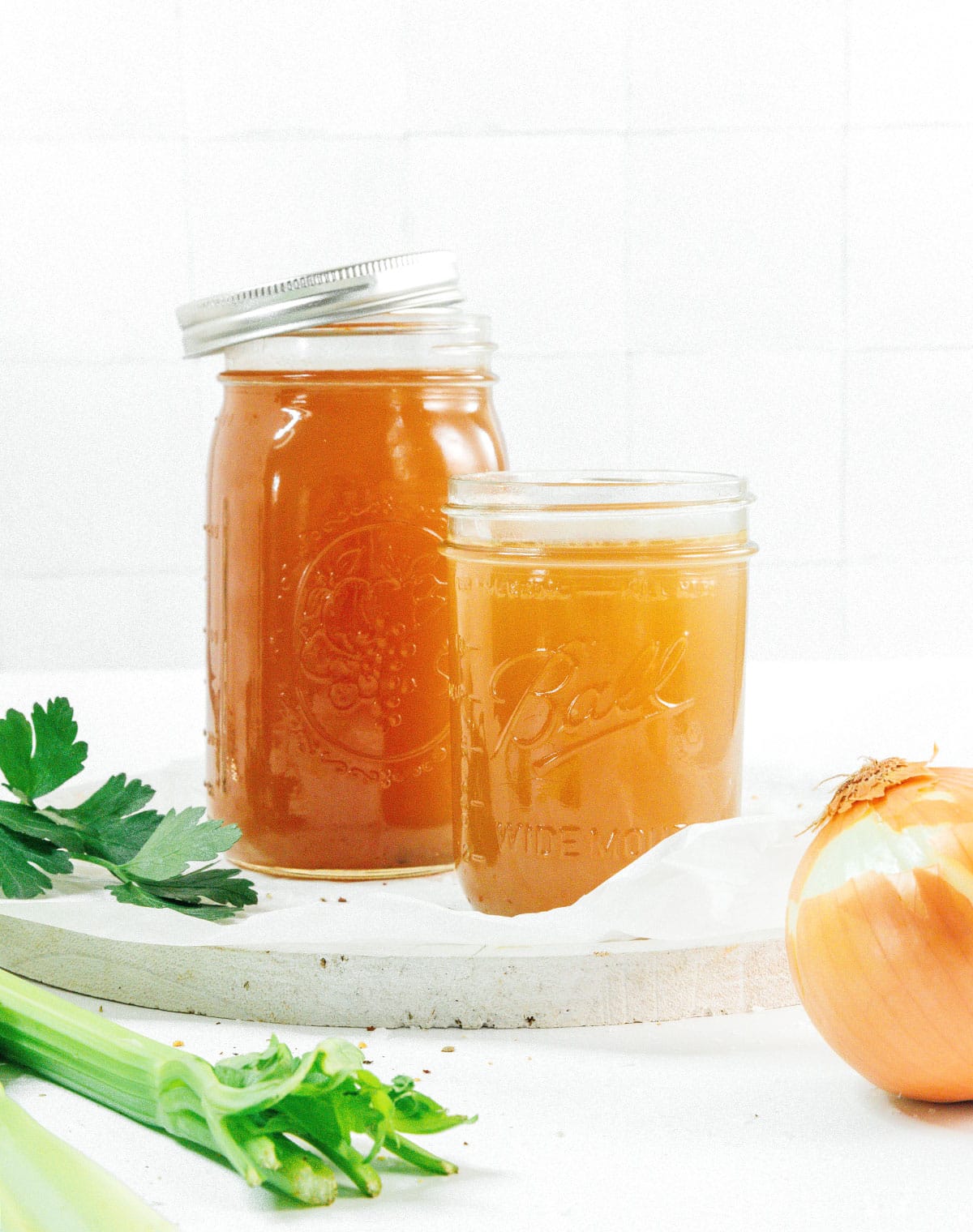
See ya later bland store-bought broth! This flavor-loaded veggie broth is ready in 60 minutes and can be made using kitchen scraps or fresh vegetables. With tried-and-true tips for maximum deliciousness (and 5-star reviews to back it up!), this is how to make vegetable broth that’s anything but bland.
 save this recipe!
Your New Go-To Broth
If you’re feeling a little guilty about tossing your veggie scraps, this recipe is for you! In just over an hour, you can magically transform all those odds and ends into a rich, flavorful vegetable broth that’s perfect for vegan minestrone soup, butternut squash risotto … you get the idea.
Plus, it’s super customizable—use whatever veggies you have on hand or adapt it to suit any dietary needs (like making it a low-sodium vegetable broth!).
Reader rating
“I made this using veggie scraps. It turned out great! I’m so glad I won’t have to use the commercial stuff anymore. Thanks for another great recipe Sarah.” —Nancy
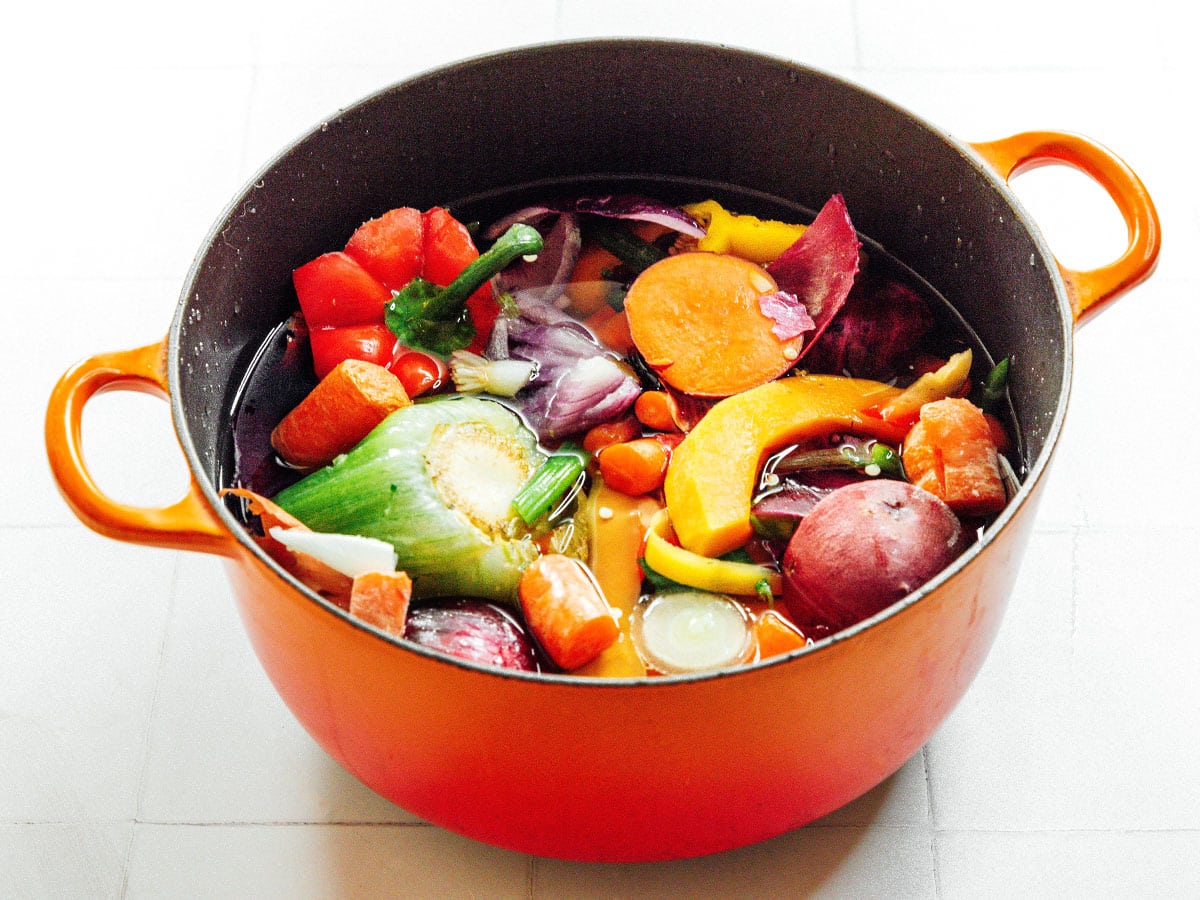
And speaking of customization, I’m showing you how to make this veggie broth in two ways: from vegetable scraps or with fresh vegetables!
Using kitchen scraps is a great way of reducing food waste and saving money.
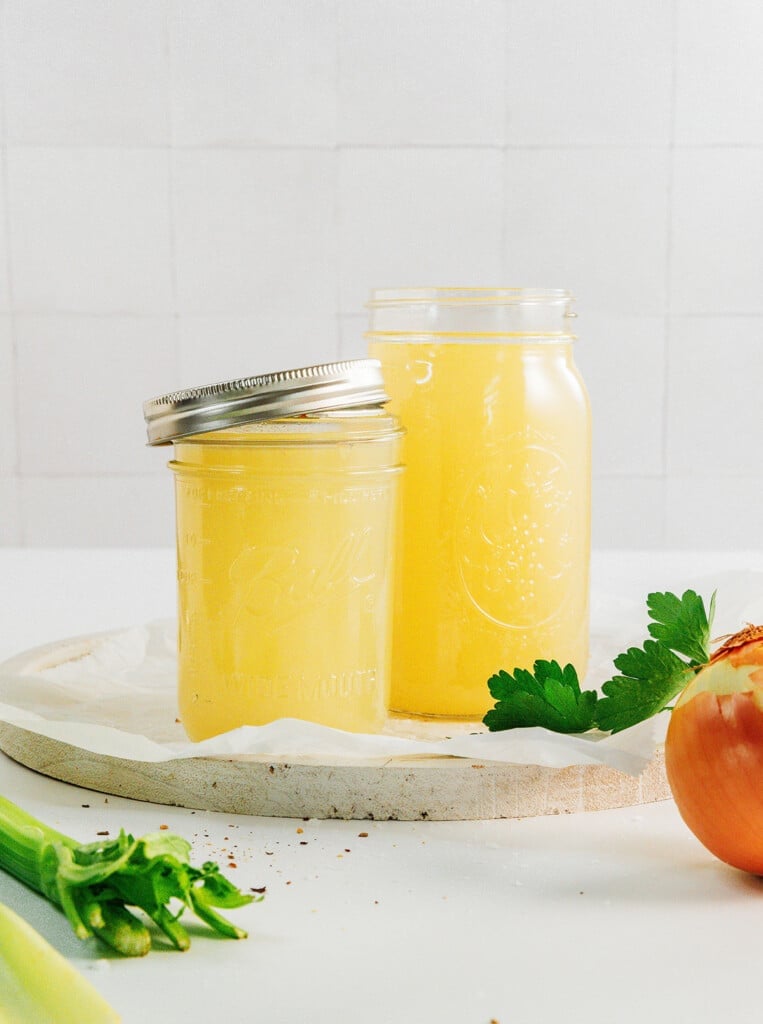
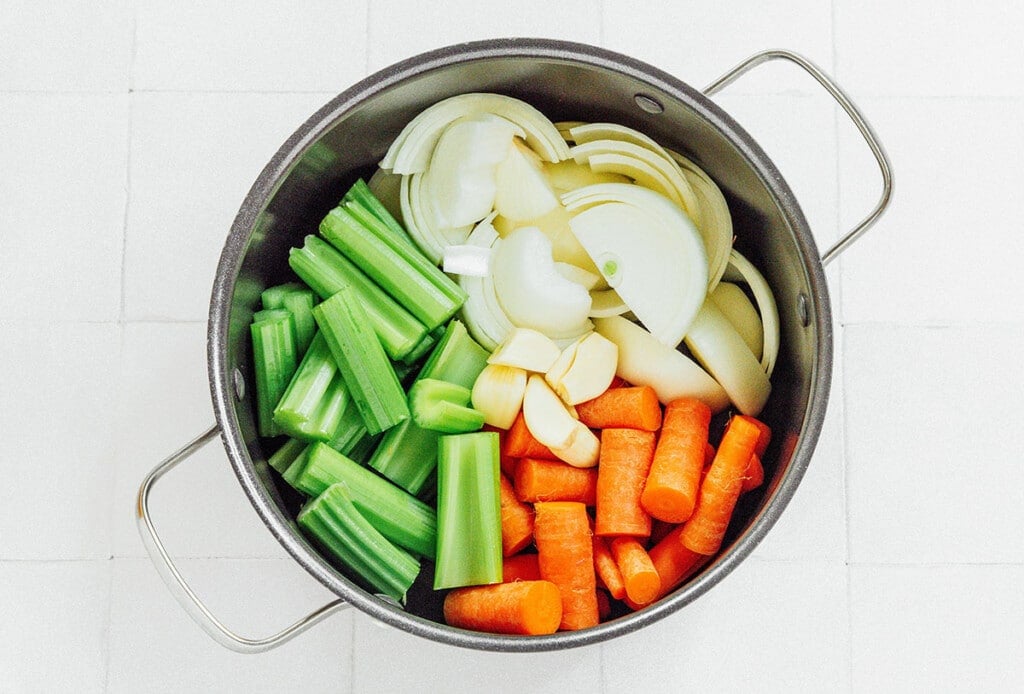
Making broth from fresh veggies can give you a more predictable broth flavor.
Here’s What You’ll Need
Both fresh vegetables and kitchen scraps have their perks—choose whichever option works best for you! Jump down to the recipe card for exact measurements, this is just an overview!
- Onions: These add so much flavor, they’re affordable, and any type of onion will work! Make sure to peel and chop before incorporating.
- Celery: Also an inexpensive vegetable, chopping up celery and letting it soak into your broth brings a fresh, bright taste to the final product.
- Carrots: You can leave the skins on after scrubbing your carrots down or peel them, whatever your preference.
- Garlic: Can you ever have enough garlic? Just peel and toss the cloves in whole.
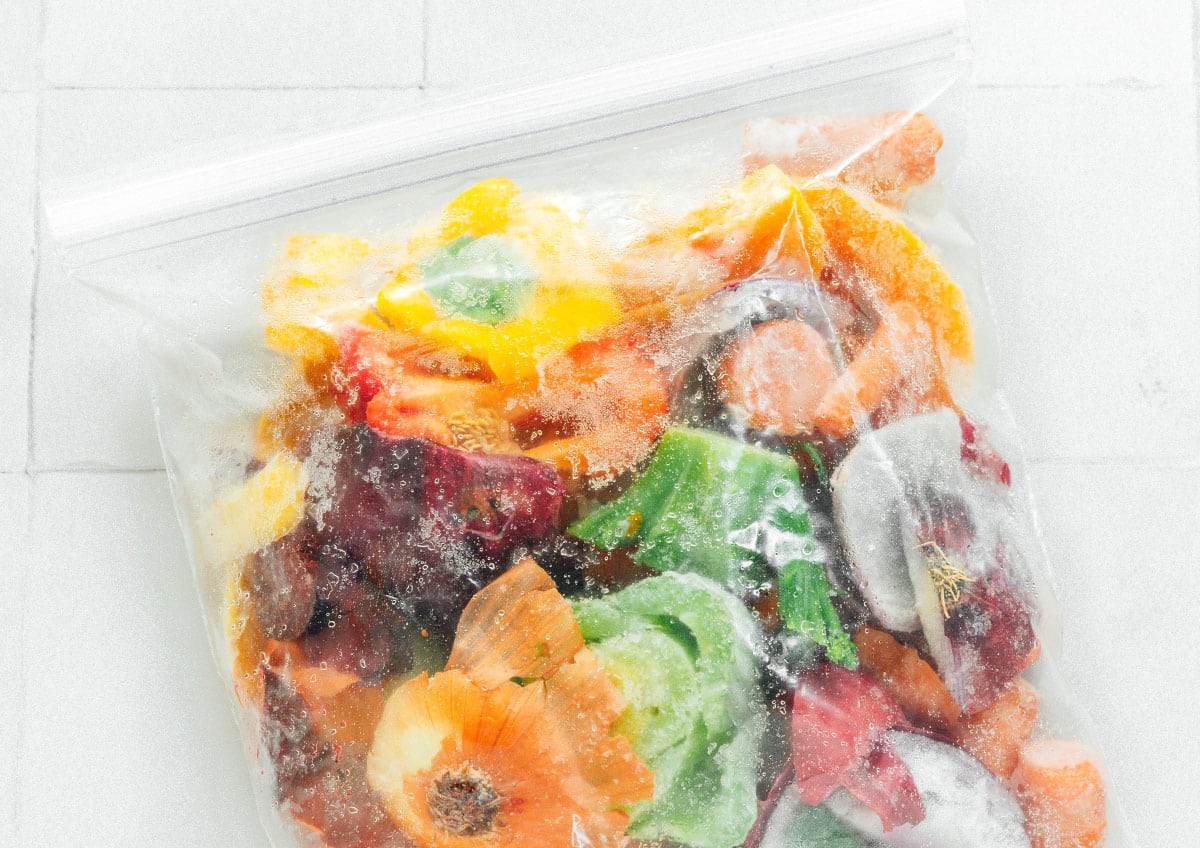
Using kitchen scraps instead? Vegetables and scraps that work well for making broth include broccoli stems, bell pepper scraps, potatoes and skins, herb remnants, spent corn cobs, and leeks.

Avoid These Veggies
Some veggies don’t play well in broth and can make it bitter. It’s best to avoid excess florets, most leaves and stems, onion and garlic skins, and celery leaves for a smoother flavor.
Here’s how to make it
The hardest part of the process is chopping your veggies! After that, you can admire from afar while the magic happens in the pot. (Jump to the recipe card for the full printable instructions.)
Step 1: Saute The Veggies
If you want a more intense flavor, saute the veggies in a large pot with olive oil before boiling. (This provides more flavor infusion in the water in future steps.)
Step 2: Boil The Vegetables
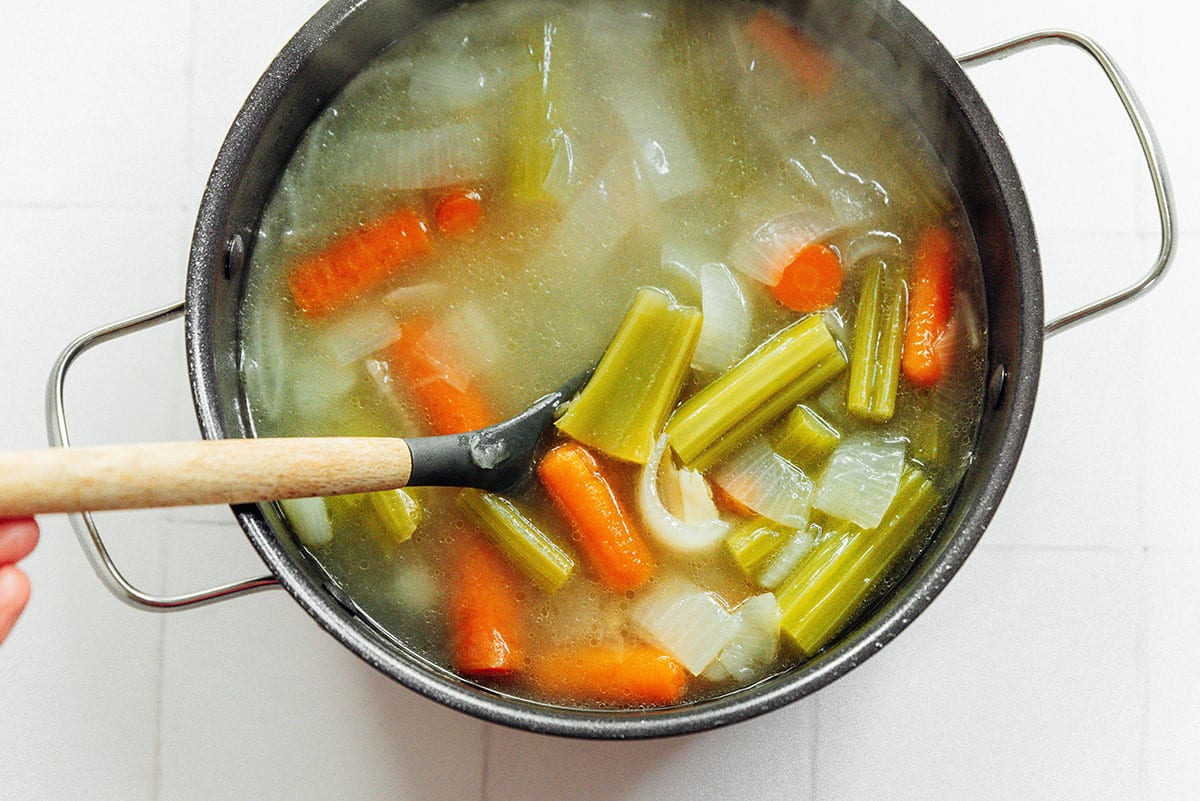
Add 10 cups of cold water to your veggies in the large pot (or enough water to cover them). Cover with a lid and bring to a gentle boil for 45-60 minutes.
Step 3: Strain The Broth
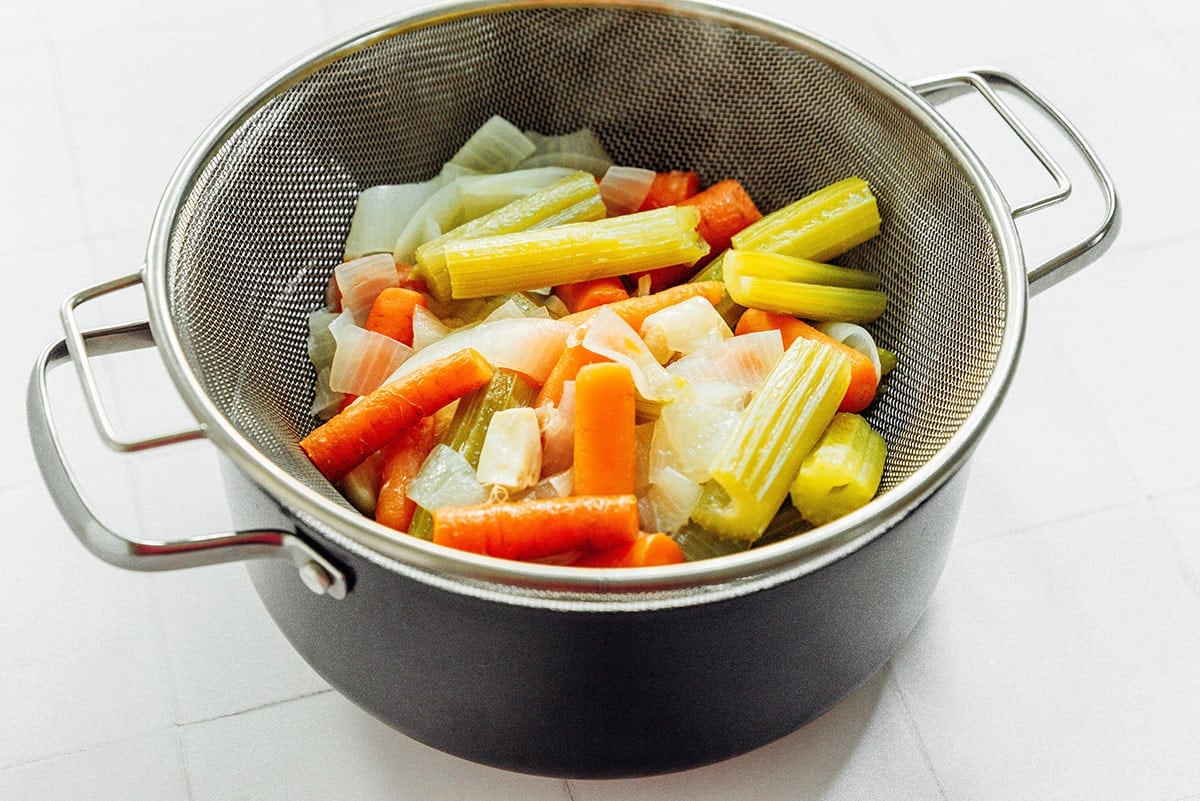
When the simmering time is up, place a big bowl under a large strainer and strain the broth.
Step 4: Cool It Down
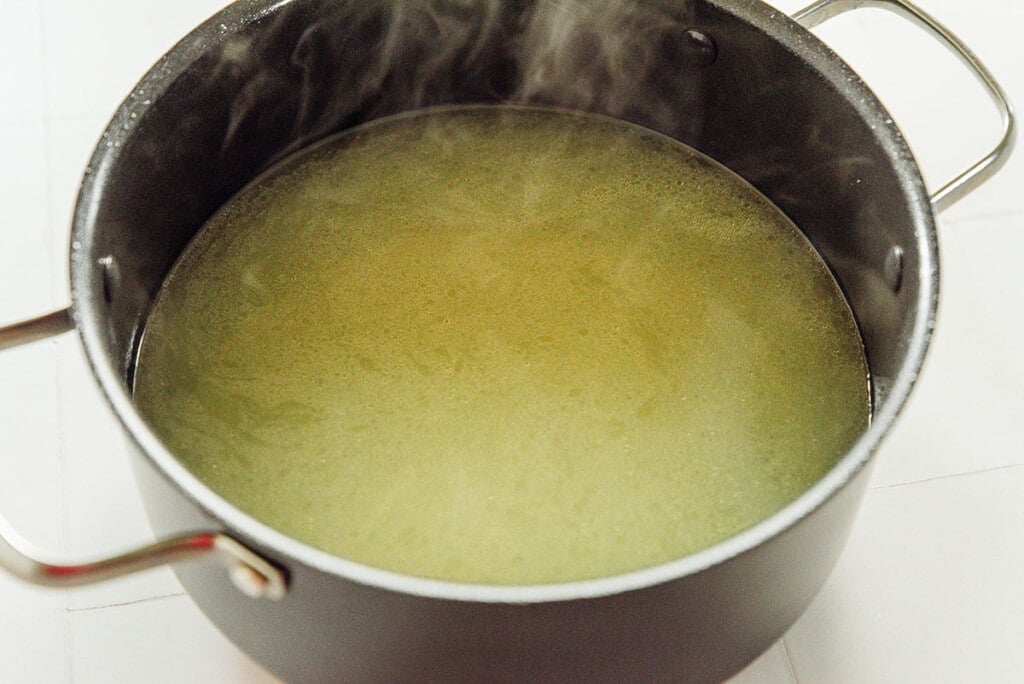
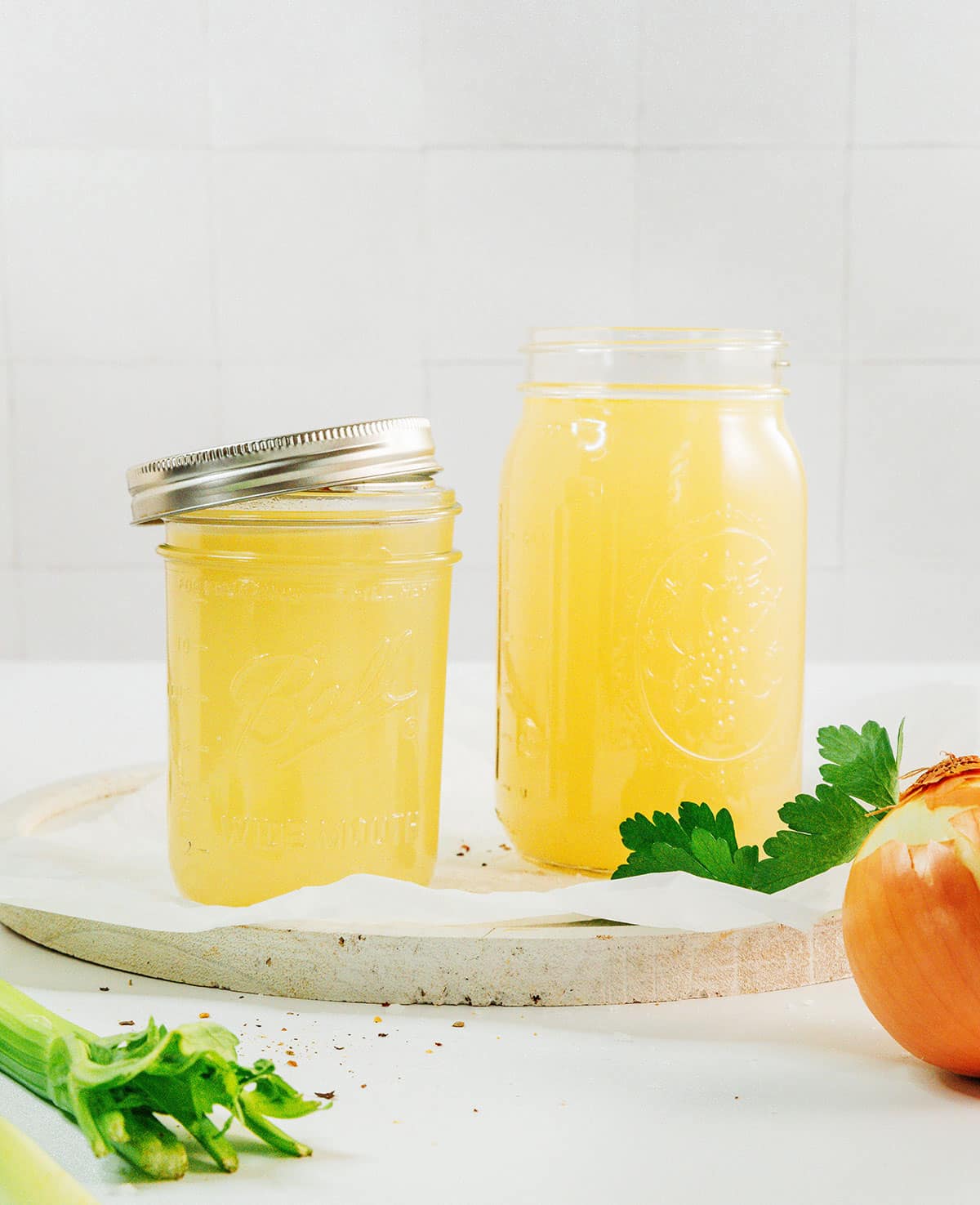
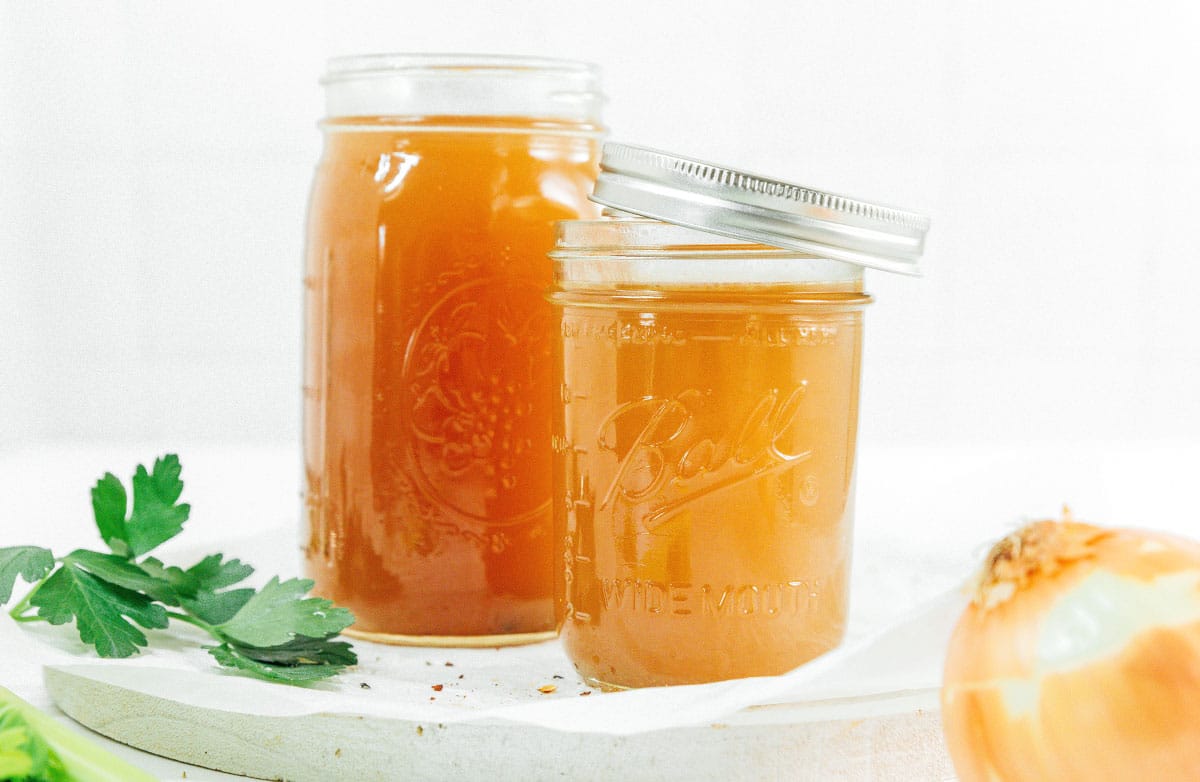
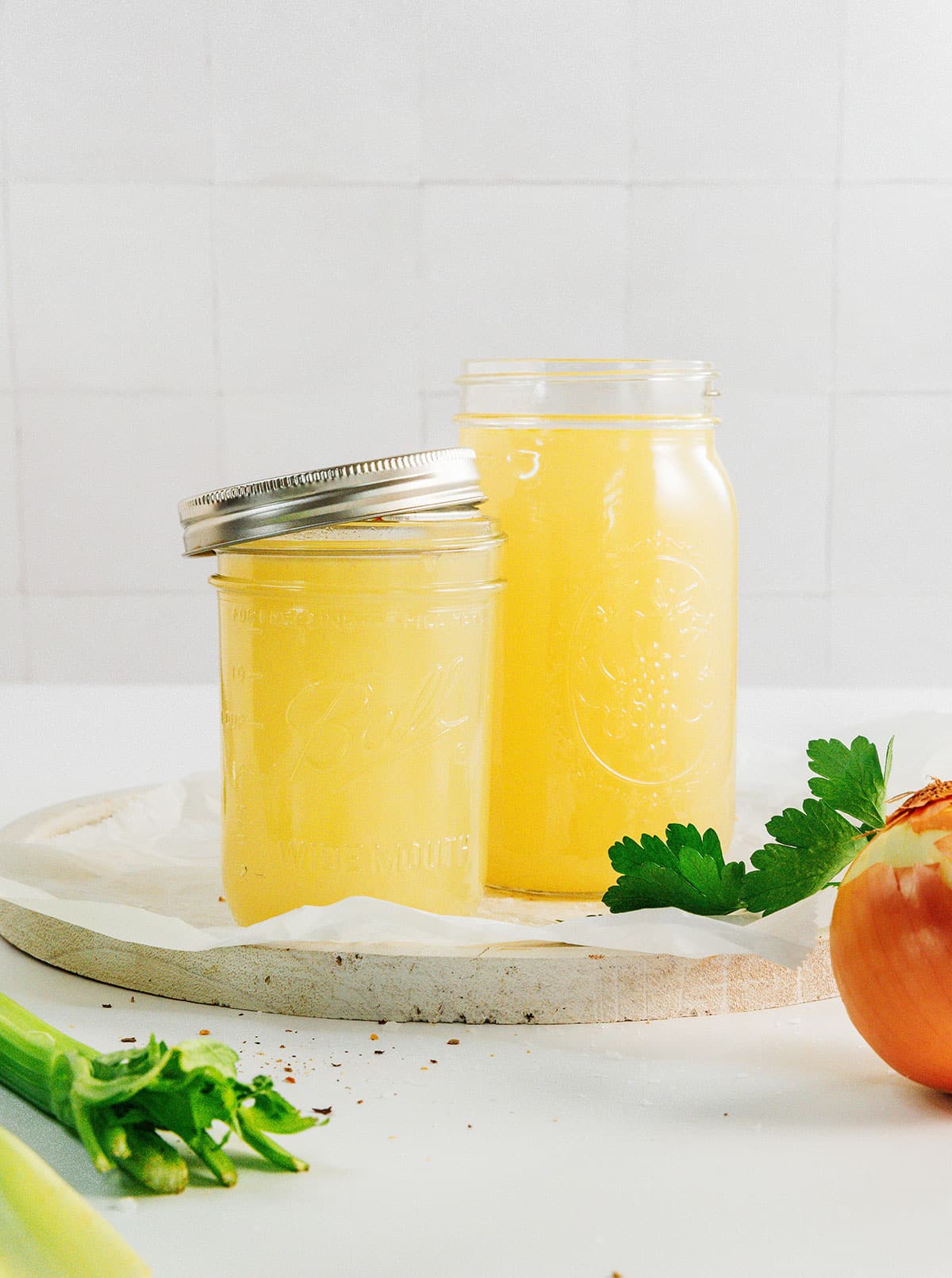
At this point, you can add a dash of salt to strengthen the flavors. Let your broth cool, then divide it into glass jars. Store it in the fridge until ready to use!
Kitchen scraps Vs. Fresh Vegetables
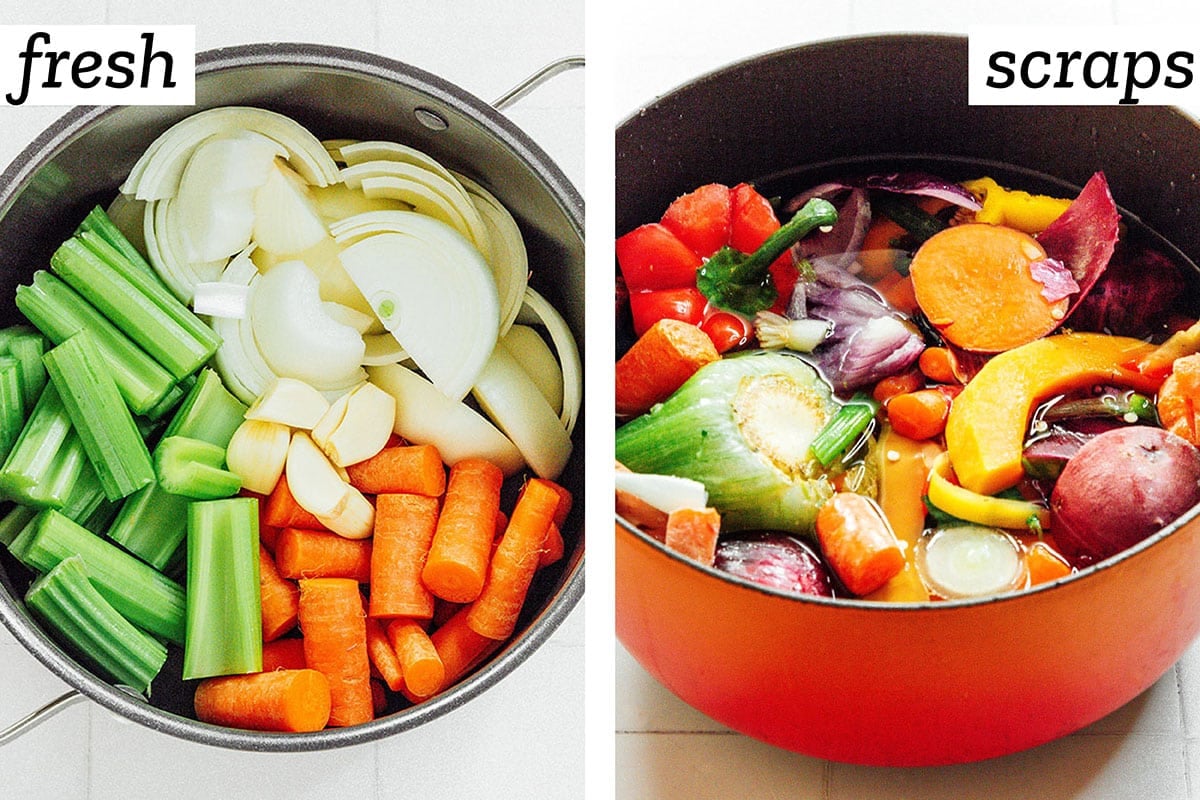
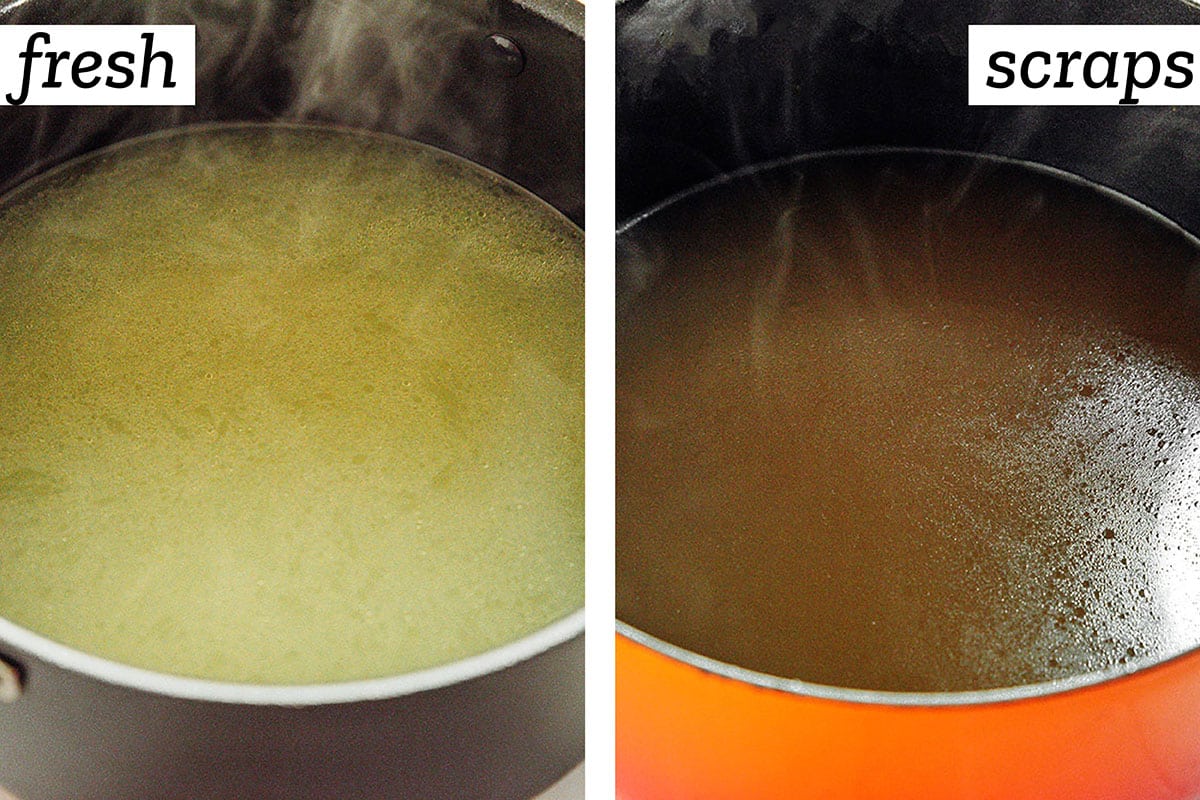
Scraps are my preferred way of making vegetable broth. As I’m cooking every day, I place scraps in a freezer bag and once it’s full, I make broth! I love knowing that I’m reducing food waste and not buying extra ingredients. It’s also nice knowing I’ll always have broth on hand for my next project.
Sometimes, DIY vegetable broth is the way to go! One big benefit of using fresh vegetables is that this recipe is foolproof. Some veggies can make broth bitter, but with fresh ingredients, you’ll avoid any sneaky flavors that might throw off the taste.
Why make your own broth?
- Reducing food waste becomes much easier when you have a plan for your scraps.
- It’s a cheaper alternative, even if you’re using fresh vegetables. You’ll get more bang for your buck (because broth/stock options can get expensive at the store!). Plus, you won’t have to lug it home in your grocery bags.
- Your pantry space will be freed up since this broth is stored in the fridge, which I know is definitely a benefit for me.

How To Make Vegetable Broth (Fresh Or From Scraps)

Ingredients
Broth With Fresh Vegetables
- 2 onions, white or yellow, peeled and roughly chopped
- 5 ribs celery, chopped
- 5 large carrots, chopped
- 6 cloves garlic, peeled
Broth With Kitchen Scraps
- Best Vegetables For Broth, mushrooms and stems, potatoes and skins, herb remnants, bell pepper scraps, corn and/or spent cobs, summer squash and skins, winter squash and skins, leeks,
- Avoid These*, onion skins, too much broccoli or cauliflower, woody herb stems, celery leaves
Optional Flavor Enhancers
- tomato paste
- hardy herbs
- salt
Instructions
- Saute (Optional): To intensify flavors, optionally heat a splash of oil in a large pot and add your chosen veggies. Saute until warm and fragrant, about 10 minutes.
- Boil: Add 10 cups of cold water, or enough to cover the veggies. Optionally add a spoonful of tomato paste or hardy herbs. Cover with a lid and bring to a gentle boil for 45 to 60 minutes.
- Strain: Place a large bowl under a strainer and strain the veggies from the broth.
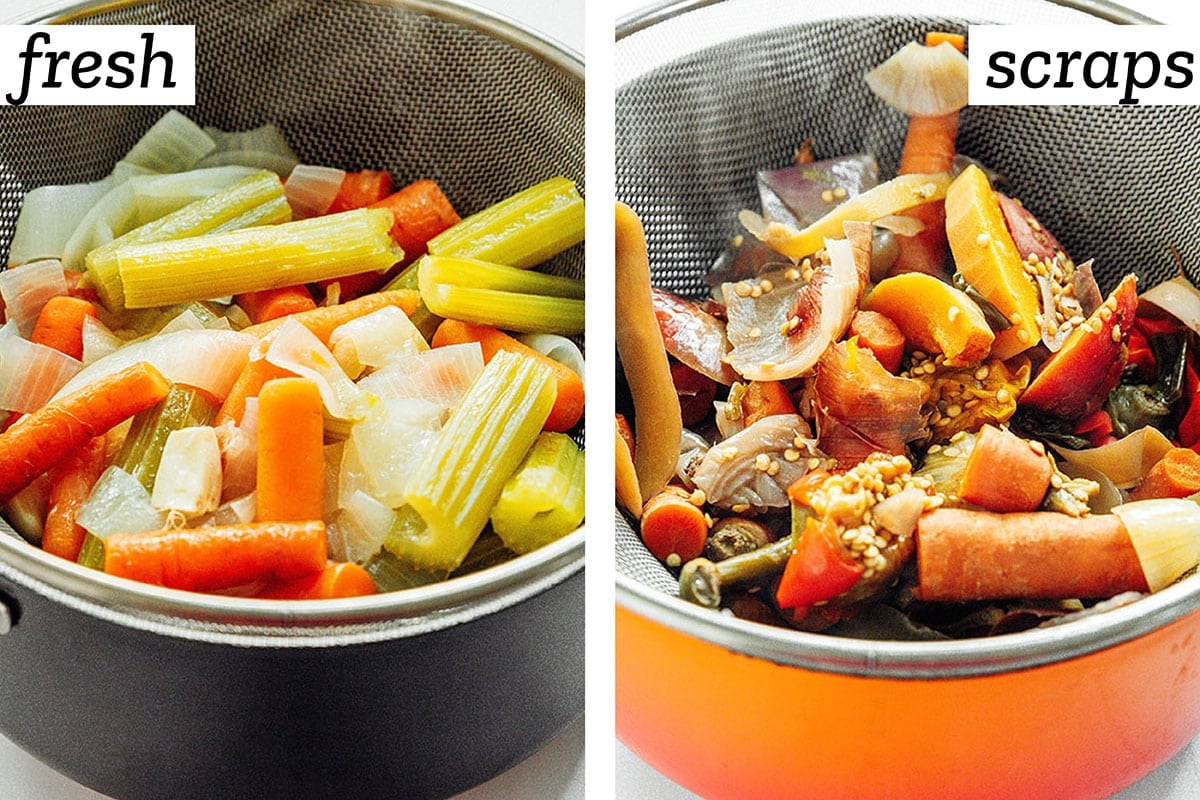
- Cool: Optionally add a dash of salt to intensify the flavors. Let cool before portioning into glass jars. Store in the fridge until ready to enjoy.
Notes
Nutrition
Nutrition information is calculated by Sarah Bond, degreed nutritionist, and should be taken as an estimate. For the most accurate nutritional information, calculate it using the actual ingredients in your recipe.
 did you make this?Leave a comment below and tag @liveeatlearn on social media! I love seeing what you’ve made!





What do YOU do with the veggies after you strain them for the liquid? Do you eat them as is soft, or use for something else?
By the time they’ve been boiled to make broth, all the nutrients and flavor are gone, so all that’s left is really just fiber. I usually just compost it!