

This post contains affiliate links.
Everything you need to know about cooking with bulgur, an ancient whole wheat grain that’s packed with protein, fiber, and vitamins!
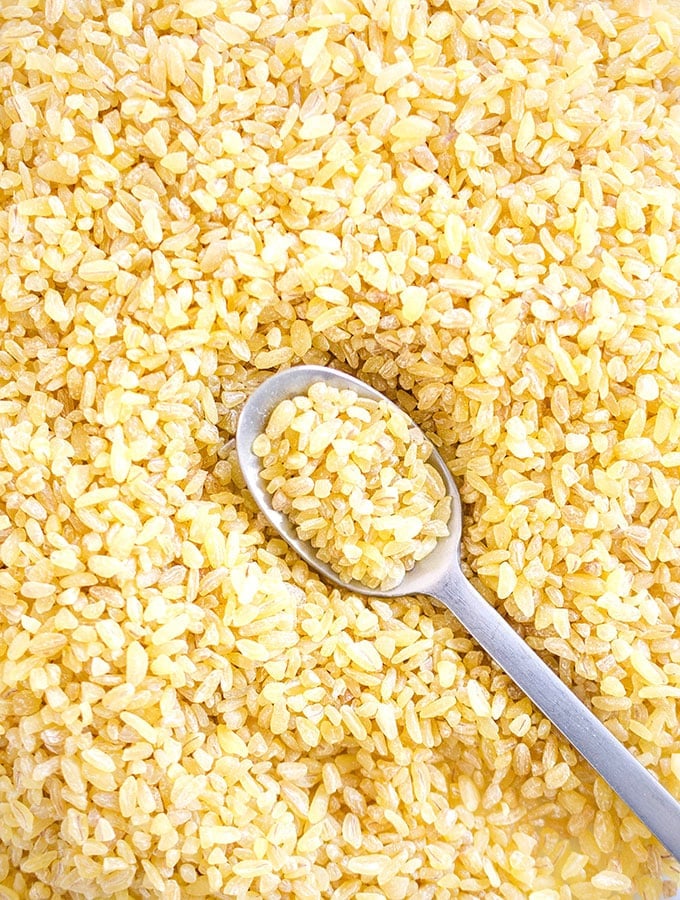
What is bulgur?
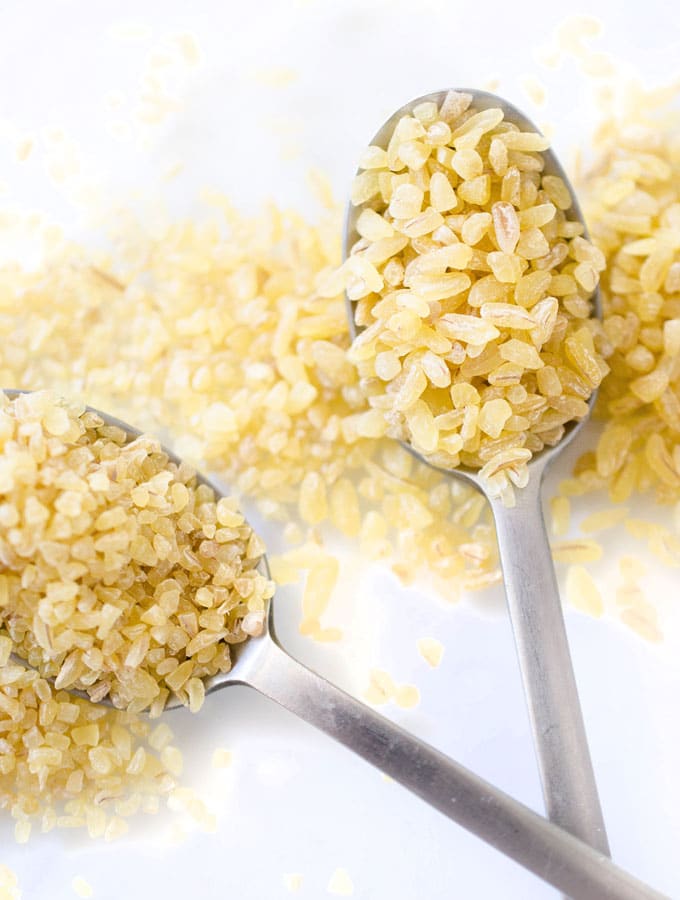
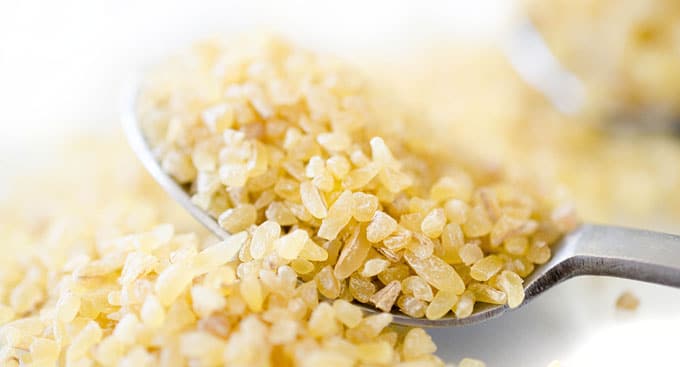
Bulgur is a grain consisting of groats of wheat. The groat, sometimes known as the “berry”, is the whole wheat grain, consisting of the cereal germ (high in healthy polyunsaturated fats), most of the bran (the fiber-rich coating), and the endosperm (usually what refined white flour consists of).
This whole grain is then parboiled (partially boiled prior to packaging to make cooking faster for you!), dried, and cracked (ground up a little or a lot, depending on the grade of bulgur).
The result is a whole grain that takes little time to cook (unlike bulgur’s cousin, cracked wheat, which is not parboiled and thus needs a longer cook), and is packed with fiber and B vitamins and protein!
Types of Bulgur
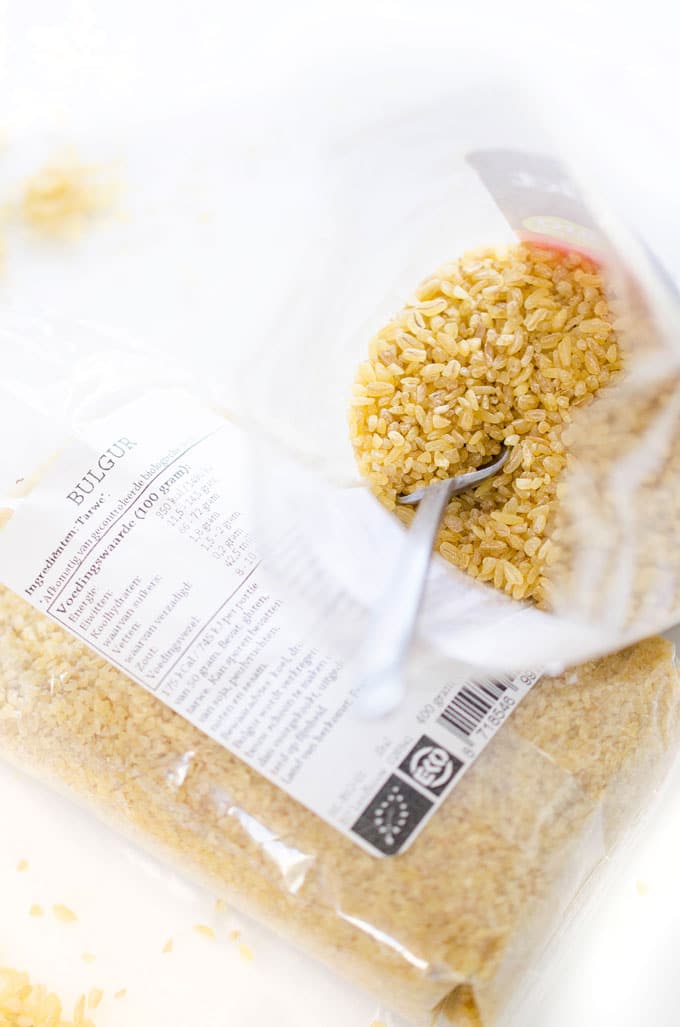
Bulgur varies in how finely it has been ground, and comes in four grades:
- Fine (#1)
- Medium (#2)
- Coarse (#3)
- Very Course (#4).
The fine/medium bulgurs are great for tabbouleh or as breakfast porridge. The more coarse varieties are good for adding hearty texture to soups and pilafs.
How to cook bulgur
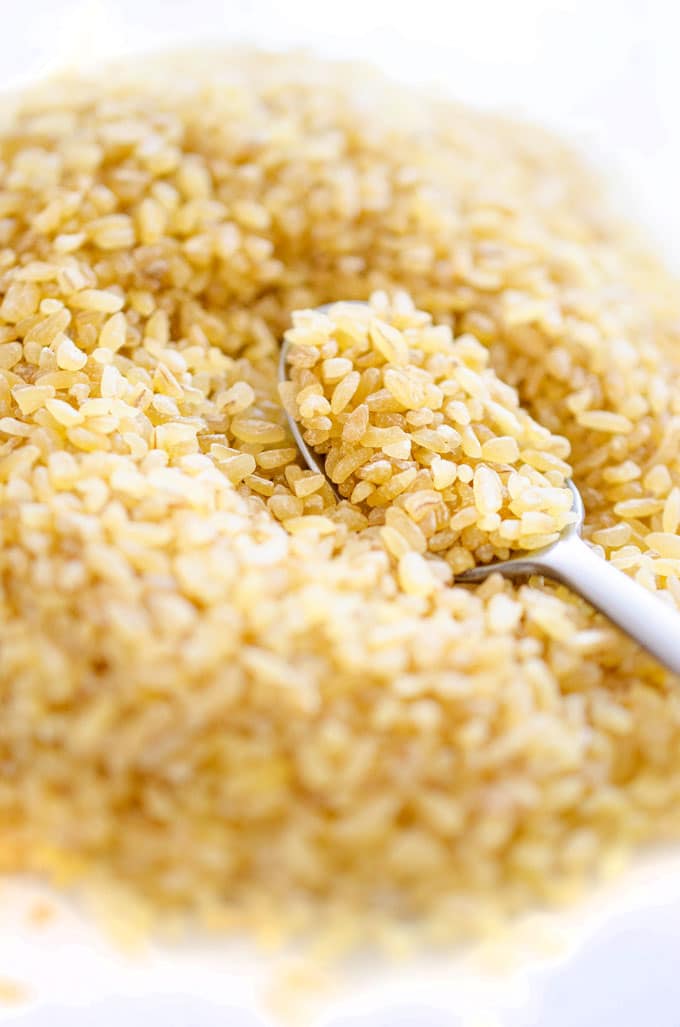
Some recipes call for cooked bulgur, while others want it presoaked. Fortunately, both are way easy to make.
How to cook bulgur by boiling: You’ll need 1 part bulgur to 2 parts water. Bring water to a boil and add bulgur, then cook for 15 to 20 minutes, until tender. Drain excess liquid.
How to cook bulgur by soaking: Combine 1 part bulgur and 2 parts boiling water. Stir and let sit for an hour. Drain excess liquid.
Moral of the story? Bulgur is so easy to cook and brings a new, nutty flavor into the mix! Try substituting bulgur for dishes that call for brown rice or quinoa.
Some of our favorite bulgur recipes are Bulgur Falafel, Bulgur Salad, and Bulgur Breakfast Bake, or you could go with Bulgur Pilaf for a more traditional bulgur recipe!
How to store bulgur
Store uncooked bulgur in a cool, dry, airtight container. Cooked bulgur should be stored in the fridge for a few days, but will quickly “weep” moisture, making it watery.
Is Bulgur Wheat Healthy?
Bulgur is a whole grain, making it full of fiber and nutrients. Compared to quinoa, bulgur is slightly less rich in nutrients, containing less vitamins, minerals, and protein. Compared to couscous, bulgur is a higher fiber, more nutritious grain.
Can Celiacs Eat Bulgur?
As a form of wheat, bulgur contains gluten, and is therefore not safe for those with celiacs or gluten intolerances.
Bulgur Health Benefits
Bulgur is a whole grain, making it a filling, nutrient dense plate filler. The following bulgur nutrition information is per 1 cup (182 g) of cooked bulgur.
- Calories: 151
- Carbohydrates: 34 g
- Fiber: 8 g, 33% of Daily Value (DV)
- Protein: 6 g
- Fat: 0 g
- 55% DV of Manganese: A trace element that plays a role in healthy brain and nervous system function.
- 15% DV of Magnesium: A mineral that plays a large role in bone formation and maintenance in addition to being a part of over 300 reactions within the body.
- 10% DV of Iron: A major component of hemoglobin, the proteins that make up red blood cells and carry oxygen around the body. This is a non-heme source, meaning it does not come from an animal. It is not absorbed as well as heme iron.
- 9% DV of Niacin (Vitamin B3): A water-soluble vitamin that is a precursor to NAD, a coenzyme important for breakdown of macronutrients into fuel. Niacin may also reduce risk of cardiovascular disease.
- 8% DV of Folate (Vitamin B9): A water-soluble vitamin that helps make DNA & RNA and metabolize amino acids.


learned a lot but where are the recipes with bulgar in them?
Hi there! You can find all of our bulgur recipes here: https://www.liveeatlearn.com/?s=bulgur
Do the calorie figures vary depending on cooked or uncooked weight?
Most packs I’ve seen in shops show 100g as containing around approx 350kcal whereas this article and others emphasize that 1 cup (185g) of COOKED bulgar contains only 151kcal?
Please Help.
Yep calories will vary if it is cooked vs. uncooked – the cooked version has absorbed a lot of water and will therefore have less calories for the same amount of weight 😀
I only have course bulgur but my recipe is for fine bulgur. Can I put course bulgur into a food process and grind into fine?
Yep that should work! 😀
Hi, Is the Bulgar you are showing in this article iGolden Bulgar? I wanted to buy some today to make a Mediterranean salad I found on line and I could only find Red Bulgar. Do you have any suggestions on where I can get the Holden? I’m willing to order on line if needed. Thank you!
Red bulgur would also work well here! Traditional gold bulgur can easily be found online though 😀
I love it. Helpful information.
Can you freeze uncooked bulgur?
Yes! Store it in an airtight container in the freezer, where it can last for years!
How long will bulgur last vacuum sealed? We’ve been vacuum sealing rice, flour etc in canning jars and storing them in our basement with our other canned food?
I haven’t tried this before so I can’t say for sure, but it’s probably comparable to rice 😀
Thank you, Sarah! Your information was helpful in making my daughter’s lunch today.
Thanks for your share. I was overweight weighing 109kg at 5ft 4inches tall so my doctor asked me to lose weight. I tried it all but never did so I decided to change drastically. STOP RICE RED OIL, GROUNDNUT OIL. I first started with Fonio but it alway became porridge so I changed to bulgur. Now I have lost 13kg in two months. am now happy and encourage all to eat bulgur if you want to loss weight..
Is bulgur wheat flour the same as whole wheat flour
Yes, I believe if you were to grind bulgur it would be whole wheat flour.