

This post contains affiliate links.
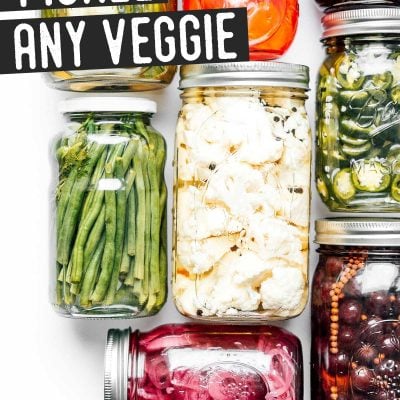
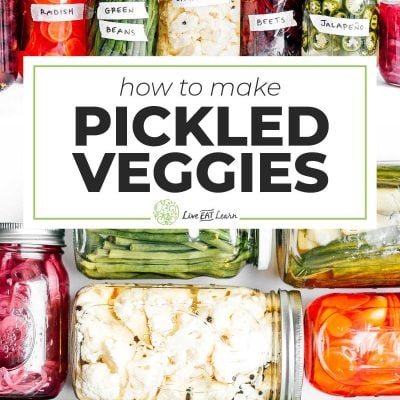

Learn how to quick pickle everything from cauliflower to beets to green beans! These easy refrigerator pickles are perfect for preserving fresh veggies and adding a punch of tangy flavor to just about anything.

 save this recipe!
Whether you’ve got too many farmers market finds or just need something punchy to perk up your plate, quick pickling is your new best friend.
As a food scientist who’s spent years testing fermentation recipes and brewing endless batches of homemade kombucha, I’ve got a soft spot for anything briny and tangy. And while this method isn’t fermentation (it’s vinegar-based, not bacteria-powered), it’s the easiest way to get that pickle flavor in under an hour. No special gear, just fridge space, and a jar.
All you need is 10 minutes of prep, a quick brine, and a fridge. The result? Crisp, tangy pickled veggies that last for weeks and taste like you know what you’re doing.
Pickling 101
Quick pickling and canning might sound similar, but they’re different. Quick pickling is what we’re doing here—it’s fast, fridge-friendly, and perfect for short-term storage (about 2 to 3 weeks). Canning, on the other hand, is more technical and meant for long-term storage with specific safety steps. All the recipes in this post are quick pickles only—not tested for canning—so if you’re looking to store them long-term, be sure to follow proper USDA canning guidelines.

The Base Ingredients
This is the go-to quick pickle brine I use for nearly everything. It’s simple, pantry-friendly, and works across a wide variety of vegetables. Jump to the recipe card for measurements + vegetables you can pickle!
- Vinegar: White vinegar or apple cider vinegar brings that tangy flavor and preserves the veggies.
- Non-Iodized Salt: Kosher or pickling salt works best. Avoid iodized salt, which can cloud the brine.
- Hot Water

The Salt Matters
Not all salts are created equal. For pickling, always use non-iodized salt like kosher or sea salt. Iodized salt can cloud your brine and sometimes give off a slightly metallic or bitter flavor (plus, anti-caking agents don’t play nicely with vinegar).

How to Quick Pickle
This is just an overview–jump to the recipe card for full printable instructions!
- Make the brine: Heat water, dissolve in the salt, stir in vinegar.
- Add veggies: Pack your veggies and any herbs or spices into a clean jar.
- Pour, cool, and chill: Cover with brine, let it cool, then seal and refrigerate. Ready in an hour, better in a day!

My go-to uses for pickled veggies
- Tossed on grain bowls or salads
- Tucked into sandwiches or wraps
- Served with falafel or shawarma
- Spooned over tacos, eggs, or toast
- Straight from the jar (no shame)
Reader rating
“I tried this method with baby carrots, onions and hot peppers cut in half and they are delicious. Going to make more this evening.” —Carolyn

Pickle This Next


How To Quick Pickle Vegetables

Ingredients
Base Pickling Brine
- 1 cup hot water, 236 mL
- 2 tsp non iodized salt*
- 1 cup vinegar, apple cider or white vinegar, 236 mL
For Pickled Cauliflower
- 1 tsp whole black peppercorns
- 2 cloves garlic, crushed
- Pinch crushed red pepper flakes
- 2 cups chopped cauliflower
For Pickled Green Beans
- 5 to 10 sprigs fresh dill, about 1 to 2 tsp if chopped
- 2 cloves garlic, crushed
- ½ lb green beans, trimmed, 226 g
For Pickled Beets
- 1 tsp sugar
- 1 bay leaf
- 1 clove garlic, crushed
- 1 to 2 beets, diced or cut into half-moons
For Pickled Cucumbers
- 2 pickling cucumbers, can sub 1 English cucumber, sliced or cut into wedges
- 10 sprigs fresh dill, about 2 tsp when chopped
- 4 cloves garlic, crushed
- 1 bay leaf
- 1 tsp whole black peppercorns
For Pickled Carrots
- 1 lb carrots, peeled and cut julienne
For Pickled Red Onion
- 1 large red onion, sliced into half-moons
For Pickled Jalapenos
- 10 to 15 jalapeno peppers, sliced
Instructions
- Brine: Heat water in either a kettle, the microwave, or on the stove until steaming hot. Stir in salt until dissolved. Stir in vinegar.

- Pick Your Pickle: Choose your flavor, then add all of the ingredients to a lidded non-reactive container (like a glass jar or ceramic vessel). Pour liquid over ingredients so that they are covered (you may not need all of the liquid).

- Pickle: Let cool to room temperature, then seal shut and transfer to the refrigerator. (Let pickle for at least 1 hour before digging in.)

Notes
Nutrition
Nutrition information calculated by Sarah Bond, degreed nutritionist.
 did you make this?Leave a comment below and tag @liveeatlearn on social media! I love seeing what you’ve made!


Nomnom thanks
Fantastic!!! Is all I have to say.
Hi, great page, thanks!
I’m just wondering why the salt needs to be non-iodised?
Iodine can impact the color and flavor when pickled! 😀
Another possible reason: My sister (a protein chemist) says non-iodized salt doesn’t absorb sulfur from the vegetables – our liver apparently needs that sulfur.
Hi… I see you recommend putting the pickled veg in the fridge. I’m wanting to pickle veg as a back up in case our electricity grid collapses… Which will then mean no electricity… No fridge. Will pickles keep for a few weeks in a cool, dark room?? Thanks. Jean.
Hi Jean! These are for quick pickling – for longterm storage you’ll need to follow a guide for longterm pickling (the salt ratios will be different and they may require a water bath).
Can I ommit/skip the SALT?
THANK YIU!
You really do need the salt for this one for the pickling process / flavor!
Hi there, you’re missing the measurement of beans “½ (226 g) trimmed green beans” — I can do it in grams of course but was that meant to be 1/2 cup? 1/2 pound? 1/2 bushel? 🙂
Thanks for pointing that out! It should be 1/2 lb 😀
I pickle celery. Keeps longer and I use it in salads
I also do onions
Hello……if the package or jar of salt does NOT say contents are iodized, are we safe to assume that it is not? Thanks……a pickled Canadian !
Yep, that should be fine! 😀
I cut onion, courgette, carrot and green beans, placed in a roasting tin with mange tout. Covered with foil and roasted at 200C for 10 minutes. Added the boiling water, vinegar, salt, allspice berries and crushed garlic clove. Recovered with foil and left in a cold place before going in a jar in the fridge to chill. It was gorgeous!!
Can I pickle okra using this method? If so, what optional ingredients can I add?
Yes! You could add garlic and/or dill 😀
I see some recipes add sugar (like for beets). Do I have to add sugar?
You don’t need to, it’s just for flavor!