

This post contains affiliate links.
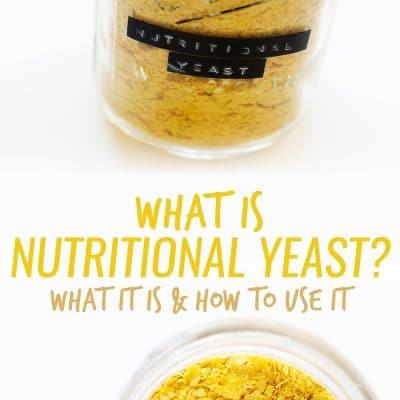
What is nutritional yeast? Your next new obsession. It adds a savory, creamy, cheesy component to any dish, it’s 100% vegan, and it’s really good for you!
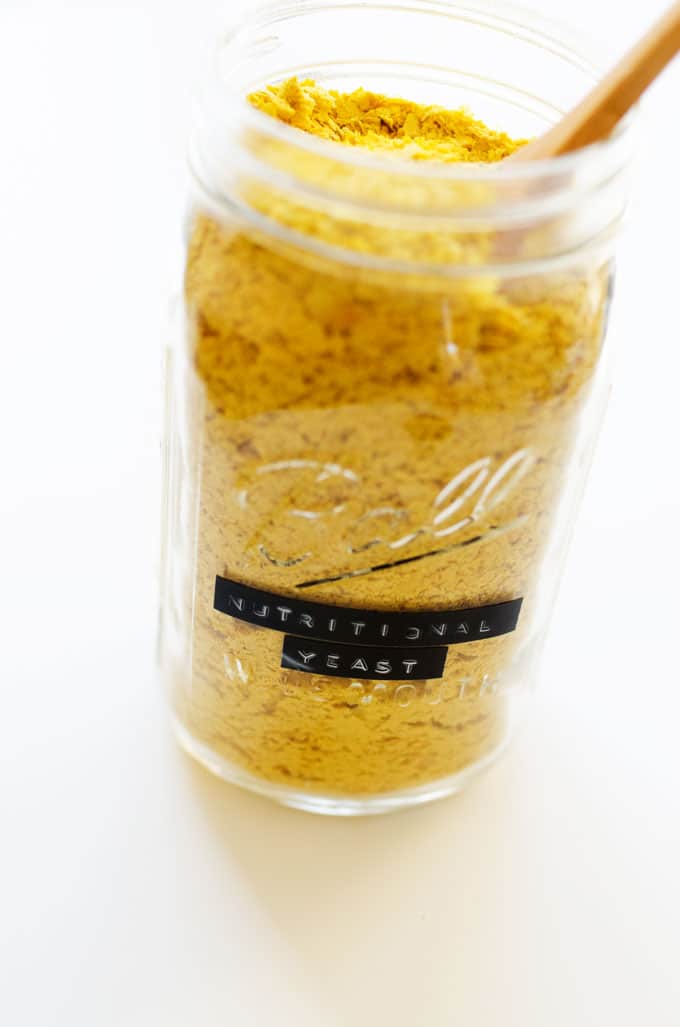
After visiting a flat out amazing vegetarian/vegan restaurants while traveling, I decided to do some digging into their voodoo flavor secrets. And a common trend I found was the use of nutritional yeast.
I understand that neither the word “nutritional” nor “yeast” elicits a strong desire to eat it, but it’s cheesy and creamy without the dairy, nutty without the nuts, and it transforms any vegetarian dish into a healthy, savory masterpiece. Which begs the question, what is nutritional yeast?
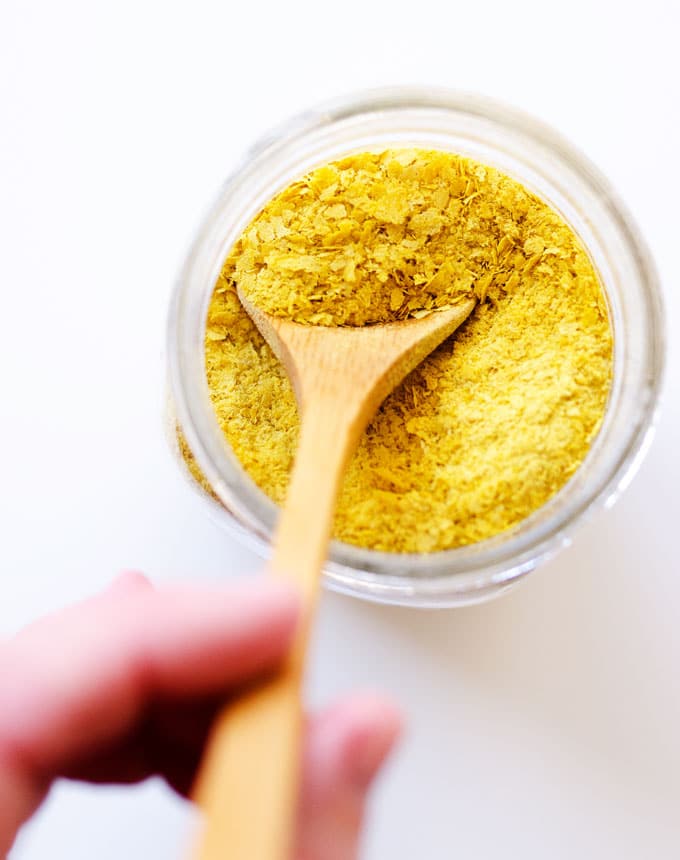
What is Nutritional Yeast?
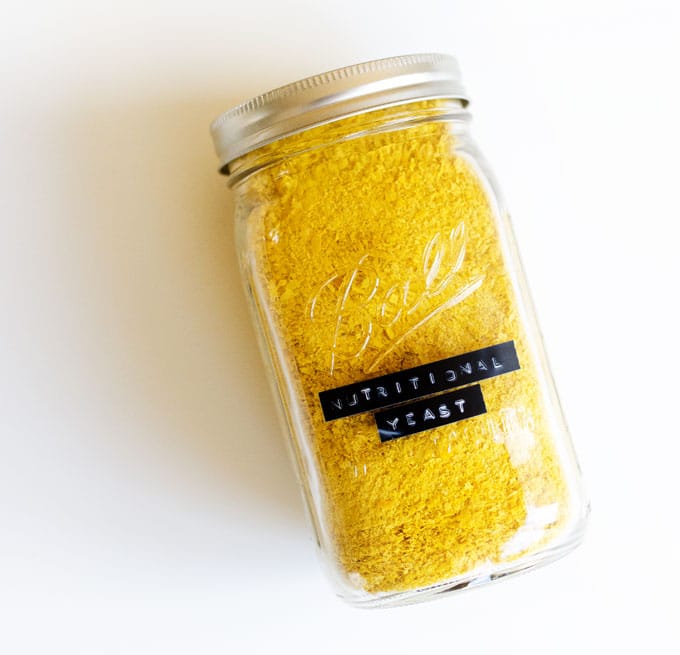
Nutritional yeast is created by growing Saccharomyces cerevisiae on beet molasses (yeast + sugar). It’s then heated to deactivate the yeast, washed, and dried. This deactivation means that people who have a sensitivity to active yeast (like the kind found in bread) can consume nutritional yeast, as it does not contain Candida albicans.
It can be used as an ingredient (like in these Almond Tofu Nuggets) or as a condiment for things like popcorn, scrambled eggs/tofu, or mashed potatoes. Be sure to check out all of our nutritional yeast recipes here!
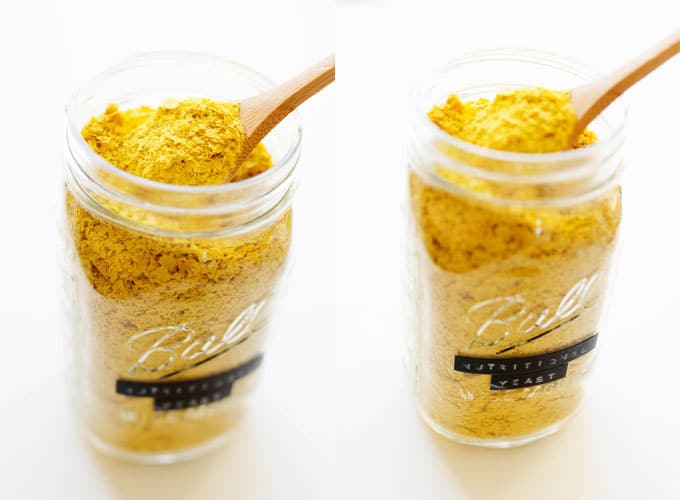
Where to find nutritional yeast
Probably due to the incredibly unappetizing name, nutritional yeast goes by a few other names. In America you may hear nutritional yeast called “nooch” or “nuch”. Australians call it “savory yeast flakes”, the Kiwis call it “brufax”, and in Ethiopia it goes by “yeshi”.
You’re more apt to find this at a specialty health store or a more trendy supermarket. If you’re lucky you’ll find this in the baking section where they have all the variations of flours and oats. You may also find it in the health food section with the vegan supplements. If all else fails, you can get it online (here).
Nutritional yeast can come in an array of packaging, though mine came in what looks like a protein powder tub. But be careful not to confuse this with Brewer’s Yeast, which is often sold nearby, and has a bitter taste. And it is definitely not Active Dry Yeast or Instant Yeast, which are active strains meant for leavening breads.
How to Store Nutritional Yeast
Store nutritional yeast in an airtight container and place in a cabinet (or dark place). Stays good for about a year.
Nutritional Yeast Nutrition Information
May differ by brand, but generally this is the nutrition information per 2 heaping tablespoons (16g). Most brands supplement the nutritional yeast with additional vitamins and minerals, which is why some of these Daily Values seem a bit exorbitant. These are all water-soluble, however, so risk of toxicity is extremely low because your body does not store them.
- Calories: 45
- Carbohydrates: 5g
- Fiber: 4g, 16% Daily Value (DV)
- Protein: 8g
- Fat: 1g
- 640% DV of Thiamin (Vitamin B1): A water-soluble vitamin that turns your food (carbohydrates) into fuel (glucose). People at risk for deficiency include those with Crohn’s Disease, alcoholics, and those undergoing kidney dialysis.
- 570% DV of Riboflavin (Vitamin B2): A water-soluble vitamin that acts as a component of FAD to help your body break down macronutrients in the electron transport chain, creating usable energy.
- 480% DV of Vitamin B6 (Pyridoxine): A water-soluble vitamin that works behind the scenes as a coenzyme in many important reactions within your body, including protein metabolism and red blood cell formation, among countless other functions.
- 280% DV of Niacin (Vitamin B3): A water-soluble vitamin that is a precursor to NAD, a coenzyme important for breakdown of macronutrients into fuel. Niacin may also reduce risk of cardiovascular disease.
- 130% DV of Vitamin B12 (Cobalamin): A water-soluble vitamin important in brain and nervous system function as well as red blood cell formation. It is only found naturally in meat and animal products, but can be made industrially via bacterial fermentation.
- 60% DV of Folate (Vitamin B9): A water-soluble vitamin that helps make DNA & RNA and metabolize amino acids.
- 20% DV of Zinc: A mineral important in strengthening your immune system, healing wounds, and maintaining your sense of taste and smell.
- A Complete Protein: Contains all 9 essential amino acids (the amino acids you need to obtain from food because your body cannot make them).


Hi Sarah, I was snooping around your blogs & came across this post. Thanks 4 the info on nutritional yeast. I always wanted to know what it was & how to use it.
You should try it out! It’s such a unique and tasty ingredient 🙂
Hi Sarah, Thanks I’m going to buy some. what can I put it on, just not sure. Can it be used on almost any type food?
You can use it to season popcorn (just sprinkled on top) or as a seasoning when you’re cooking (if you want some added nutty/eggy/richness). I just published a vegan breakfast taco recipe that I looove that uses nutritional yeast 😀
Thanks again Sarah, I read your recipe 4 breakfast taco. Can U guess what I’m eating 4 breakfast tomorrow? Taco here I come! Thanks Sarah, I love breakfast the best of all meals & always looking 4 something different & thanks 2U I found a good breakfast to eat. UR the best!
Thanks so much, Lexie! Happy I could help! (p.s. they also make a pretty great reason to have breakfast for dinner 😉 )
Thanks Sarah, this such a good ingredient when you cook. I love it and no need to be vegan to use it, many recipes are so good with it. My kale chips are so delicious with it. It was interesting to understand where it come from. Nicole
It’s such an undervalued ingredient for the everyday kitchen (not just vegan, you’re right!) I’ll have to try it on kale chips, sounds tasty!
This answered a lot of questions! I feel better about trying/buying it!
OMG thank you for such a detail very clear explanation.
Is nutrtional yeast ok for a kidney diet that restricts potassium?
1 tablespoon of nutritional yeast has about 189 mg of potassium!
I love that you differentiate between water and fat soluble vitamins in the nutrition info, that is extremely important, and not everyone knows the big difference between vitamin types!