

This post contains affiliate links.
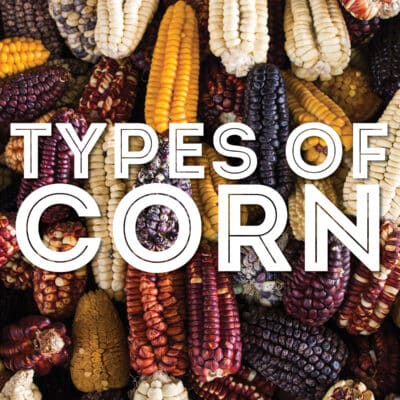
Corn, corn, beautiful corn! In this post we will cover 17 different types of corn and some tasty ways to use them!
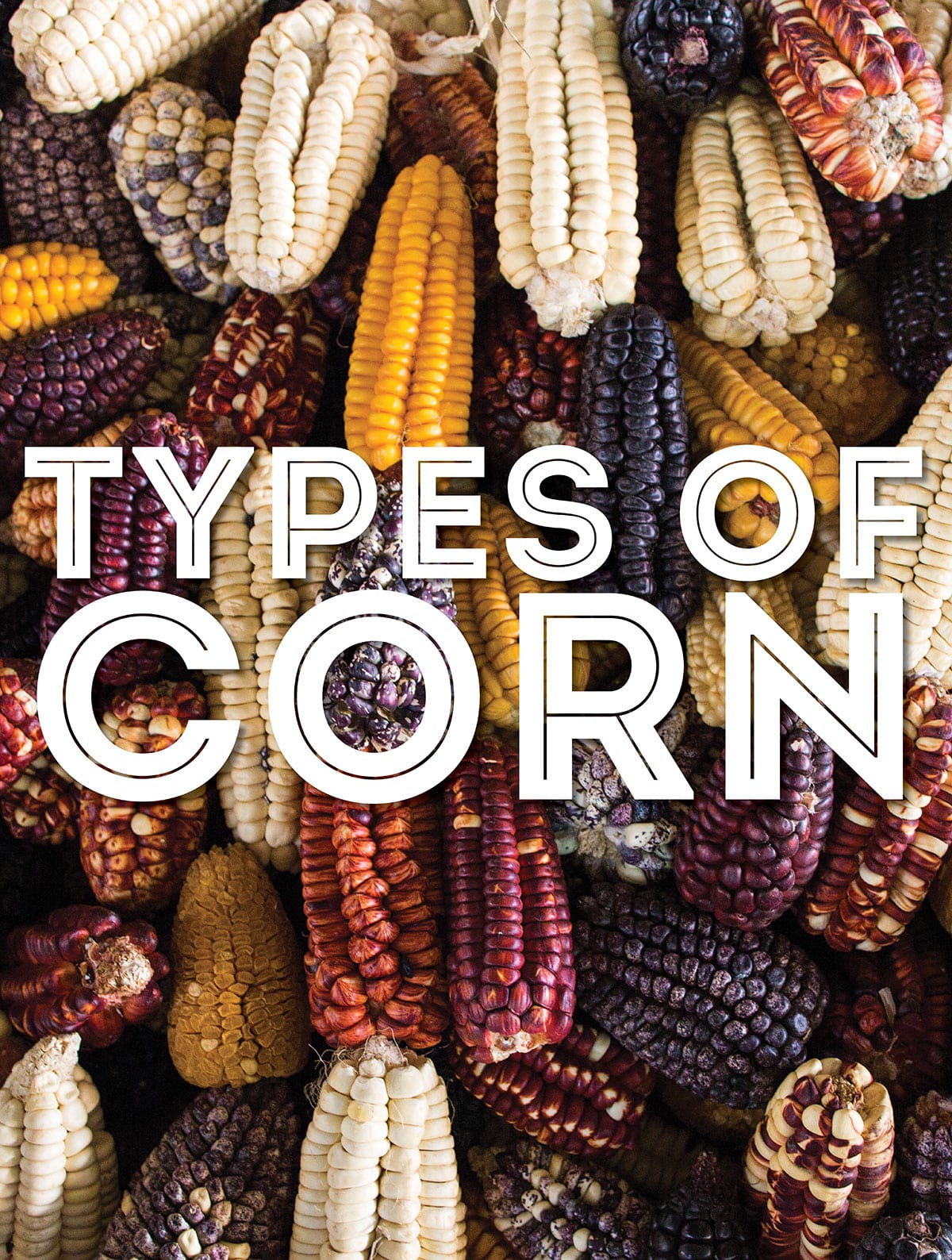
Corn likely originated in Mexico about 10,000 years ago as a much smaller plant than it is today. But early native Americans learned how to pick specific kernels to replant, so that the size of the plant and yield of the crops increased.
Today the United states grows over 13 billion bushels of corn a year. Over 5 billion are used as animal feed and over 5 billion to produce ethanol (mainly for gasoline). The rest is eaten here in the USA, exported, or used for other non-food purposes.
Before we look at different types of corn here is an optional corn trivia question. Scroll to the bottom of this post for the answer.
Corn Trivia!
Which State produces the most corn each year? Iowa, Nebraska, Kansas, or Illinois? (find the answer at the bottom of this post!)
The Most Common Varieties of Corn in the United States
These five corn varieties make up about 99% of all corn consumed in the United States. We list them in order of most to least use.
Field Corn
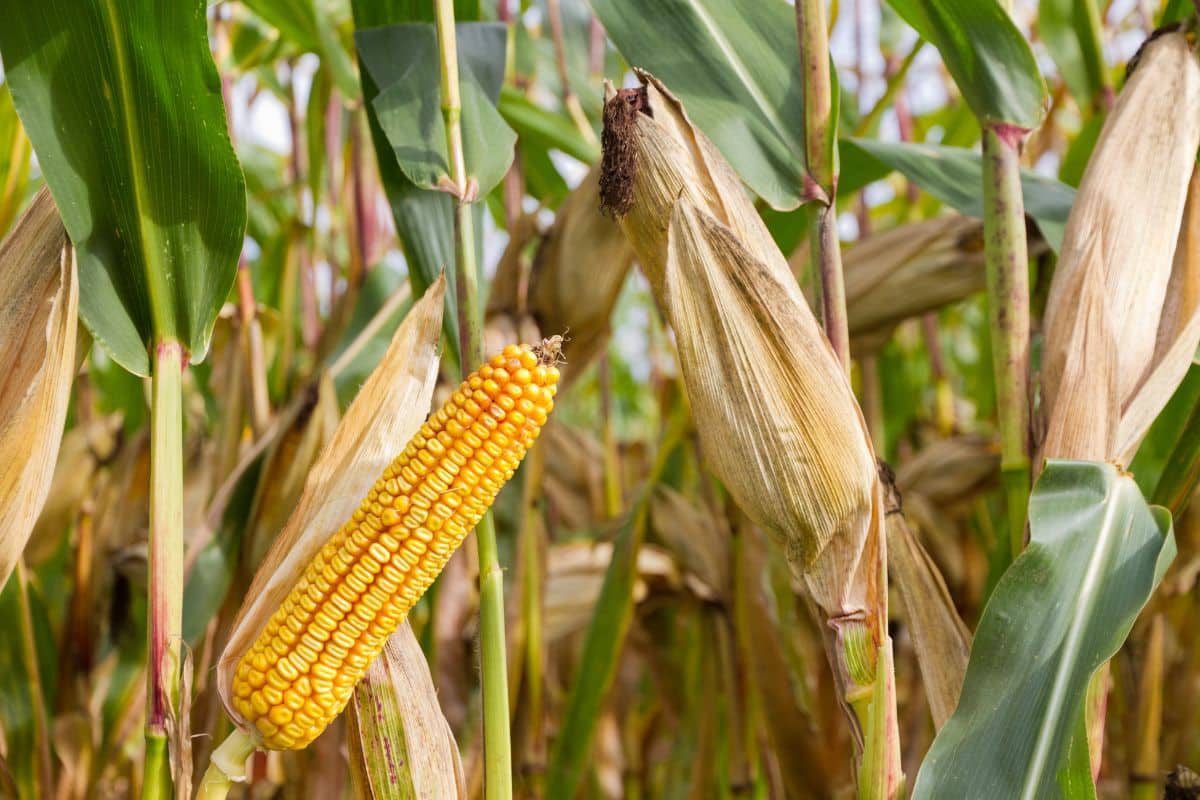
Field corn, also known as Dent Corn, is the most widely grown type of corn in the United States accounting for over 90% of production. It is named for the distinctive indentation or “dent” that forms on the top of each kernel as it dries. Dent corn is primarily used for animal feed and ethanol production, but it is also used in corn syrup, corn starch, corn chips, corn meal, and a variety of other edible and non-edible products. Field corn is harvested later than sweet corn. It remains in the field until the stalks and leaves turn brown in the fall. The entire plant is then harvested with a combine. The kernels are separated from the rest of the plant which is fed back onto the field as fertilizer.
Sweet Corn
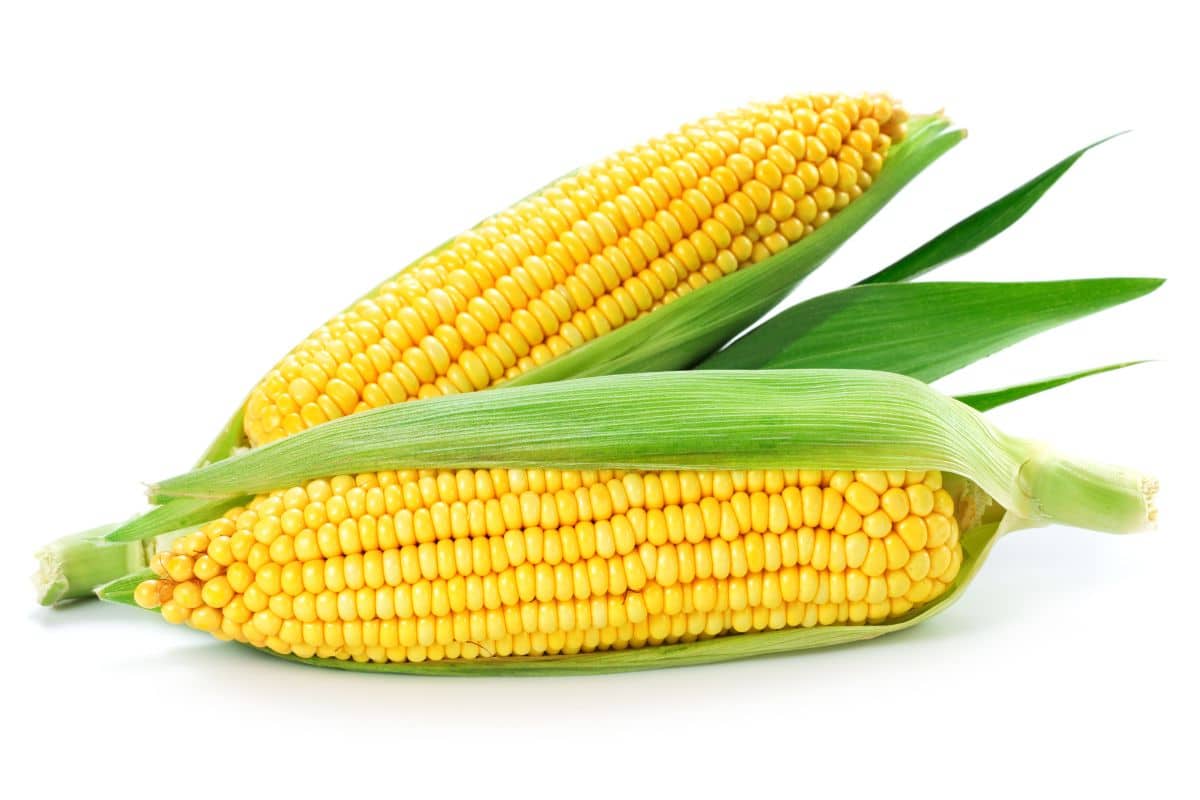
Sweet corn production in the USA is a distant second to field corn. It is a type of corn that has a significantly higher sugar content than other types thus giving it a sweeter taste and more tender texture than other types of corn. It is the corn we know so well as corn on the cob, bought frozen or canned, and used in an endless variety of recipes. One of our top 5 most popular recipes here at Live Eat Learn is this Zucchini Corn Salad. It is easy to make and we guarantee that if you take a batch to your next cookout invite, you won’t return with leftovers.
Popcorn
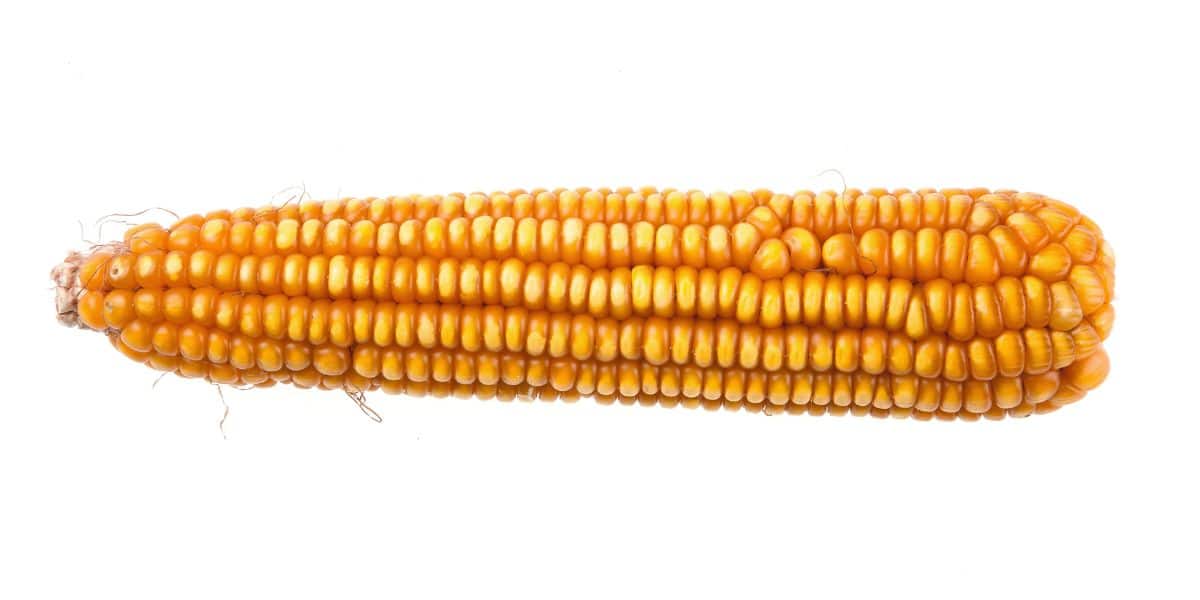
You may have thought that the corn you “pop” in the microwave or buy at the theater was the same corn you eat off the cob at cookouts, but it isn’t. Popcorn is a type of corn that has a hard outer shell and a small, starchy interior that “pops” when heated. America grows about $2.4 billion of popcorn a year with Nebraska being the leading producer. Popcorn comes in a variety of colors, including white, yellow, and red. Despite America’s love for buttered popcorn, it makes up only a tiny fraction of the corn grown and consumed in the United States, coming in at only ¼ the level of sweet corn.
Flour Corn

Flour corn is a type of corn that has a soft, starchy interior, and is primarily used for making corn flour. It is typically white or yellow and has a slightly sweet taste. Flour corn is grown in dry areas of the American Southwest and in arid regions of South America.
Flint Corn
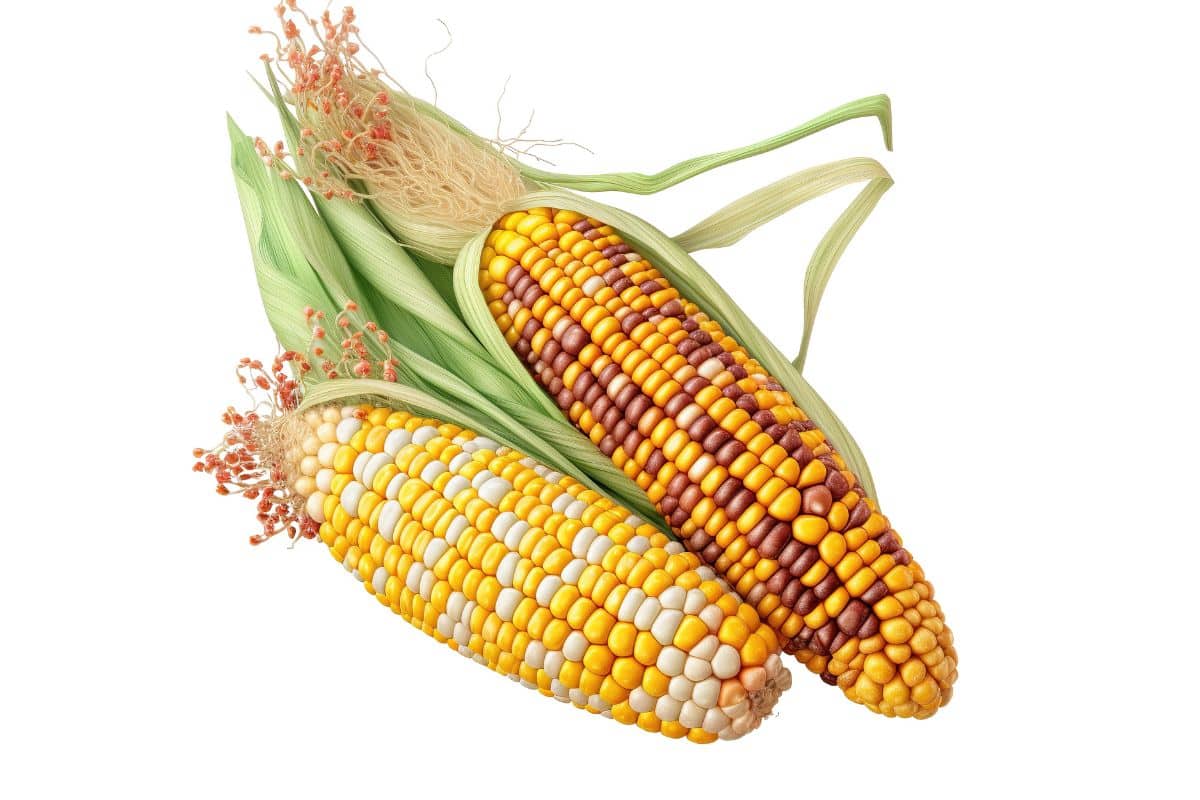
Flint corn is also called Indian corn. It has a hard outer layer and colorful, multicolored kernels. It is primarily used for decoration, but it can also be ground into cornmeal or used to make masa, a type of dough that is used to make tortillas, hominy, polenta, soups and other traditional foods.
Other Varieties of Corn
Here are 12 other varieties of corn of interest listed in alphabetical order:
Baby Corn
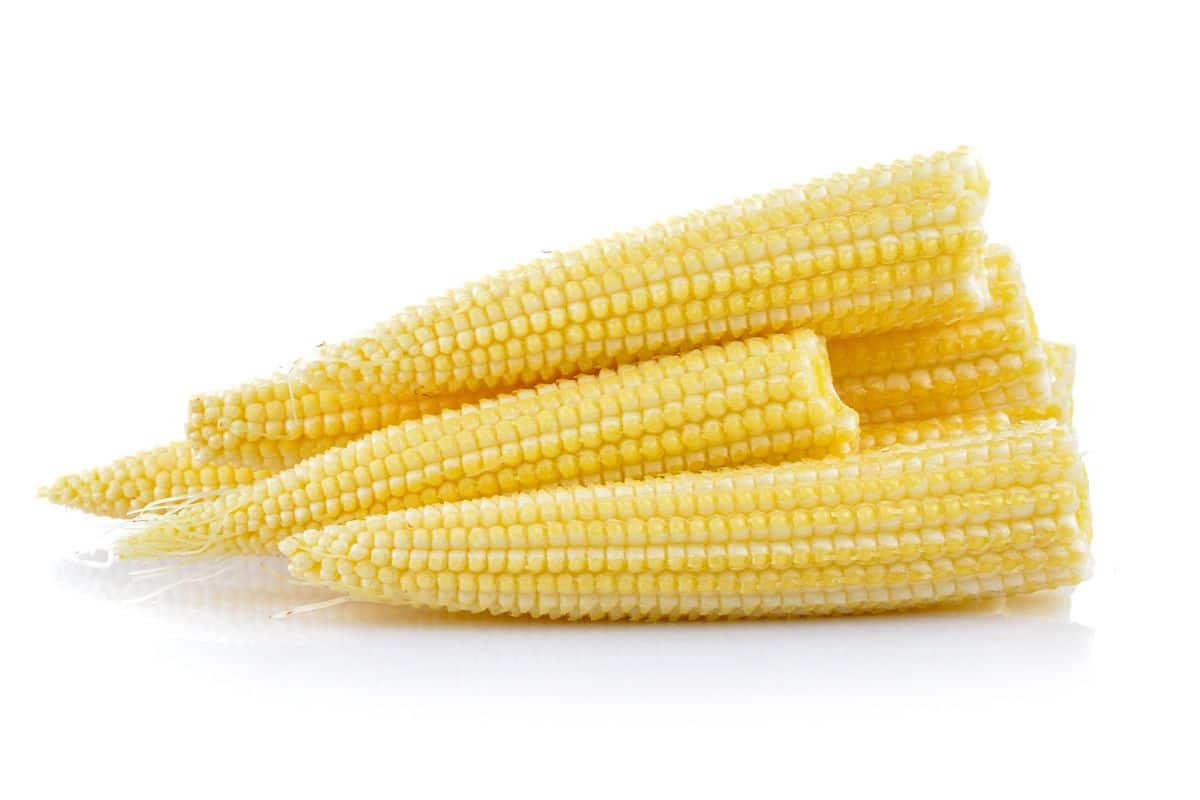
This is a small, immature ear of corn that is harvested when it is only a few inches long. It is commonly used in Asian cuisine, particularly stir fry. Baby corn is usually eaten whole to include the cob which is quite soft when immature. Baby corn is not widely cultivated in the USA.
Black Aztec Corn
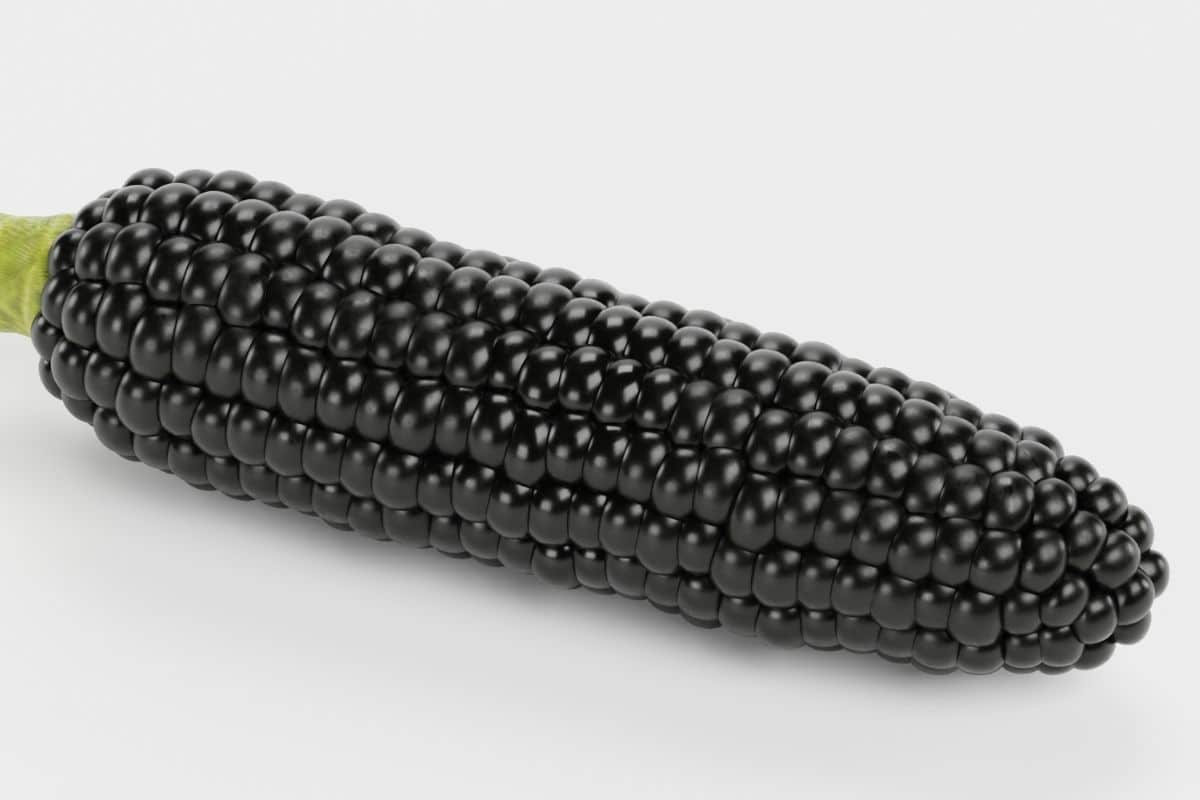
Black Aztec corn is a type of flour corn that is black or dark purple in color. It is native to Mexico, and is used to make a variety of traditional dishes, including tortillas, tamales, and pozole.
Bloody Butcher Corn
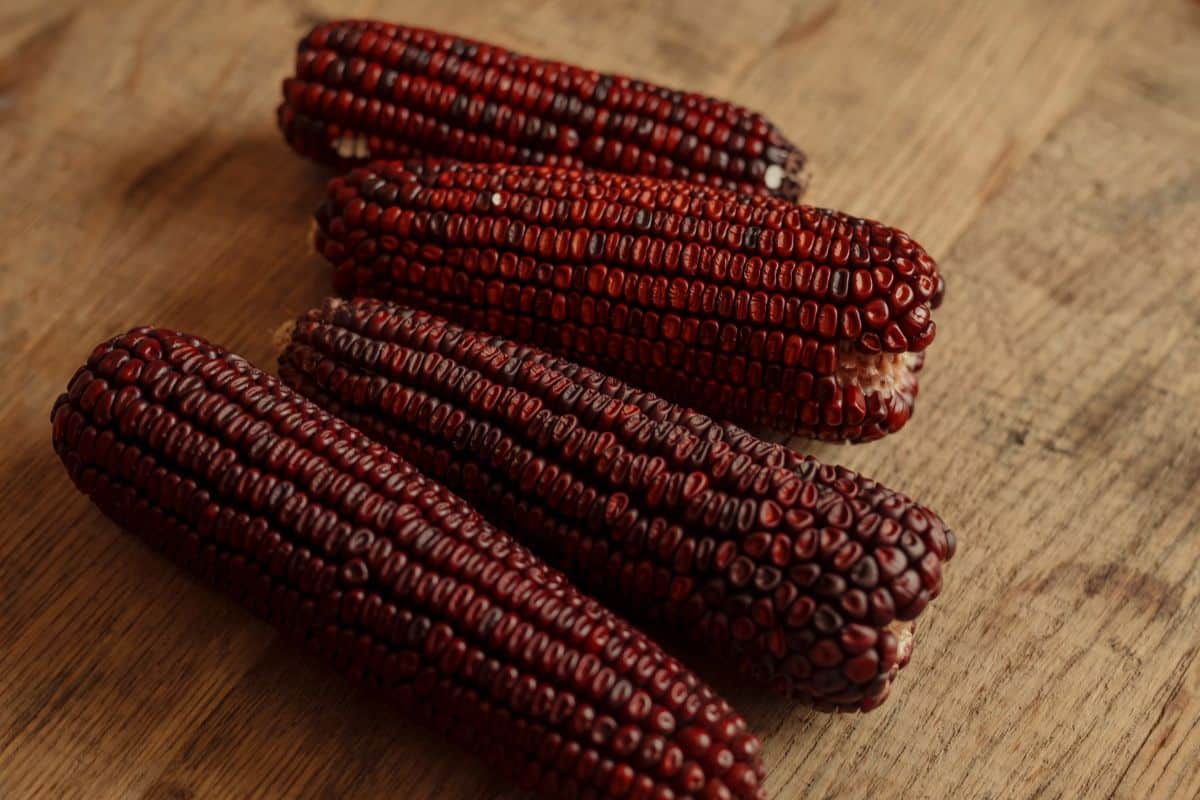
This is a red-colored corn that was commonly grown in America in the 1800s. It has a unique flavor and is still used to make cornmeal and flour.
Blue Corn

Blue corn is a type of corn that has a blue or purple color and is primarily grown in the southwestern United States and Mexico. It is used to make a variety of food products, including tortillas, chips, and bread, and is known for its slightly nutty flavor.
Floriani Red Flint Corn
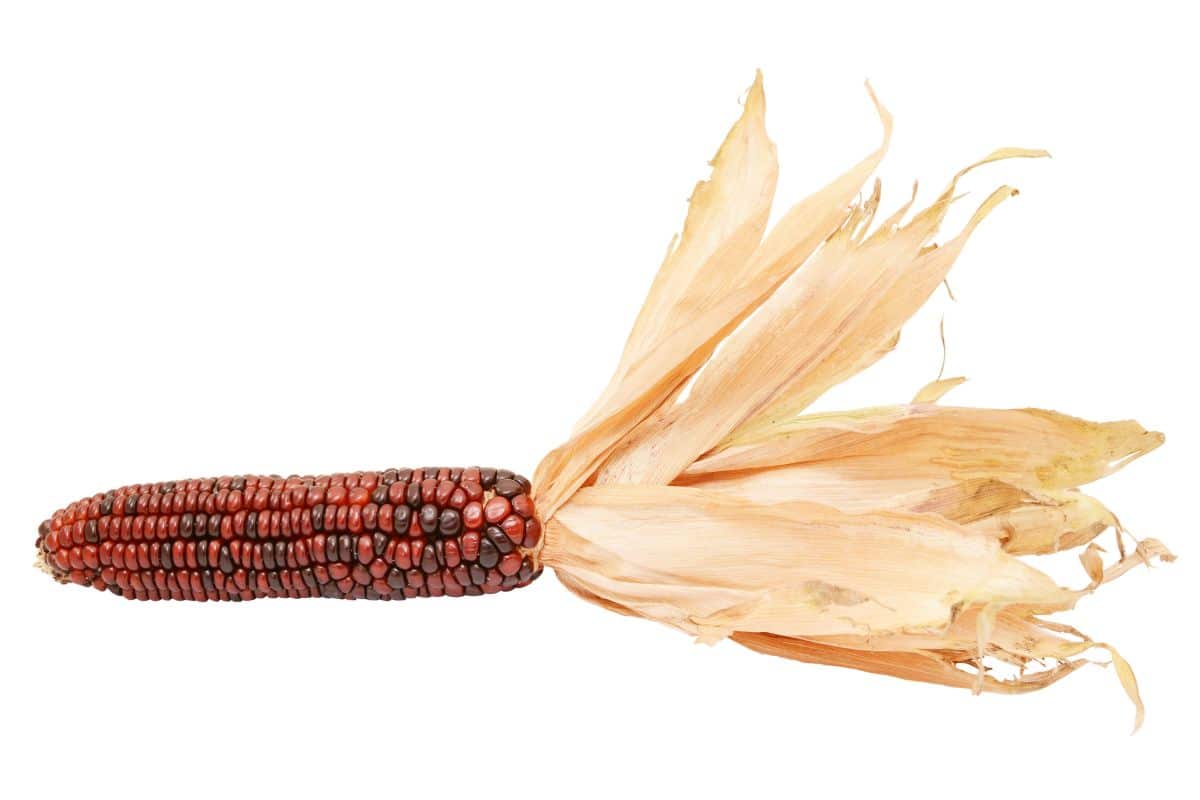
This is an heirloom variety which simply means that it is an old cultivar vs a newer hybrid corn developed by nature or farmers. It is an aesthetic vibrant red corn with a nutty flavor. It is often used to make polenta and grits.
Glass Gem Corn
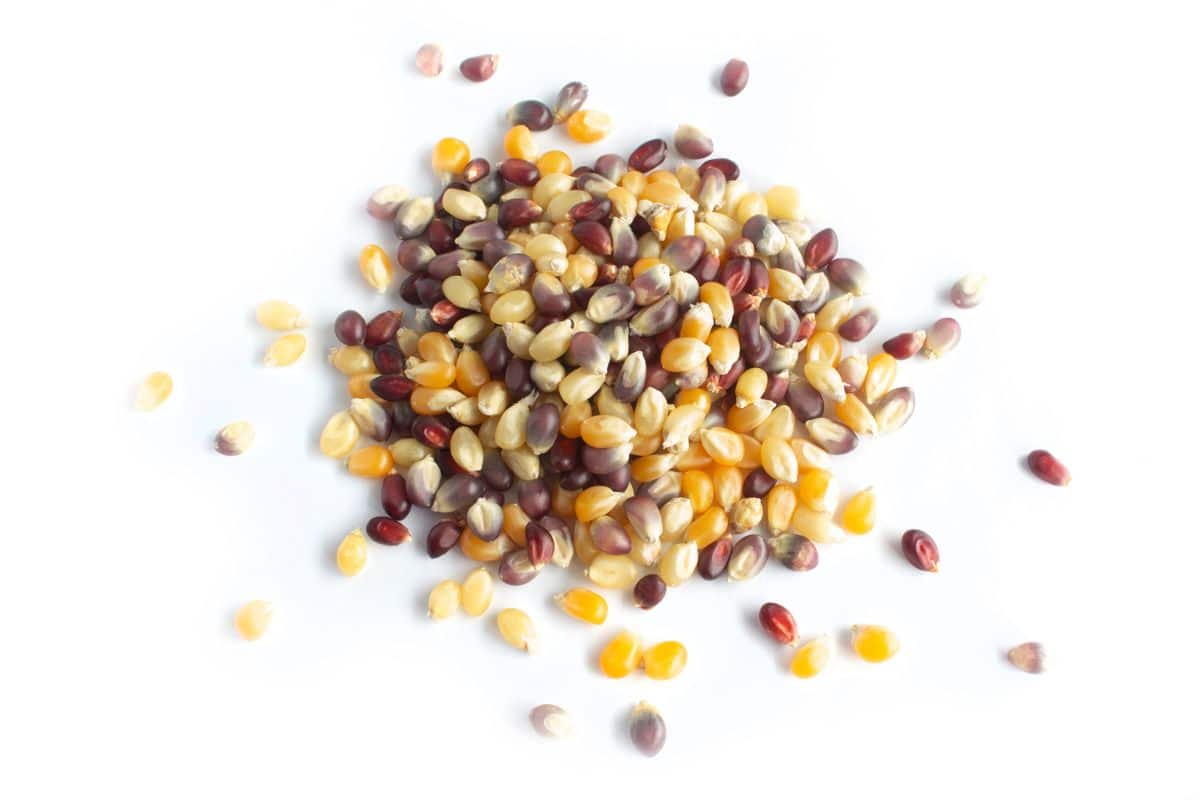
Glass Gem corn is a type of flint corn that is used more as an ornamental corn than itis cooked and eaten. Each kernel has a different color and pattern, ranging from deep reds and blues to bright yellows and greens.
Oaxacan Green Dent Corn
Oaxacan Green Dent corn is a type of dent corn that is grown in Mexico, and has a unique green color. It is used to make quite a few traditional Mexican dishes, including tamales, tortillas, and pozole.
Painted Mountain Corn

This corn is a high-altitude variety that is grown in the Rocky Mountains and was developed in Montana in the 1970s to be particularly cold resistant. Each cob displays a range of colors, including yellow, red, and orange and is used to make cornmeal, flour, and grits.
Pod Corn
Pod Corn is a real oddity. Each kernel of corn is shrouded in a husk. This “type” of corn is really just a mutation that can occur in dent, flint, flour, sweet, waxy, or popcorn. It is not grown commercially and is just used ornamentally. We included this one just for interest. Nothing to see here folks. Moving on.
Purple Corn
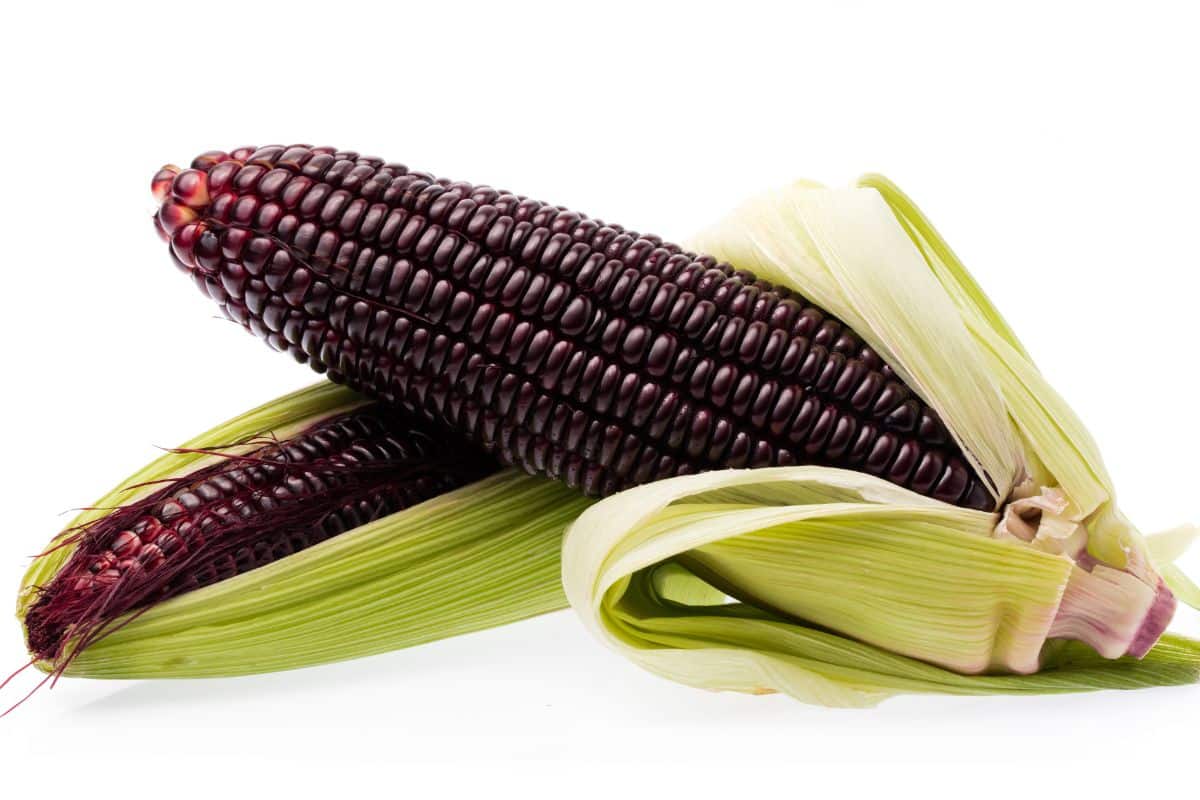
Purple corn comes to us from the Andes Mountains of Peru, and is just what its name implies, a purple colored corn. It is used to make a variety of dishes, including drinks, bread, and desserts. It is considered a bit healthier than yellow or white corn as the purple color comes from the antioxidant anthocyanin it contains.
Strawberry Popcorn
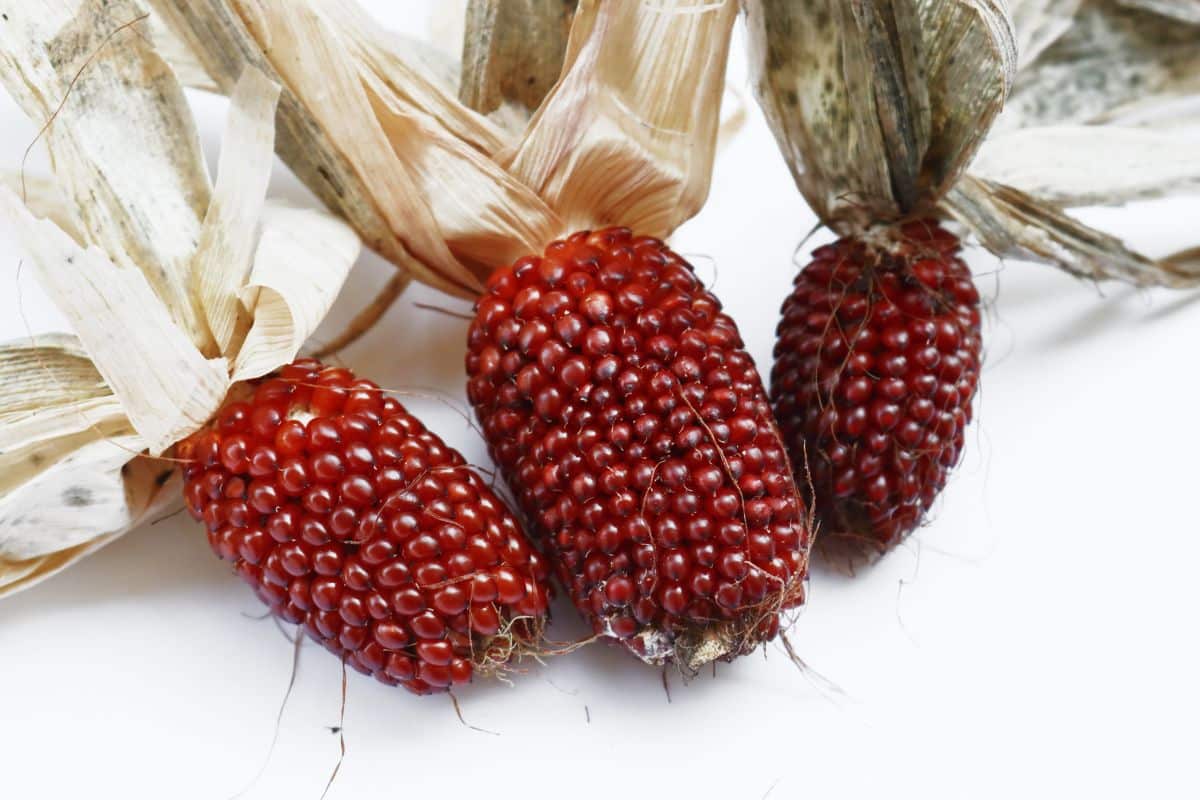
Strawberry popcorn is a variety of popcorn that has a reddish-pink color, and is named for its resemblance to strawberries. It is primarily grown as a novelty crop to use in displays. It does not make red popcorn, so if you see red popcorn (already popped) for sale it has been colored.
Waxy Corn
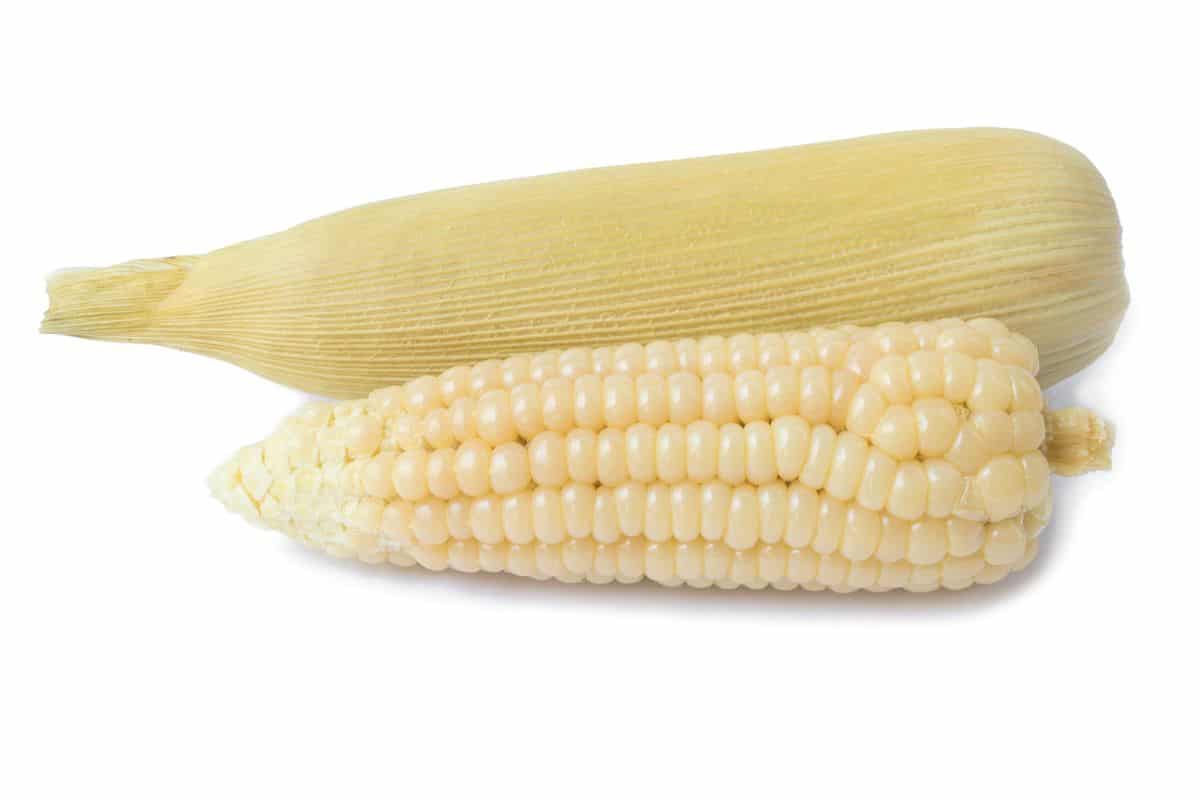
Waxy corn is a type of corn that has a high level of amylopectin, a type of starch that makes it very sticky when cooked. While waxy corn is certainly edible, it is mostly used for making industrial products such as adhesives, textiles, and paper.
Trivia Answer
The answer is Iowa though all four states are major corn growers!


Shoe-peg corn?
Good day! Hi how many variants of waxy corn do you have. Aside from white waxy corn do you have yellow waxy corn. Which is more expensive white or yellow?
Hey there! When it comes to waxy corn, there are indeed different variants, with white and yellow being the most common ones you’ll find. White waxy corn tends to be more readily available, but yellow waxy corn is also out there if you keep an eye out for it.
As for which one is more expensive, it can vary depending on factors like location and availability. Sorry I can’t give a more straight answer!
Where can I find growers of Indian corn so that I can sell for a non-profit group?
I’m not sure – sorry about that!
This was just VERY helpful