

This post contains affiliate links.
These sweet little juice bombs are a gift from nature, and we’re about to give them the appreciation they deserve. Read on for all the juicy deets you need to know about mandarin oranges!
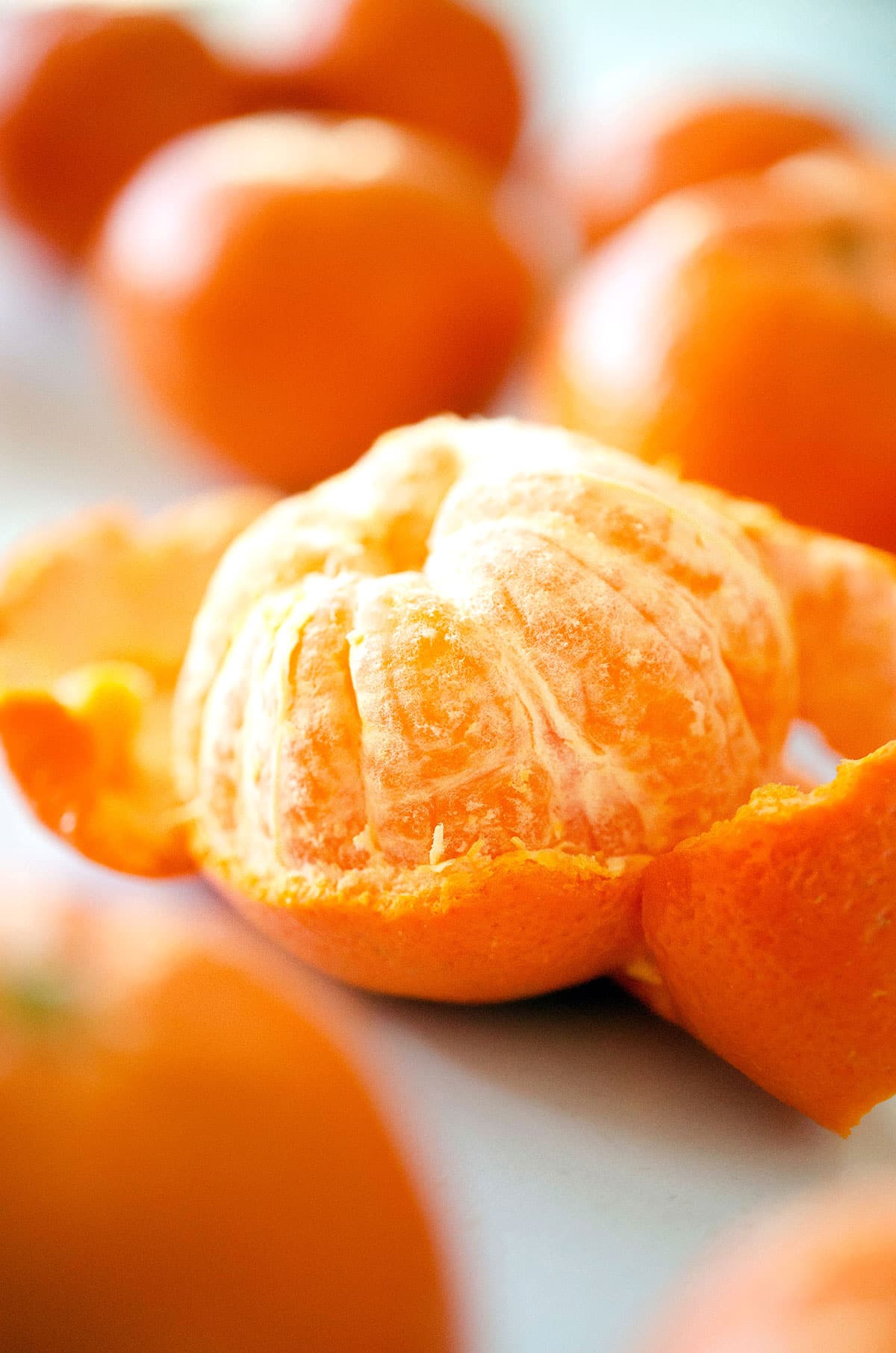
So what are mandarin oranges?
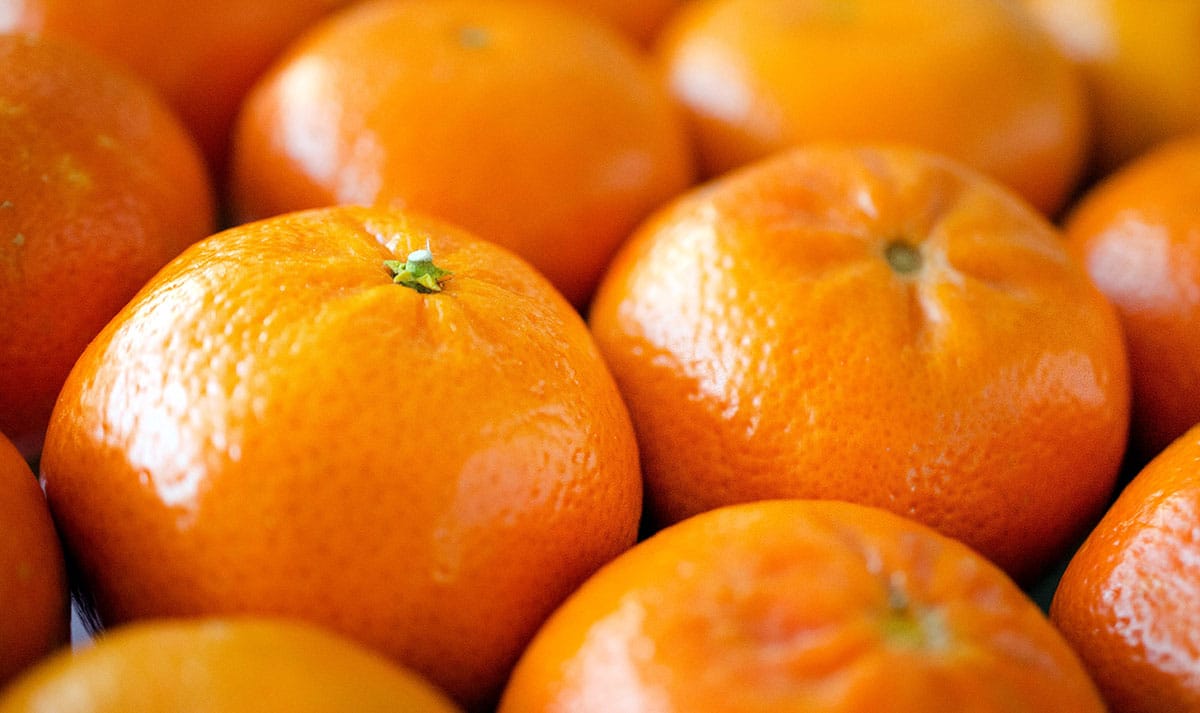
Mandarin oranges are a small, loose-skinned variety of the common orange, typically sweeter and less acidic than the larger oranges.
Mandarine oranges are thought to have originated in India, but when they travelled across China where they picked up the name “mandarin”. They made their way to England and Euro-tripped it down to Italy, eventually making it to the Moroccan port of Tangier, where they garnered another name, “tangerine”.
How to Peel a Mandarin Orange Video
While peeling mandarine oranges is an easy way to enjoy them, you can cut them as you would any orange!
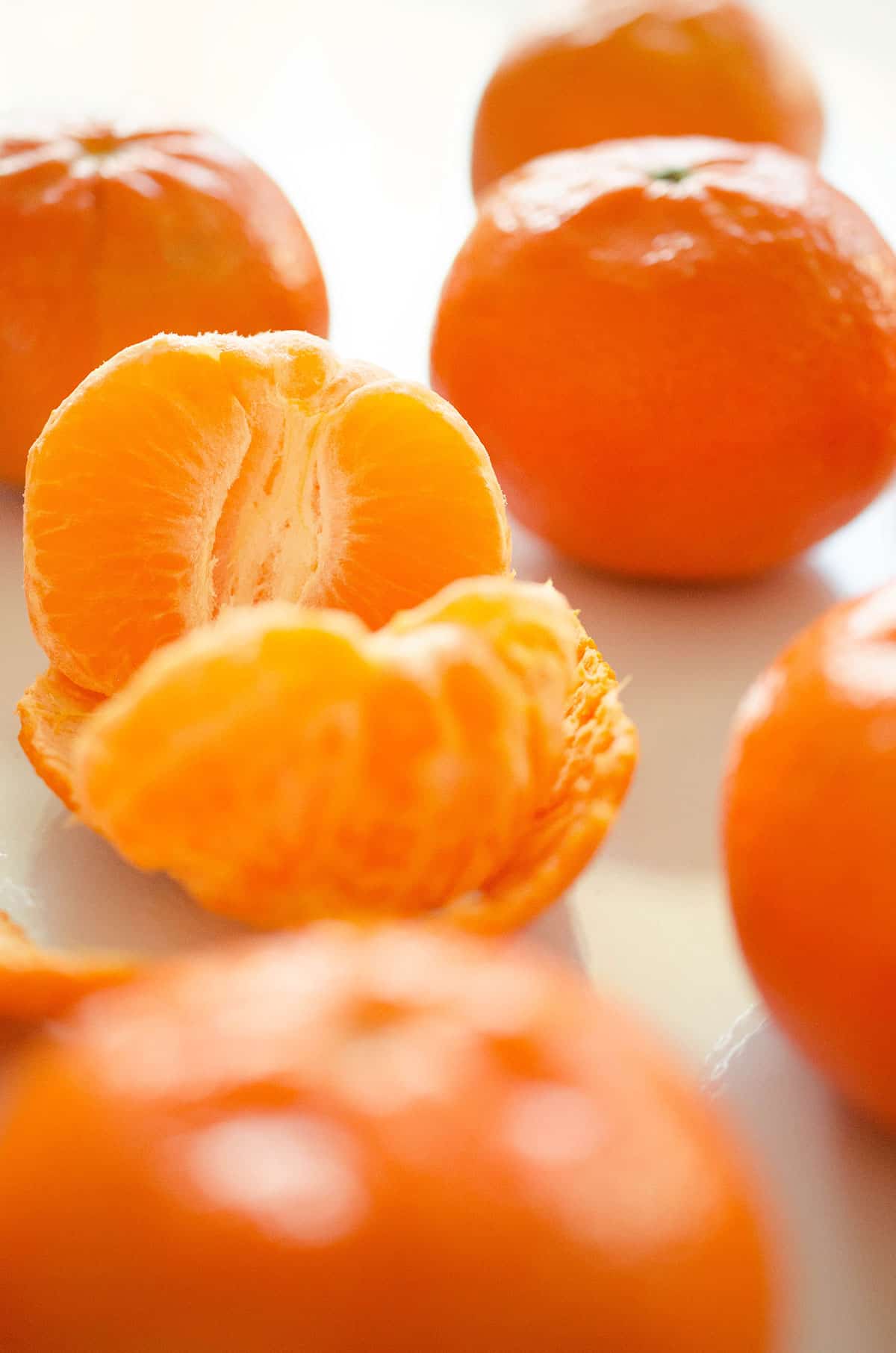
Mandarin Orange Varieties
Are mandarins and clementines the same thing? In short, sort of! Mandarin oranges are a smaller descendent of the common orange. Because mandarins are easily crossed with other varieties of citrus and can grow in a number of climates, many varieties of mandarins have been created…around 200! Here are the most popular varieties of mandarin oranges (learn more about types of oranges here):
- Clementines: This sweet variety is usually seedless and easy to peel, making it great for kids. Brands like “Cuties” or “Sweeties” commonly use clementines (but…fun fact! As different varieties go in and out of season, these brands will swap which kinds of mandarins they include in the packs)
- Tangerines: Though “tangerine” was originally just another word for the fruit “mandarin”, the term “tangerine” has begun to take on another meaning. What we call tangerines in the U.S. are commonly more tart and have a deeper orange/red color than the common mandarin. Varieties of tangerine include Darby and Fairchild.
- Satsuma: This is a seedless variety originating in Japan. The tree is more tolerant to cold, so you’ll find these in colder climates. This variety has a thick but delicate skin, meaning it’s quick to peel but bruises easily, making it great for either eating locally or canning for shipment.
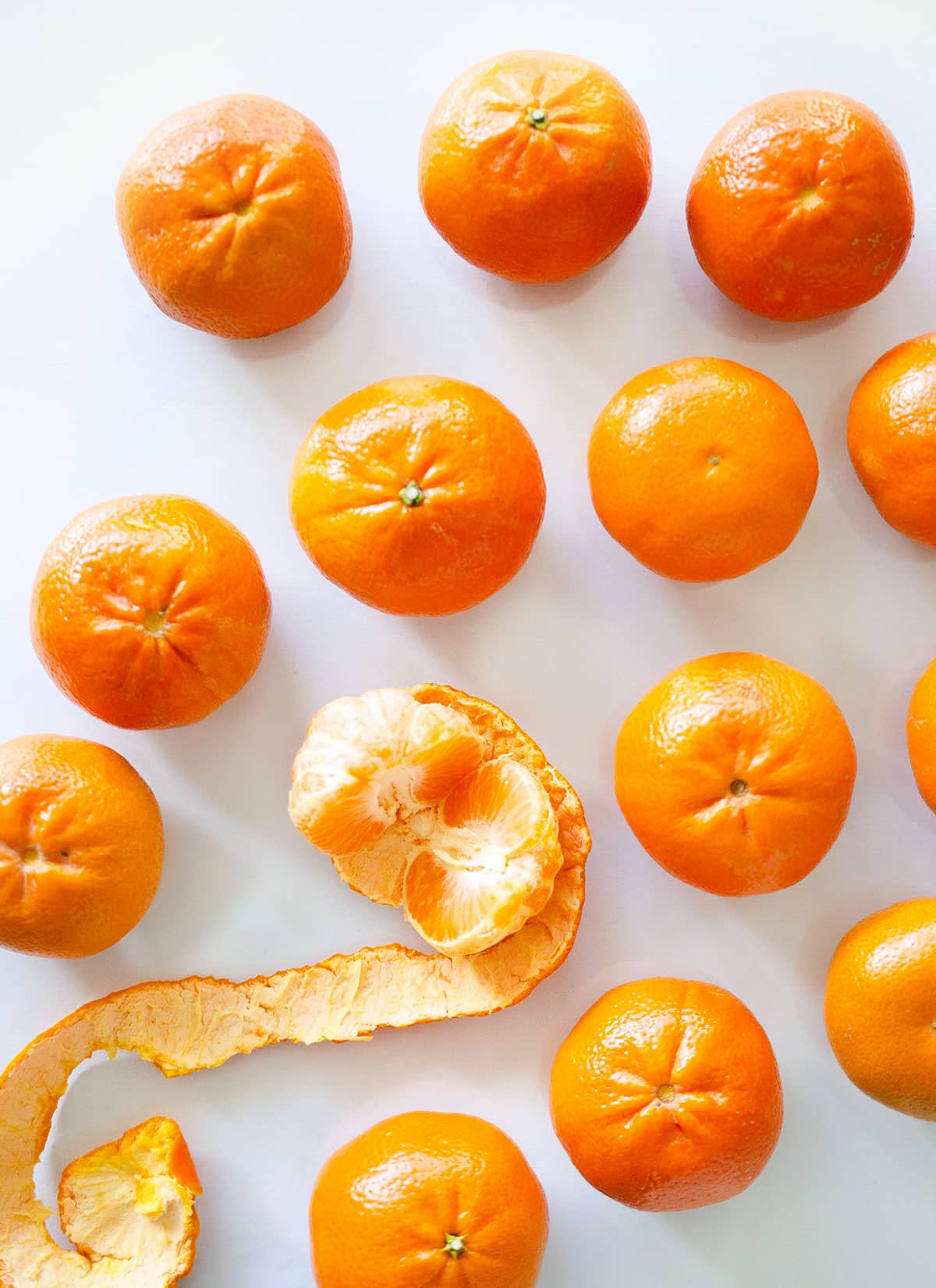
Are canned mandarin oranges good for you?
Canned mandarin oranges can be a great way of getting more fruit into your diet, especially when mandarin oranges aren’t in peak season. You’ll need to make sure they’re not canned in sugar. Look for a label on the can that says “no added sugar”.
How to select mandarin oranges
You’ll find a variety of mandarins are in season from November to April. Choose fruits that are heavy for their size and unblemished.
How to store mandarin oranges
Store mandarin oranges in a cool, dark place (like the fridge). At room temperature they’ll last about 1 week. Refrigerated in a bag they should last 2 weeks to 1 month.
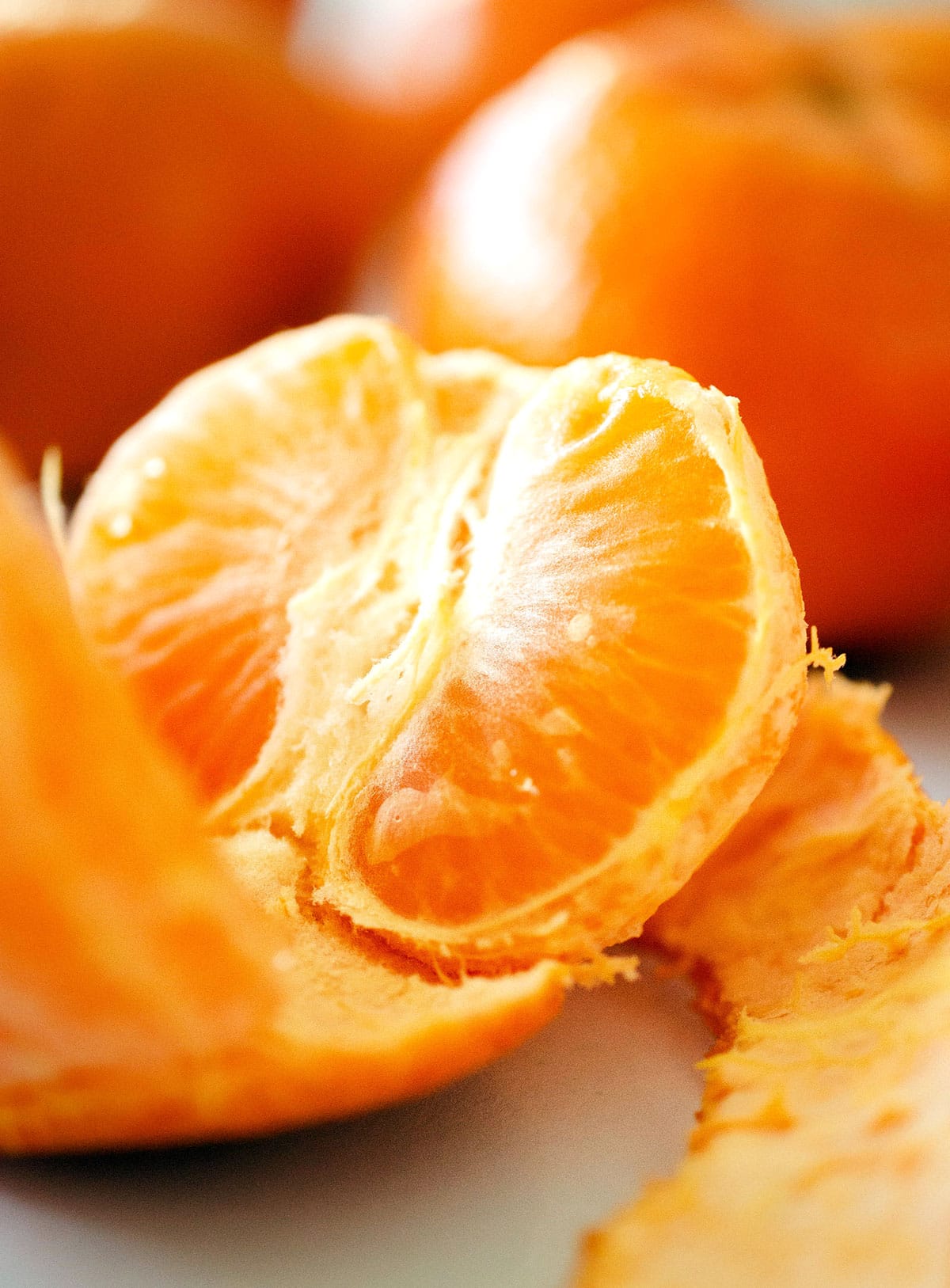
Mandarin Orange Recipes
Mandarin oranges can be used in place of oranges in most recipes, but they are especially great in salads and breakfast bowls! Here are my favorite mandarin orange recipes:
Mandarin Orange Nutrition Information
Mandarin oranges are loaded with nutrients! I’ll put on my nutritionist brain and break it down. (This information is per 1 large (120 g) mandarin orange).
Mandarin Orange Calories: 64
Mandarin oranges are relatively low in calories, making them a healthy snack.
Carbohydrates: 16 g
As with most fruits, mandarin oranges are mostly made up of carbs because of their natural sugars.
Fiber: 2 g
Oranges contain some fiber, and have 9% of your Daily Value (DV).
Protein: 1 g
As with most fruits, oranges are not high in protein.
Fat: 0 g
As with most fruits, mandarine oranges are fat-free.
53% Daily Value of Vitamin C
1 large mandarin orange contains over half of the vitamin C that you need in a day! This antioxidant helps maintain your immune system as well as helps to create collagen.
16% Daily Value of Vitamin A
Mandarin oranges are also a good source of Vitamin A, which is essential in many components of healthy vision, as well as immunity!


What a great post! I’ve eaten hundreds of these little beauties over the years, but now I know so much more about them!
We love oranges in our household. Generally I section what our grocery calls “lunchbox oranges” (5 for a $1) for my daughter’s lunch. I keep the peel on. I’ll show this video to her – I’m sure she’ll want to try this way of sectioning an orange 🙂
My family ALWAYS had them when they were in season too! They’re such a healthy snack to have sitting out 🙂
What VIDEO on this site??? I don’t see any here. My Mandarin oranges from Costco has skins that feel like they’re glued on–you have to crush the fruit to get it off the skin!
SO–I’d appreciate a video. The one on Pininterest didn’t work.
THANK YOU
There’s a video within the post that shows a fun way of sectioning a mandarin orange. I think that’s what Jill is referencing too 😀
Love oranges, especially clementines! We have been buying them by the boxes too recently at our local market – excited to learn so many things about them and also to see what recipes you have in store!
I think if I didn’t buy them by the boxes I’d be going to the store for more every other day!
I plant mandarin tree 4years ago. Now its morethan one meter hight. So i want to know how manyears need more for get fruit.
My son loves mandarin oranges! I love this informational post and can’t wait to show him the video!
these are so pretty! We love oranges, and I love putting the smell after I put the orange peels down the garbage disposal.
Oh that’s a great idea! Unfortunately garbage disposals aren’t so common here in Europe. But I’ve heard that boiling the peel also smells mighty nice!
I didn’t know either until I started looking into them more! So I figured there was no way I could included ALL oranges in this ingredient spotlight…there are so many things to learn about mandarins alone!
ARE DEEZ PICTURES COPYRIGHTED?
Thanks for asking, Aubrey. Yes they are. Feel free to email me at sarah@liveeatlearn.com to discuss licensing.
How many pounds of Mandarin Oranges are needed to feed 22 people giving them 4 ounces each?
That’s a whole lot of mandarin oranges! Looks like you’ll need 5.5 lbs 🙂
what happens if you swallow a whole mandarin orange? Asking for a friend 😉
Well you’ll have an instant does of vitamin C!
I have a mandarin tree that was in the yard when we bought our house 10 years ago, the fruit is large and juicy, BUT, the skin is thin and hard to peel, and if left for a week after picking goes rock hard. any suggestions
Hmm now that’s a tricky one! Could you use a vegetable peeler while they’re still soft?