

This post contains affiliate links.


I’ve made this soup more times than I can count since first developing it, mostly because traditional kimchi-jjigae usually leans on pork or pork broth for its depth, and I wanted a vegetarian version that didn’t taste like something was missing.
The trick I landed on after a lot of testing was giving the mushrooms a full 8 minutes to sweat out their moisture before adding any liquid. That step alone builds a savory base that carries the dish, so the broth doesn’t need meat to feel rich. It’s also why I add the tofu at the very end and only give it a gentle stir, since silken tofu breaks apart easily and I’d rather keep those soft cubes intact.love!

 save this recipe!
I could have kimchi for every meal for the rest of my life and be a happy lady. Because when kimchi can be worked into so many dishes (see tacos, fries, ramen), you’ll never get bored of it.
And this Kimchi Soup? It’s anything but boring. Two major things make it a sensory experience: the textures and the flavors.
Every bite has a different texture, from the delicately crunchy daikon radish to the melt-in-your-mouth silken tofu.
Reader rating
Why You’ll Love This Kimchi Soup
I could eat kimchi at every meal for the rest of my life and be a happy woman, and this soup is one of my favorite ways to use it.
- Ready in 30 minutes, making it an easy weeknight dinner
- Every bite has contrast, from crunchy daikon radish to melt-in-your-mouth silken tofu
- Easily adjustable heat, so you control how spicy the final bowl turns out

Kimchi Soup Ingredients
The ingredients list for this recipe is simple, but ingredients may be tricky to find, depending on where you are. I love hitting up Asian supermarkets, which usually have more unique ingredients (like silken tofu and daikon radish). Jump to the recipe card for exact measurements—this is only an overview!
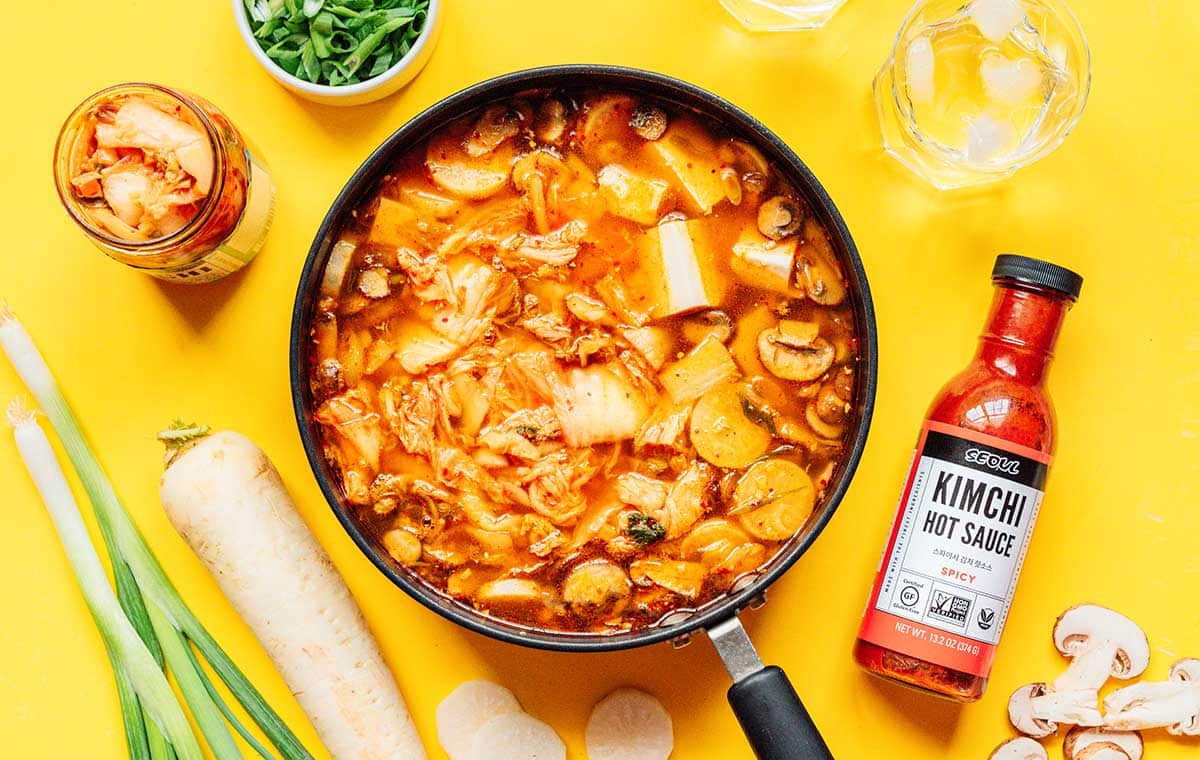
- Veggie Base: Our flavorful base is comprised of scallions (green onions), garlic, ginger, and mushrooms!
- Broth: Vegetable broth adds the perfect meatless flavor to our soup. Feel free to use a low-sodium variety if desired.
- Kimchi Hot Sauce: This Lucky Foods original, with its bold, authentic flavors, brings both heat and flavor to our soup.
- Daikon Radish: Aka white or winter radish, this veggie brings a mild flavor and fun, crispy texture.
- Kimchi: It wouldn’t be Kimchi Stew without the kimchi! Lucky Foods has a vegan kimchi we love (it comes in Original and Spicy).
- Silken Tofu: This soft tofu soaks up all the flavors of the soup and has a melt-in-your-mouth texture you’ll love! You may need to look in the international aisle of your grocery store (silken tofu often comes in a shelf-stable box).

How to Make Kimchi Soup
Jump to the recipe card for the full printable instructions!
Step 1: Saute the Veggies
Thinly slice the scallions, separating the white and the green parts (we’ll saute the whites and use the greens as a topping). Mince the garlic, and finely grate the ginger. Heat oil in a large skillet or pan over medium heat. Add the white parts of the scallions, garlic, ginger, and mushrooms.

Step 2: Simmer
Add the vegetable broth, hot sauce, and daikon radish. Bring to a simmer, cover, and cook until the radish is slightly softened (I like to leave a little crunch in the radish, but you could cook it until it’s totally soft if that’s your jam).

Step 3: Add the Kimchi and Tofu
Stir in kimchi and tofu. Taste and add soy sauce as needed for saltiness (depending on the saltiness of your broth).
Ladle into serving bowls and top with the green parts of the scallions. Bing bang boom, Kimchi Soup!

Kimchi Soup Key Tips
- Let the mushrooms fully sweat before adding liquid. Rushing this step is the biggest reason the broth can taste thin. Give them the full 8 minutes so they release their moisture and start to brown slightly.
- Taste before adding soy sauce. Kimchi and hot sauce brands vary a lot in saltiness, so taste the broth first and add soy sauce only as needed.
- Use low-sodium broth if you’re watching sodium. Since kimchi and hot sauce already bring plenty of salt, a low-sodium vegetable broth gives you more control over the final flavor.
Kimchi Soup Recipe Variations
- Add miso: For a savory punch of flavor, stir in a spoonful of miso paste.
- Add an egg: A soft boiled egg plopped into each serving bowl ups the protein content, making this soup even more satiating.
- Change up the mushrooms: Rather than button mushrooms, you can use shiitake or portobello.
- Add noodles: Glass noodles, cooked separately and added before serving, add another fun texture to this soup.
- More tofu: While the recipe uses half a package, the tofu lovers can add in the whole package for extra protein!

Kimchi Soup Recipe FAQs
The two terms are largely used interchangeably, and this recipe (kimchi-jjigae) sits right in between them. Traditionally, “stew” implies a thicker dish with more solid ingredients relative to liquid, often served bubbling hot in a stone pot, while “soup” suggests a thinner, more broth-forward version. This recipe leans toward the stew side, with a hearty ratio of vegetables and tofu to broth.
Use a low-sodium vegetable broth to cut down on overall sodium, and load up on extra vegetables like mushrooms or daikon for more fiber. Choosing a kimchi made without added sugar also helps keep the dish on the lighter side without changing the flavor much.
Cut back on the hot sauce, or leave it out entirely and let the kimchi provide the heat on its own. Choosing a mild kimchi and adding a bit of extra broth to dilute the overall spice level both help bring the heat down without losing the dish’s flavor.
More Korean-inspired recipes


Kimchi Soup

Ingredients
- 6 scallions
- 4 cloves garlic, minced
- 1 Tbsp freshly grated ginger
- 1 Tbsp vegetable oil, 15 mL
- 1 8-oz package sliced mushrooms, 226 g
- 4 cups veggie broth, 950 mL
- 2 Tbsp hot sauce, 30 g
- 1 medium daikon radish, peeled and sliced into ¼ inch rounds
- 1 cup kimchi, 150 g
- ½ 12-oz package silken tofu, cut into large cubes, 340 g
- soy sauce, as needed
Instructions
- Saute: Thinly slice the scallions, separating the white and the green parts. Mince the garlic, and finely grate the ginger. Heat oil in a large skillet or pan over medium heat. Add the white parts of the scallions, garlic, ginger, and mushrooms. Cook, stirring often, until mushrooms sweat out their moisture and are soft about 8 minutes.

- Simmer: Add broth, hot sauce, and daikon radish. Bring to a simmer, cover, and cook until radish is slightly softened (I like to leave a little crunch in the radish), about 10 minutes.

- Serve: Stir in kimchi and tofu. Taste and add soy sauce as needed, for saltiness. Ladle into serving bowls and top with the green parts of the scallions.

Notes
Nutrition
Nutrition information is calculated by Sarah Bond, degreed nutritionist, and should be taken as an estimate. For the most accurate nutritional information, calculate it using the actual ingredients in your recipe.
 did you make this?Leave a comment below and tag @liveeatlearn on social media! I love seeing what you’ve made!





Really tasty and easy how to make it’s so delicious!
Pretty Sarah,
Thank you kindly for all of these amazing recipe ideas❗️
As a fellow Nutritionist I greatly applaud them.
♥️💗♥️
Katy