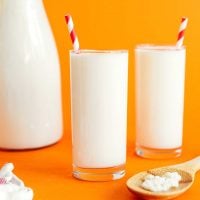
How To Make Milk Kefir (Easy Tutorial!)
Breaking down the simple basics of how to make easy homemade milk kefir, a probiotic-rich fermented drink that’s soon to be a staple in your kitchen!
Servings: 4 cups
Ingredients
- 1 Tbsp kefir grains
- 4 cups whole cow's milk 960 mL
Instructions
- Clean: Clean everything well with regular soap (avoid antimicrobial soaps). I’m talking the hands, glass jugs, spoons - everything!
- Assemble: Add 1 Tbsp (ish) of the kefir grains and 4 cups of whole milk to a large glass jug. Cover the jug with either a few layers of paper towels or a few paper coffee filters. Secure with a rubber band to prevent any bugs or dust from getting in.
- Ferment: Set in a warm, dark spot (65 to 85°F / 18 to 29°C) for about 24 hours. You’ll know your kefir is done when it has slightly thickened and smells fermented. If you kefir has separated into yellowish watery-looking whey, that’s fine! It’s just a sign that you can either reduce the length of fermentation next time or use more milk next time.
- Strain: Place a wide non-metal* bowl under a fine-mesh non-metal colander. Pour your finished kefir into the colander, stirring with a plastic or wooden spoon to gently force kefir through. The grains will be left.
- Start new batch: Rinse out the large jar that you fermented the grains in, then add the grains back into it. Add 4 cups of fresh milk to start the process over.
- Store fresh kefir: Transfer the finished kefir that collected in the wide bowl and transfer it to a sealable jar. Store in the fridge for around 2 weeks.
Video
Notes
*Brief contact with metal is okay, but letting the kefir touch metal for extended periods, as the acidic nature of the kefir can leach heavy metals into your kefir.
Flavor kefir by blending in fresh fruit (¼ cup), chocolate (1 Tbsp cocoa powder), vanilla (¼ tsp vanilla extract), or dates (1 pitted date).
Where do you get kefir grains? Unless you have a friend who makes kefir, it's easiest to get your grains online. Find them on Amazon.
Nutrition
Serving: 1cup (depends on fermentation length) | Calories: 162kcal | Carbohydrates: 15g | Protein: 8g | Fat: 8g | Saturated Fat: 5g | Cholesterol: 30mg | Sodium: 125mg | Potassium: 0mg | Fiber: 3g | Sugar: 12g | Vitamin A: 0IU | Vitamin C: 0mg | Calcium: 220mg | Iron: 0mg
